BPO Labor Laws: Key Regulations for BPO Companies
Explore how labor laws affect BPO operations, from working hours to employee rights, workplace safety, and key compliance requirements across regions.
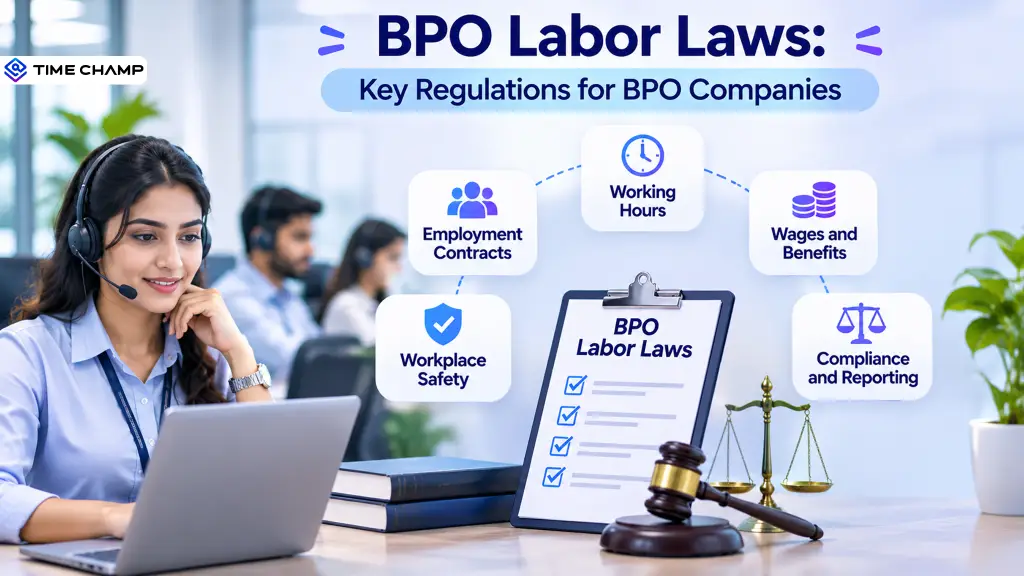
Your BPO workforce can operate across different shifts, locations, and schedules, but labor laws still set clear boundaries around employment conditions. BPO labor laws cover areas such as minimum pay, working hours, overtime, rest periods, leave, safety, and employee rights. The exact obligations depend on the jurisdiction where your employees work.
A clear understanding of these rules can help you set appropriate policies and maintain accurate employment records. This article looks at the main labor requirements that apply to BPO operations, how they vary across countries, and how you can support compliance in your workplace.
Why Do Labor Laws Matter in BPO Operations?
Labor laws give you a legal framework for managing working hours, wages, overtime, leave, workplace safety, and employee rights. They matter in BPO operations because your work often involves extended service hours, rotating shifts, night shifts, and teams working across different locations. Following the rules helps you meet your legal responsibilities while maintaining fair working conditions.
Here are the main reasons labor laws matter when you run BPO operations.
1. Protects Employee Rights
Labor laws establish basic protections around pay, working hours, rest periods, leave, safety, and other employment conditions. These requirements give you a clear foundation for workplace policies and helps ensure that your employment practices meet the standards that apply in your jurisdiction.
2. Keeps Working Hours and Overtime in Check
BPO operations often run beyond regular daytime hours to support customers in different time zones. Labor laws can set requirements for working hours, overtime, rest periods, and night work. Keeping accurate records of hours worked helps you apply the right rules and calculate additional pay where the law requires it.
3. Reduces Legal and Financial Risk
Ignoring labor requirements can lead to wage disputes, regulatory action, legal claims, and financial penalties. Accurate records, clear employment policies, and regular compliance reviews give you a better way to identify issues before they become larger problems.
4. Builds More Consistent BPO Operations
Clear labor policies give you a consistent way to schedule shifts, record working hours, process payroll, manage leave, and handle employment matters. This becomes especially important when your BPO operates around the clock or supports clients across multiple time zones.
Need better visibility into work hours across your BPO workforce?
Use Time Champ to turn workforce data into clear insights for everyday decisions.
How Do BPO Labor Laws Differ by Country?
Labor laws for BPO operations can change significantly when you cross a border. If you run operations across different countries without considering these differences, you may face fines, lawsuits, or even forced shutdowns. Here is how labor rules differ across the outsourcing hubs where you are most likely to operate.
1. United States
The Fair Labor Standards Act (FLSA) sets the baseline in the US. It requires overtime pay at 1.5 times the regular rate when a non-exempt employee works more than 40 hours in a workweek. Most call center and customer service roles count as non-exempt by default. An employee qualifies as exempt only if they receive a salary above the set weekly minimum and their primary duties involve genuine managerial or high-level discretionary work.
Many US wage-and-hour disputes in the BPO space come from employers misclassifying representatives as exempt to avoid overtime obligations. Getting the classification right matters more than almost anything else in a US-based operation.
2. Philippines
The Labor Code of the Philippines caps the standard workday at eight hours and the standard workweek at 48 hours across six days. Employees can work up to eight hours per day, excluding a one-hour meal break, which typically results in a 48-hour workweek from Monday through Saturday. Work beyond eight hours earns overtime pay at a minimum of 25% above the regular wage. This rises to an extra 30% for work on a holiday or rest day.
Because many Philippine BPO clients operate in US or UK time zones, most agents work graveyard shifts, and the law accounts for that directly. Call center workers on the night shift earn a 10% night differential for hours worked between 10 PM and 6 AM, added to their regular rate. You’ll also need to budget for 13th month pay, a legally mandated bonus calculated at a minimum of one-twelfth of an employee’s total basic salary for the year and paid by December 24.
3. India
The Industrial Disputes Act, 1947 provides a framework for investigating and settling industrial disputes between employers and workmen. It covers areas such as conciliation, arbitration, adjudication, strikes and lockouts, lay-offs, retrenchment, and closure.
For BPOs, this means disputes related to employment, termination, lay-offs, or retrenchment can fall under the Act, subject to its scope and applicable rules. The Act also provides mechanisms through Labor Courts and Industrial Tribunals for resolving certain disputes.
4. European Union and UK
The EU Working Time Directive governs working hours across member states. It caps the average workweek at 48 hours, including overtime, calculated over a reference period. It also requires rest periods, breaks, and a minimum of four weeks of paid leave each year. Daily rest also receives protection, with at least 11 consecutive hours of rest required in every 24-hour cycle.
The UK has a notable exception. Workers can choose to opt out of the 48-hour weekly cap, which means they can agree to work longer hours. However, they can never be forced to make that agreement.
Take a quick look at how common outsourcing hubs handle key labor rules.
| Region | Standard Workweek | Overtime Rule | Distinct Requirement |
|---|---|---|---|
| United States | 40 hours | 1.5x pay past 40 hrs. (non-exempt only) | Exempt vs non-exempt classification drives most disputes |
| Philippines | 48 hours (6 days) | 25% premium (30% on rest days/holidays) | 10% night differential for 10 PM to 6 AM shifts |
| India | Varies by state | Varies by state | State-level Shops and Establishments Acts, separate rules for women's night shifts, Industrial Act |
| EU/UK | 48 hours (averaged) | Governed by member state law | 11-hour daily rest guarantee; UK allows opt-out of the 48-hour cap |
How Can BPO Companies Stay Compliant with Labor Laws?
Staying compliant starts with knowing which labor rules apply to each location where you operate. You also need accurate records, clear workplace policies, and regular checks to catch issues before they become disputes. Here are the key steps to keep your BPO operations aligned with labor requirements.
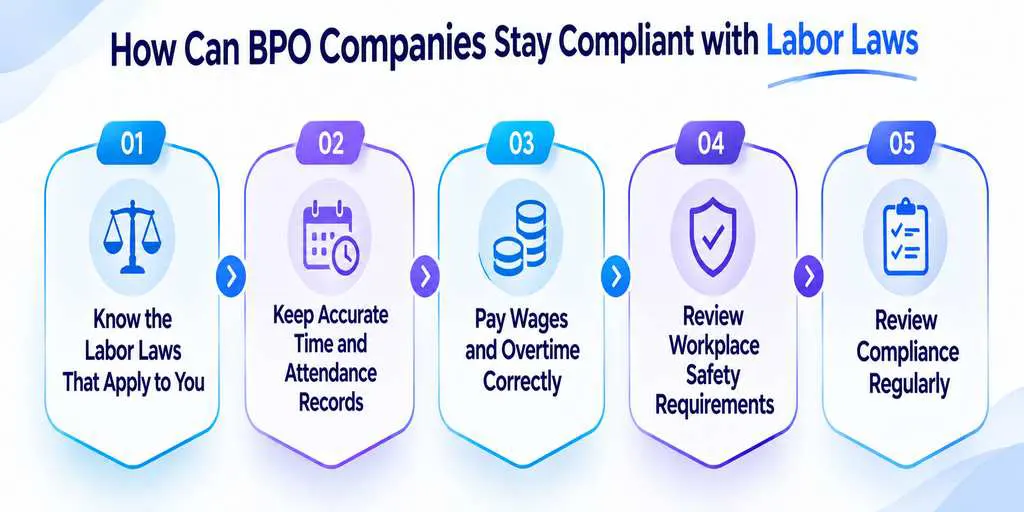
1. Know the Labor Laws That Apply to You
Start by identifying the labor laws that apply in each location where your workforce works. Check requirements for working hours, overtime, minimum wages, leave, benefits, night shifts, workplace safety, and termination. If you operate across countries or states, keep a separate compliance checklist for each location because the rules can differ.
2. Keep Accurate Time and Attendance Records
Record when employees start and finish work, take breaks, and work overtime. These records give you a clear view of hours worked and help you calculate wages and overtime correctly. Some time tracking tools, such as Time Champ, can help you maintain accurate records of work hours, attendance, breaks, and overtime in one place, making it easier to keep your records ready when you need them.
3. Pay Wages and Overtime Correctly
Check that your payroll follows the wage and overtime rules that apply to your workforce. Review regular pay, overtime rates, deductions, holiday pay, and other statutory payments. Keep your payroll records accurate and review them regularly to catch payment errors before they turn into larger compliance issues.
4. Review Workplace Safety Requirements
Make sure your workplace follows the safety and health rules that apply in your location. This includes identifying workplace risks, preparing for emergencies, recording relevant incidents, and keeping required safety records.
5. Review Compliance Regularly
Labor compliance can change when you expand into a new location, change shift patterns, add remote work, or update employment policies. Review your practices regularly and correct gaps as soon as you find them. This helps you keep your records and policies aligned with the rules that apply to your workforce.
What Are the Penalties for BPO Labor Law Violations?
Non-compliance doesn't stop at a warning letter. It usually shows up as a fine, a lawsuit, or both landing on your desk at once, and the numbers involved can wipe out a quarter's profit margin fast. Here are the penalties your BPO could face if it slips out of line with labor regulations.
- Wage and hour violations hit hardest under the Fair Labor Standards Act. Willful or repeated breaches can cost up to $1,085 per violation, child labor violations can climb to $16,035 per violation, and a violation that causes a minor's death or serious injury can reach $145,752.
- Workplace safety violations carry even steeper numbers under OSHA. A serious or other-than-serious violation can cost up to $16,550; failing to fix a cited hazard adds the same amount for every day it stays unresolved, and a willful or repeated violation can run as high as $165,514.
- Worker misclassification opens a different set of problems. Labeling employees as independent contractors to skip payroll obligations exposes you to IRS penalties for unpaid income tax, Social Security, and Medicare contributions, plus a fine for every W-2 you failed to file. Intentional misclassification pushes both the fines and the legal exposure much higher, sometimes into criminal territory for company leadership.
- Posting and notice failures add up quietly but quickly. Skipping the FMLA poster costs up to $216 per offense, missing the OSHA "It's the Law" poster costs up to $16,550, and ignoring the Employee Polygraph Protection Act notice costs up to $26,262.
- Beyond the direct fines, non-compliant BPOs also face back pay claims, liquidated damages, and attorney's fees, none of which show up in the original penalty but all of which land on the final bill.
Conclusion
BPO labor laws can vary widely based on where your workforce works, how you structure shifts, and the type of employment you offer. Keeping up with these rules helps you handle wages, working hours, leave, employee rights, and workplace requirements correctly.
Regular compliance checks, accurate records, and clear workplace policies can help you catch issues early and avoid costly disputes. If you operate across different locations, review the rules that apply to each one and update your practices when those requirements change.
Worried that missing work-hour records could lead to compliance issues?
Use Time Champ to keep accurate time data and make compliance checks easier.

Thasleem Shaik

Table of Content
 Why Do Labor Laws Matter in BPO Operations?
- How Do BPO Labor Laws Differ by Country?
- How Can BPO Companies Stay Compliant with Labor Laws?
- What Are the Penalties for BPO Labor Law Violations?
- Conclusion
Related Blogs

Business process outsourcing (BPO) vs Knowledge process outsourcing (KPO). Discover definitions of BPO and KPO, key functions, similarities, and use cases.
Guna Lakshmi | Apr 02, 2026
In-house vs outsourcing explained with key differences, pros, cons, costs, and practical tips to help you choose the best approach for your organization.
Anjali | Jul 02, 2026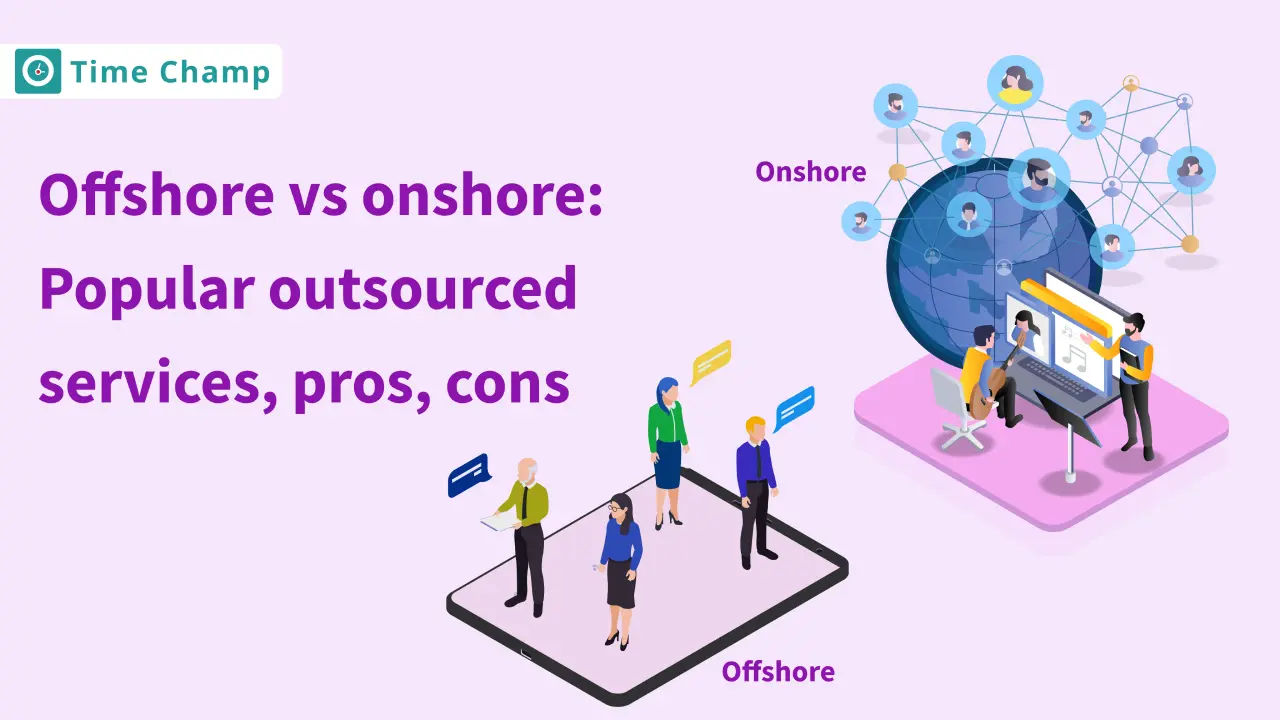
Exploring offshore and onshore outsourcing: Compare popular services, advantages, and drawbacks to make informed business decisions.
Mounika Sai | Nov 20, 2023
Explore top BPO companies offering tailored solutions. Find the right partner to boost efficiency, cut costs, and drive your business growth!
Mounika Sai | Nov 24, 2023
Learn how to kickstart your BPO business with this comprehensive step-by-step guide, covering everything from planning to execution. Get insights now!
Tarun Kumar Reddy | Nov 17, 2023
Learn why billing breakdowns damage BPO trust, why clients value workforce intelligence billing, how it strengthens billing models & implementation steps.
Thasleem Shaik | Feb 11, 2026


 4.7/5 avg.
Ready to Manage Your Workforce Smarter?
Join our family of 1500+ companies using smart insights to redefine workforces!

Free Trial
No Credit Card Required