Agile Scrum Principles Explained: A Complete Guide
Learn the 12 Agile Manifesto principles, Scrum's three pillars, and five values. Discover how they work together and apply to Scrum sprints across teams.

Your team completes sprint planning, joins the daily scrum, attends sprint reviews, and holds retrospectives. Still, deadlines slip, customer feedback arrives too late, and the same problems keep coming back. If that sounds familiar, the issue isn't usually the scrum events, it's how the team applies the principles behind them.
Agile scrum principles combine the 12 agile manifesto principles with scrum's three pillars and five scrum values. Together, they help teams deliver better products, respond to change, and improve with every sprint.
Many teams follow the scrum process but still struggle because they miss the ideas behind it. Understanding how agile principles, scrum pillars, and scrum values fit into each sprint makes it easier to spot what's working, what's not, and where changes are needed.
What are Agile Scrum Principles?
Agile scrum principles are the guiding principles, pillars, and values that shape how scrum teams work. They include the 12 agile manifesto principles, scrum's three pillars, and five scrum values, helping teams deliver value and continuously improve.
The 12 Agile principles behind Scrum
The 12 agile manifesto principles form the foundation of agile scrum principles and guide how scrum teams deliver value. They describe how agile teams should deliver value, respond to change, collaborate, and improve over time. Scrum doesn't replace these principles; it provides a framework to put them into practice through every sprint.
| S. No | Agile Manifesto Principle | What It Means for Scrum Team |
|---|---|---|
| 1 | Satisfy the customer through early and continuous delivery of valuable software. | Deliver something valuable at the end of every sprint, not just report progress. |
| 2 | Welcome changing requirements, even late in development. | Update and reprioritize the product backlog as customer needs change. |
| 3 | Deliver working software frequently, in weeks rather than months. | Keep sprints short and finish work that is ready to release. |
| 4 | Business people and developers work together daily | The product owner stays involved and works closely with the team throughout the sprint. |
| 5 | Build projects around motivated individuals. Give them the support and trust they need. | Let the team decide how to complete the work while leaders remove blockers. |
| 6 | Face-to-face conversation is the most effective way to communicate. | Encourage real-time discussions. For remote teams, video calls are often better than long message threads. |
| 7 | Working software is the primary measure of progress. | Progress is measured by completed work that meets the Definition of Done. |
| 8 | Promote sustainable development at a constant pace. | Plan sprints at a pace the team can maintain over the long term. |
| 9 | Continuously focus on technical excellence and good design. | Include testing, refactoring, and quality improvements in every sprint. |
| 10 | Simplicity, the art of maximizing the amount of work not done, is essential. | Focus only on the work that delivers the most value and avoid unnecessary features. |
| 11 | The best architectures, requirements, and designs emerge from self-organizing teams. | Trust the team to decide the best way to design and deliver the solution. |
| 12 | At regular intervals, the team reflects on how to become more effective. | Use sprint retrospectives to make improvements that are applied in the next sprint. |
The Three Pillars of Scrum
The three pillars of scrum are transparency, inspection, and adaptation. They are the foundation of scrum and support every sprint. The three pillars work together: the team must first make work visible, then review it regularly, and finally make changes based on what they find. If any one of these is missing, scrum loses its purpose.
Transparency
Transparency means everyone on the team can clearly see what work is being done, what has been completed, and what is blocking progress. The Product Backlog, Sprint Backlog, and Definition of Done should be clear and easy for everyone to understand.
For example, if a task stays "In Progress" for several days because someone is stuck but doesn't tell the team, others assume everything is on track when it isn't.
Inspection
Inspection means checking the work often to see if everything is going as planned. Scrum events like the daily scrum, sprint review, and sprint retrospective give the team time to review progress, discuss problems, and identify what needs attention.
Inspection isn't about reporting updates to the scrum master. It's about the whole team looking at the work together and spotting issues before they become bigger problems.
Adaptation
Adaptation means making changes after finding a problem. If the team notices that something isn't working, they should try a better approach in the next sprint instead of repeating the same process.
For example, if the same issue comes up in every retrospective but nothing changes afterward, the team is reviewing the problem but not acting on it. Scrum works best when feedback leads to real changes.
The Five Scrum Values
The five scrum values are commitment, focus, openness, respect, and courage. They change how a scrum team works together. While the three scrum pillars define the process, these values influence how people communicate, solve problems, and support each other. Without them, even a team that follows every scrum event can struggle to deliver good results.
| Scrum Value | What It Means | What Happens When It's Missing |
|---|---|---|
| Commitment | Work together toward the sprint goal and support the team in achieving it. | Team members finish their own tasks, but the sprint goal isn't achieved. |
| Focus | Stay focused on the sprint work and avoid unnecessary distractions. | Too many tasks are started, but very little is completed. |
| Openness | Share progress, challenges, and blockers honestly with the team. | Problems stay hidden until the sprint review or after deadlines are missed. |
| Respect | Value each team member's ideas, skills, and contributions | Misunderstandings increase, teamwork suffers, and trust begins to fade. |
| Courage | Speak up about risks, ask difficult questions, and challenge unrealistic expectations. | Team members stay silent even when they know something is wrong. |
Turn Agile Principles into Better Sprint Outcomes!
Track workload, team activity, and sprint progress to see how your team collaborates and improves
How Agile and Scrum Principles Fit Together in a Sprint
Agile principles define the mindset, while scrum turns those ideas into action. The table below shows how each scrum event and artifact supports the agile principles during a sprint.
| Scrum Event or Artifact | What Happens | Scrum Pillar | Agile Principles Supported |
|---|---|---|---|
| Sprint | The team works in a fixed timebox to deliver a usable product increment. | Transparency, Inspection, Adaptation | 1, 3, 8 |
| Sprint Planning | The team selects work and sets the sprint goal. | Transparency | 5, 10, 11 |
| Daily Scrum | The team reviews progress, discusses blockers, and updates the plan. | Inspection, Adaptation | 4, 6, 12 |
| Sprint Review | Stakeholders review the completed work and share feedback. | Inspection, Adaptation | 1, 2, 4, 7 |
| Sprint Retrospective | The team reflects on the sprint and agrees on improvements. | Inspection, Adaptation | 5, 9, 12 |
| Product Backlog | A prioritized list of work needed to achieve the product goal. | Transparency | 2, 10 |
| Definition of Done | A shared checklist that defines when work is complete. | Transparency | 7, 9 |
The table can also help you find the source of common scrum problems. For example, if the team rarely improves after each sprint, look at the sprint retrospective and agile principle 12 (regular reflection). If work is marked as complete but still needs testing or fixes, review the Definition of Done and agile principle 7 (working software). In many cases, the problem isn't scrum itself; it's that one event or artifact isn't being used as intended.
How to Know if Scrum Is Working for Your Team
A team can follow every scrum event without following the principles behind them. What matters is whether those events help the team inspect, adapt, and improve, not just complete the process.
Ask these questions:
- Does every sprint retrospective lead to at least one improvement in the next sprint?
- Does every completed item meet the Definition of Done?
- Can the team maintain a steady pace without relying on overtime?
- Are blockers raised during the sprint instead of waiting until the sprint review?
If you answer yes to most of these, your team is likely putting agile and scrum principles into practice.
One principle that's easy to miss is sustainable pace. A sprint may finish on time, but if the same people are regularly working extra hours, the workload isn't sustainable.
Time Champ gives teams the data they need to find these patterns early.
Automatic time tracking
Time Champ records time spent on projects and tasks automatically, giving teams a clear picture of the actual effort behind each sprint instead of depending on memory during retrospectives.
Workload insights
Workload reports make it easy to see whether work is shared fairly across the team and identify team members who are consistently carrying extra work.
Productivity reports
Productivity insights help teams compare planned work with actual effort, making sprint discussions more objective and helping identify areas for improvement.
Together, these insights support Scrum's transparency pillar by giving everyone a shared view of how the sprint actually unfolded.
Build Stronger Scrum Teams with Better Visibility!
Monitor sprint progress, balance workloads, and help your team improve every sprint with Time Champ
Conclusion
Understanding agile scrum principles is only the first step. The real difference comes from applying these principles in every sprint and making small improvements along the way. When teams stay open, collaborate, and adapt to change, scrum becomes much more than a framework; it becomes a better way of working.

Jahnavi Pulluri

Related Blogs
Table of Content
 What are Agile Scrum Principles?
- The 12 Agile principles behind Scrum
- How Agile and Scrum Principles Fit Together in a Sprint
- How to Know if Scrum Is Working for Your Team
- Conclusion
- Related Blogs
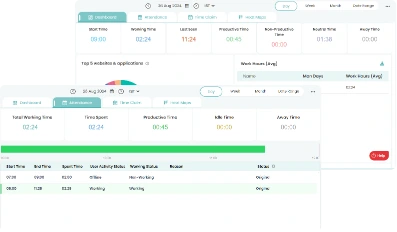
Related Blogs
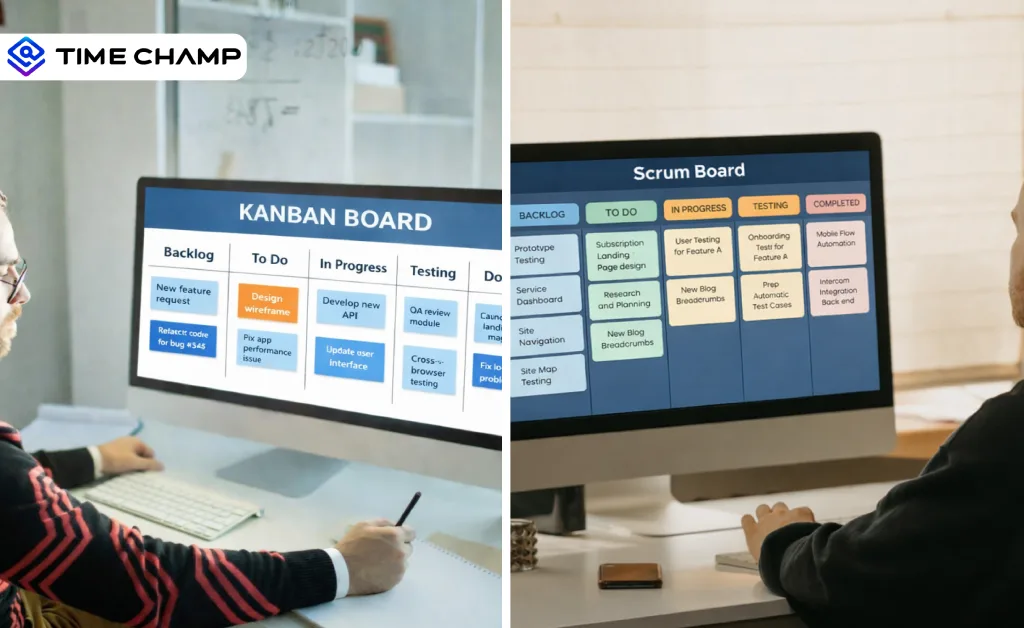
Kanban vs Scrum board explained. Understand their key differences, features, benefits, and when to use each method to manage projects effectively.
Thasleem Shaik | Apr 02, 2026
Explore Kanban board templates for projects, teams, HR, and IT. Free Excel, Word, and PDF downloads to visualise tasks and streamline workflows.
Thasleem Shaik | Nov 03, 2025
Discover how workforce intelligence improves workload distribution, balances team capacity, prevents burnout & how to manage it with data effectively.
Tarun Kumar | Feb 11, 2026
Explore 5 core principles of employee monitoring, emerging AI ethics in 2026, and a practical playbook to balance employee productivity, privacy, and trust.
Anjali | May 07, 2026
Compare employee monitoring software costs in 2026. Explore pricing factors, models, tiers, hidden fees, and the real total cost of ownership for any team.
Jahnavi Pulluri | Apr 16, 2026
Understand employee monitoring legal compliance, key laws, and best practices to track work activity while protecting privacy and avoiding legal risks.
Thasleem Shaik | Apr 14, 2026


 4.7/5 avg.
Ready to Manage Your Workforce Smarter?
Join our family of 1500+ companies using smart insights to redefine workforces!

Free Trial
No Credit Card Required