Teams often face confusion when discussions happen across multiple conversations, and different team members understand the information in different ways. This creates misunderstandings and makes coordination harder. Sometimes teams overlook important points, and decisions take longer than expected. Group communication helps prevent these issues because it allows people to exchange ideas, clarify information, and discuss solutions together.
This guide explains what group communication means, why it matters in team settings, and how you can improve it. You will explore real examples, understand key components, and learn the different channels used to share information. These insights will help you communicate more clearly and work toward shared goals with fewer misunderstandings.
What is Group Communication?
Group communication is the process of exchanging information, ideas, and feedback among people working toward a shared goal. It involves working together in an organized way to ensure a clear understanding, smooth teamwork, and better decision‑making
Group communication creates a shared space where every member stays aligned with objectives, tasks, and updates. It supports smooth coordination, reduces misunderstandings, and helps each contributor understand how their work fits into the bigger picture.
Why is Group Communication Important?
Studies reveal that poor communication drains US businesses more than $2 trillion each year, and 86% of teams point to the lack of good communication as one of the main reasons for failures at work. When your team communicates with clarity and consistency, the benefits go far beyond simply sharing updates. Here are the main reasons why it is so important.
- Improves Decision-Making: Group communication enables you to listen to various opinions prior to making a choice. These discussions help the group examine ideas carefully and select solutions that reflect collective thinking.
- Coordinate Tasks Effectively: Every project involves several responsibilities that must connect smoothly. It keeps you aware of updates, deadlines, and responsibilities so the group stays organized and focused on shared goals.
- Reduces Conflict and Misunderstandings: Effective communication reduces the possibility of misunderstanding that may result in preventable conflict. Transparent discussions can assist you in solving problems at the earliest stage and maintaining stable relations throughout the workflow.
- Increases Confidence and Engagement: Open communication gives every contributor a voice, which boosts confidence and keeps engagement high. When a group exchanges information freely, motivation increases, and your entire team stays more connected.
- Better Productivity and Faster Execution: When updates move smoothly within the group, work flows better, and you can complete tasks with fewer interruptions. Consistent communication helps you make quicker decisions and reduces wasted time caused by misinterpretation.
What are the Different Types of Group Communication Channels?
Group communication works best when you choose the right channel for the situation. Each channel shapes how you share updates, collaborate, and keep your group aligned. Here is a list of some commonly used group communication channels that enable you to organize discussions and make information readily available to the entire group.
1. Face-to-Face Meetings
Face-to-face meetings allow you to discuss topics directly with the group in the same space. This channel works well for brainstorming, problem-solving, and decision discussions because everyone can respond immediately. You can also read tone, expressions, and reactions, which helps the group understand each idea more clearly.
2. Video Conferencing
Video calls allow you to communicate with the group even when members work from different locations. Platforms such as online meeting tools make it easier to conduct discussions, share updates, and review plans without gathering in the same room. This channel supports real-time interaction while maintaining visual connection.
3. Group Emails
Group emails allow you to share detailed information with several members at the same time. You can send updates, documents, instructions, or meeting summaries through one message that reaches the entire group. Email is effective in cases where the information requires careful reading or when the group does not require a quick response.
4. Instant Messaging Platforms
Messaging tools help you exchange quick updates and short discussions within a group conversation. Platforms such as Slack, Microsoft Teams chat, WhatsApp, and Google Chat allow you to ask questions, clarify points, or share quick information without arranging a meeting. These tools support fast communication during daily work.
5. Collaboration Platforms
Collaboration platforms support group communication while also helping you organize work and track progress. Tools such as Microsoft Teams, Trello, Asana, Notion, and Monday.com allow you to discuss tasks, share files, review updates, and coordinate activities in one workspace. These platforms keep conversations connected to projects, so you can see updates, follow task progress, and stay informed about ongoing work within the group.
6. Memos
Memos serve as formal communication used to share official information within a group. You can use memos to communicate announcements, policy updates, or important instructions that require clear documentation. A memo usually follows a structured format and helps you deliver precise information to the relevant group without lengthy discussion.
What Are the Examples of Group Communication?
Group communication occurs whenever a group discusses ideas, shares updates, or works through decisions together. These discussions help you stay informed and coordinate tasks more effectively within the group. To understand how it works in practice, let’s look at a few common group communication examples you may encounter in daily work.
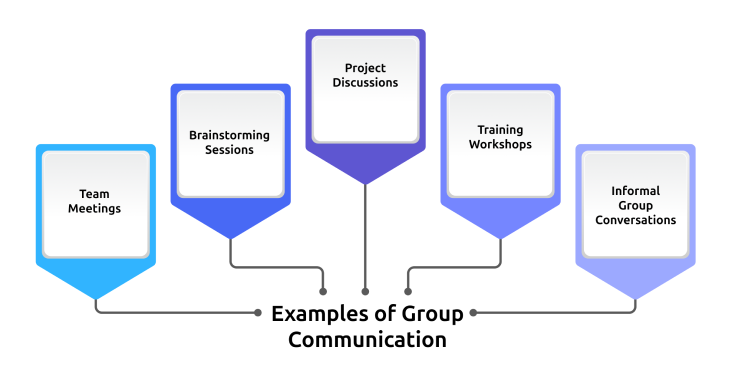
H3: 1. Team Meetings
Team meetings represent one of the most common examples of group communication. In meetings, you usually get together with the team members to discuss the project's current status, review the performed tasks, and plan the next steps. Everyone participates in the discussion, which helps you understand updates clearly and stay aligned with ongoing work.
2. Brainstorming Sessions
Brainstorming sessions give you and your teammates the opportunity to come up with ideas related to a particular topic or problem. Team members suggest their ideas, talk about different options, and develop their thoughts together. Such conversations usually inspire creative thinking and result in discovering fresh ways or solutions.
3. Project Discussions
Project discussions take place when the group reviews project plans, timelines, or deliverables. You exchange updates, clarify responsibilities, and discuss next steps. This kind of group communication makes you aware of the project progress and upcoming tasks.
4. Training Workshops
Training workshops are a great way to pick up new skills or gain deep knowledge about a certain subject or topic. You can ask questions, share your views, and talk about the ideas with the whole group during the meeting. This interaction helps you understand the topic more clearly and apply the knowledge in real situations.
5. Informal Group Conversations
Informal group conversations happen during casual discussions where you share ideas, discuss updates, or clarify small matters with the group. These interactions often take place during quick catch-ups, short team discussions, or even during lunch with the group. Such conversations help you stay connected, exchange thoughts naturally, and remain aware of ongoing updates within the group.
How to Improve Group Communication?
Strong group discussions require clear interaction and active participation. When communication improves, coordination becomes smoother, and misunderstandings reduce. Below are several practical ways you can strengthen group communication and build more effective discussions within a group.
1. Set Clear Communication Goals
Start every discussion with a clear purpose. When you define the topic, expected outcome, and main points to cover, the group understands what the conversation should achieve. Having clear objectives aids the discussion in remaining on track and prevents confusion during the conversation.
2. Encourage Open Participation
Group communication becomes stronger when everyone feels comfortable sharing ideas or questions. Encouraging each team member to take part in the discussions and express viewpoints. Open participation allows the group to examine ideas from different angles and reach better conclusions.
3. Practice Active Listening
Effective communication is more about listening than just talking. Pay close attention when others share ideas and focus on understanding the message before responding. Listening actively will make you prevent misunderstandings and make the conversation respectful and productive.
4. Use the Right Communication Channels
Choose communication channels that match the given situation. Some discussions require meetings or video calls, while quick updates may work better through messaging platforms or emails. The right channel assists you in sharing information clearly and is also helpful in ensuring group discussions remain organized.
5. Provide Constructive Feedback
You should share feedback that is helpful to the team in upgrading their ideas and future conversations. Research shows that 92% of individuals believe constructive feedback improves performance, which highlights the value of thoughtful feedback. When you provide feedback in a respectful and solution-focused way, the group can identify improvements and move forward with a clearer understanding.
What Are the Benefits of Group Communication?
Clear communication within a group helps you exchange ideas, discuss decisions, and coordinate work more effectively. When information flows smoothly, you understand updates better and collaborate with others more easily. Let us look at some key benefits that strong group communication brings to your team.
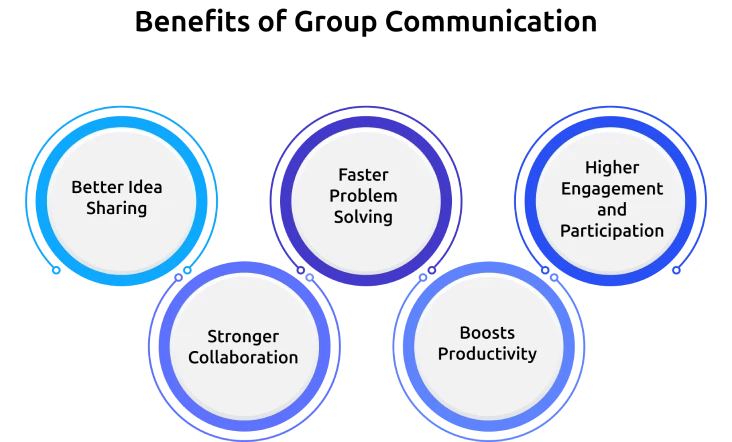
- Better Idea Sharing: Group communication allows you to exchange ideas with others in the discussion. Different viewpoints often bring new perspectives, which help the group explore possibilities and develop stronger solutions.
- Stronger Collaboration: Open communication will assist you in the coordination of tasks and keep you on track with group objectives. When information flows clearly among members, collaboration becomes smoother, and the group can work together more effectively.
- Faster Problem Solving: Group discussions allow you to examine challenges collectively. When ideas and suggestions come from multiple members, the group can identify solutions more quickly and move forward with confidence.
- Boosts Productivity: Strong group communication helps increase productivity because everyone stays informed and aligned on priorities. Clear discussions reduce confusion, minimize repeated explanations, and allow the group to focus more on progress and results.
- Higher Engagement and Participation: When your team members feel heard, they participate more actively and take greater ownership of their work. Open communication encourages everyone to contribute, which builds a stronger and more connected team.

Run HR in One Place
Time, attendance, leaves, and payroll-ready reports unified.
Explore HR Management →