What Is an Agile Epic?
An agile epic is a large body of work organized around a single objective that is too big to complete in one sprint. It is broken down into smaller user stories that can be planned, prioritized, and delivered incrementally over multiple sprints.
An agile epic bridges the gap between a high-level business goal and the user stories a team delivers, because epics are too large to complete in a single sprint, they are divided into smaller stories that can be prioritized and delivered over time. This helps teams manage complex initiatives, track progress more effectively, and deliver value incrementally while working toward a larger objective.
Where Do Epics Sit in the Agile Hierarchy?
Epics sit in the middle of the Agile hierarchy, connecting high-level business objectives to the day-to-day work teams complete. They are larger than user stories but smaller and more focused than themes or initiatives.
The Agile hierarchy typically comprises five levels, with each level adding more detail and moving closer to execution.
| Level | What It Is | Rough Timeframe |
|---|---|---|
| Theme | A broad, long-term strategic focus that multiple initiatives or epics support. | Ongoing or 1+ year |
| Initiative | A collection of related epics that work toward a larger business goal. | Several quarters |
| Epic | A large body of work with a single objective that is broken into user stories. | 1–3 months |
| User Story | A specific piece of value described from the user's perspective. | One sprint or less |
| Task | A concrete action required to complete a user story. | Hours to a few days |
You can view this hierarchy from the top down or the bottom up. Some organizations begin with strategic themes and break them into initiatives, epics, and stories. Others identify related stories first, then group them into an epic. Either approach works, because the purpose of the hierarchy is not to create an extra process but to ensure that everyday work remains connected to broader business goals.
Epic vs User Story vs Feature: What Is the Difference?
The easiest way to distinguish an epic, feature, and user story is by their scope and timeline, because these terms are often used interchangeably, confusion can quickly lead to a disorganized backlog. Understanding how they relate helps teams plan work at the right level of detail.
| Epic | Feature | User Story | |
|---|---|---|---|
| Scope | Largest, strategic body of work. | Medium, user-facing capability. | Smallest, specific user needs. |
| Timeline | Multiple sprints, typically 1–3 months. | One to a few sprints. | One sprint or less. |
| Written As | A high-level objective or outcome. | A described capability or function. | "As a [user], I want [x] so that [y]." |
| Owned By | Product owner, product manager, or team lead. | Product owner working with the team. | Delivery team. |
A simple rule of thumb: if the work cannot reasonably be completed within a sprint, it is probably not a user story. If it requires multiple stories and several sprints to deliver an outcome, it is likely an epic.
Examples of Agile Epics
The best way to understand an agile epic is to see how it breaks down into smaller stories. Whether you're building software or running a marketing campaign, the structure stays the same: one objective supported by multiple stories.
Software Example
Epic: Redesign mobile onboarding
Stories:
- As a new user, I want a simpler sign-up process so that I can create an account in under a minute.
- As a new user, I want a short product tour so that I can understand how the app works.
- As a returning user, I want one-tap login so that I can access my account quickly.
Marketing Example
Epic: Launch the Q3 product campaign
Stories:
- Create and publish the campaign landing page.
- Produce short demo videos for social media.
- Build the launch email sequence.
- Equip the sales team with updated messaging.
An epic remains the same: a large objective that is broken into smaller, manageable pieces that can be delivered over time.
How to Write a Good Agile Epic?
A good agile epic defines a clear objective without prescribing every detail. It provides direction while allowing user stories to evolve as the team learns more.

1. Focus on the Outcome, Not the Output
Write what you want to achieve, not what you want to build. For example, “Reduce new-hire ramp time” is stronger than “Build an onboarding portal.”
2. Write a Clear One-Line Goal
Keep it simple enough that any stakeholder can repeat it. If it needs more than one sentence, it is probably too large and may be closer to an initiative.
3. Define a Success Measure
Clarify how you will know the epic is successful. This could be a metric, KPI, or observable outcome.
4. Capture Initial User Stories
List the obvious stories you already know. You do not need everything upfront, new stories will emerge as work progresses.
5. Set a Rough Boundary
Define when the epic should be considered complete or when it should be split. This prevents it from expanding indefinitely.
What Mistakes Do Teams Make with Epics?
Most epic-related problems come from two extremes:
- The epic is either too vague to be useful
- Too large to ever finish.
Both make it hard for teams to deliver real value.
1. Treating an Epic as a Giant To-Do List
An epic without a clear outcome becomes a dumping ground for unrelated work instead of a focused initiative.
2. Letting It Run Forever
Without clear boundaries, an epic keeps absorbing new work and never gets formally completed or split.
3. Writing User Stories That Are Actually Tasks
Items like “add a button” are not user stories because they do not deliver standalone user value.
4. Ignoring Team Capacity
Even a well-defined epic will stall if there is no realistic capacity allocated to complete the work.
5. Confusing Activity with Progress
Movement on a board does not always mean the epic is closer to completion or delivering value.
6. Overlooking Cross-Team Dependencies
Many epics depend on other teams, and delays in handoffs can slow or block progress.
Related Blogs
Organization meaning explained: the clear definition, key types, characteristics, and real examples of an organization, plus how structure drives success.
Jahnavi Pulluri | Apr 03, 2024
Discover the key differences between training and development in enhancing skills and fostering long-term growth within an organization.
Sai Keerthi Uppala | Apr 29, 2024
Learn how core values guide decisions, shape identity, and influence behavior in both personal and organizational settings.
Jahnavi Pulluri | Apr 27, 2024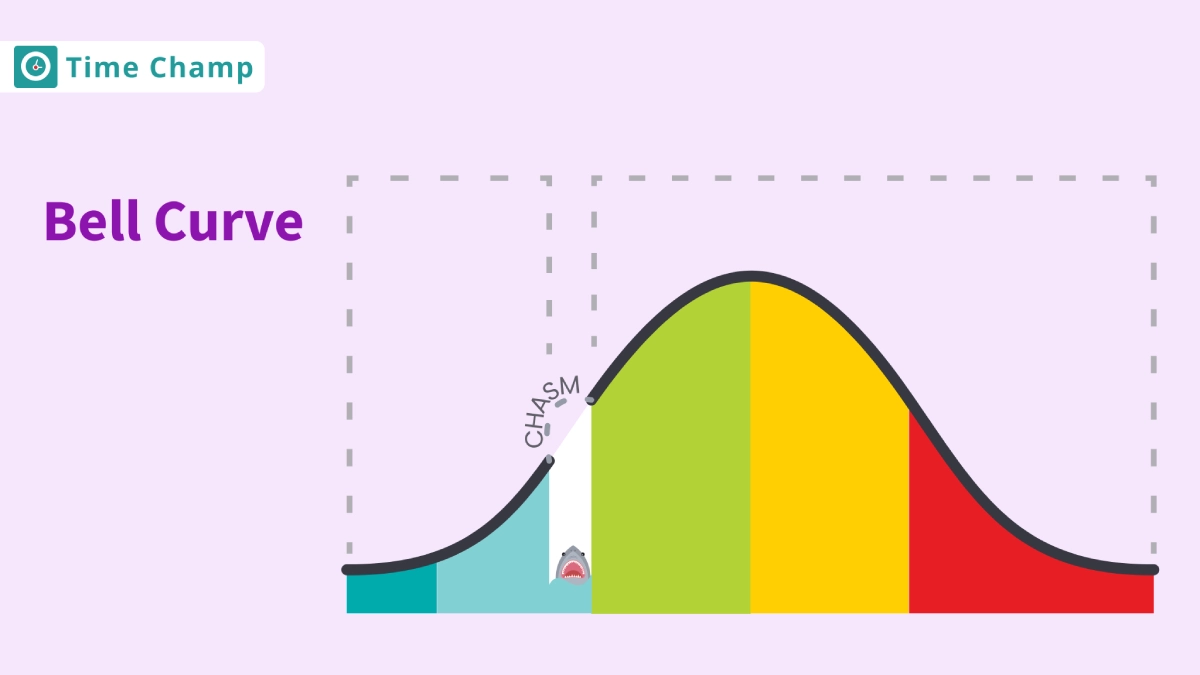
The Bell curve, which is also known as the ‘forced ranking’ is a performance appraisal technique that seeks to evaluate y employees’ performance levels.
Jahnavi Pulluri | Feb 05, 2024
Corporate communication is a process of establishing organisational communication and between the organisation and its various stakeholders.
Vijaya Lakshmi | Apr 27, 2024
The Bradford Formula, commonly referred to as the Bradford Factor, is an application in human resource management that helps to quantify and analyze the
Mounika Sai | Feb 08, 2024
Run Projects With Less Chaos
Track tasks, timelines, and team capacity in one place.
Explore Project Management →