Order Management Outsourcing: How to Choose the Right Partner
Learn what order management outsourcing is, its benefits and risks, and how to choose the right partner to improve efficiency and scale your operations.
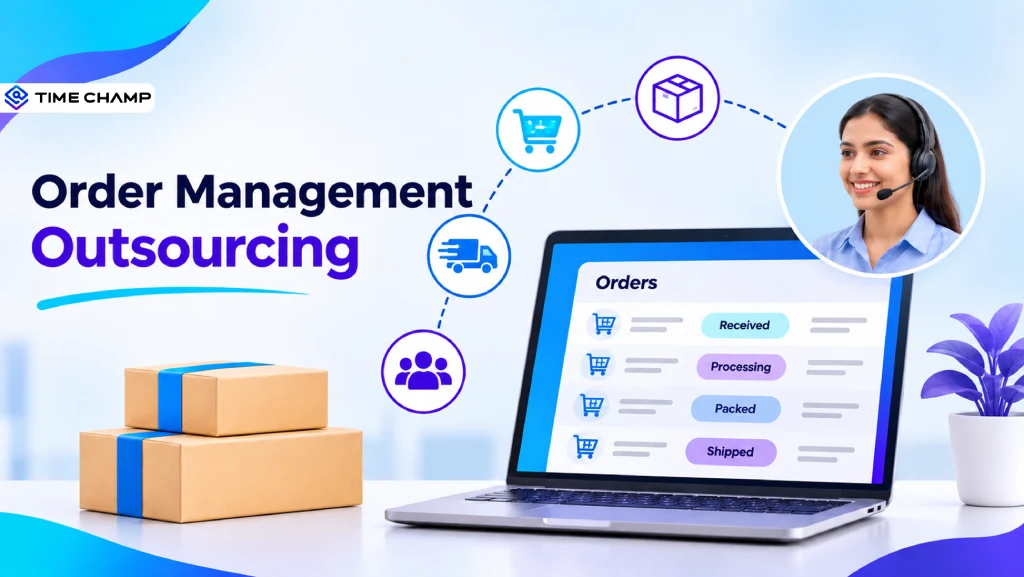
Managing orders across multiple channels can become complex, leading to delays, errors, missed updates, and rising operational costs. Order management outsourcing allows businesses to delegate these processes to specialized teams. It helps improve efficiency while keeping internal teams focused on core business priorities.
Choosing the right outsourcing partner is essential to ensure a smooth fit with business workflows, technology, and growth goals. This guide covers the key benefits, risks, outsourcing models, AI solutions, and factors to consider when choosing a partner.
What Is Order Management Outsourcing?
Order management outsourcing is the practice of hiring a third-party provider to handle order-related processes on behalf of a business. These processes can include order entry, processing, inventory coordination, shipping updates, returns, and customer communication. It helps businesses simplify operations, reduce workload, and improve order accuracy.
It can cover the entire order lifecycle, from receiving an order to delivery and post-order support. Businesses can outsource part or all of these activities based on their operational needs and resources.

Did You Know?
A Forrester Consulting study commissioned by Amazon found that 71% of respondents reported significant or transformational improvement in reducing order issues after outsourcing fulfillment capabilities to a 3PL.
What an Outsourced Order Management Team Handles
An outsourced order management team can handle various tasks across the order lifecycle, from receiving orders to resolving post-order issues. The exact responsibilities depend on the business and the scope of outsourcing.
- Order Processing: Receives, verifies, and processes customer orders accurately.
- Order Entry & Updates: Enters order details into the required systems and manages changes or cancellations.
- Inventory Coordination: Checks product availability and coordinates with inventory teams to prevent fulfillment delays.
- Shipping Coordination: Works with warehouses and logistics providers to coordinate shipments and provide delivery updates.
- Returns & Exchanges: Processes return requests, exchanges, refunds, and related documentation.
- Customer Support: Responds to order-related questions, delivery issues, and other customer concerns.
- Order Tracking & Reporting: Provides updates on order status and prepares reports on order volumes, delays, errors, and fulfillment performance.
Looking for a simpler way to manage outsourced order operations?
Use Time Champ to gain real-time visibility into team activity, work hours, and productivity across your outsourced operations.
Benefits of Order Management Outsourcing
Outsourcing order management can help businesses simplify day-to-day operations while improving accuracy, efficiency, and customer service.
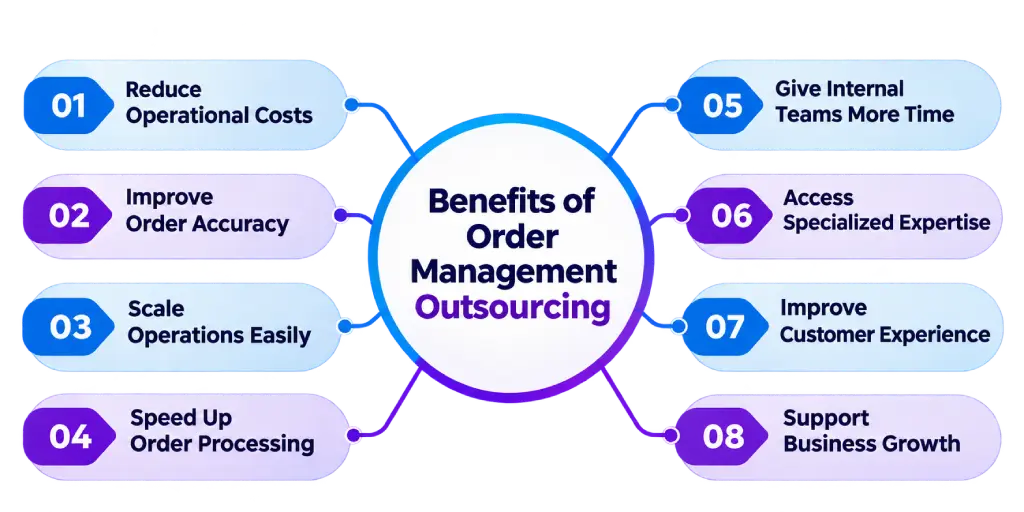
1. Reduce Operational Costs
Businesses can reduce the costs of hiring, training, and maintaining an in-house order management team. Outsourcing also provides access to specialized resources without the expense of building an entire team internally.
2. Improve Order Accuracy
Specialized teams follow established processes to verify order details, reduce data-entry errors, and ensure orders are processed correctly. This helps minimize costly mistakes and avoid unnecessary order corrections.
3. Scale Operations Easily
Outsourcing makes it easier to handle increases in order volume during seasonal peaks, promotions, or business expansion without significantly increasing internal resources. Businesses can adjust support based on changing order volumes and operational demands.
4. Speed Up Order Processing
Dedicated teams can manage orders efficiently and keep processes moving from order placement through fulfillment. Faster processing can help businesses reduce turnaround times and keep customers informed.
5. Give Internal Teams More Time
When routine order management tasks are handled externally, internal employees can spend more time on strategic activities such as sales, product development, and customer relationships. This allows teams to focus their time and resources on activities that directly support business growth.
6. Access Specialized Expertise
Outsourcing providers bring trained professionals and established processes for handling different order management activities. Businesses can also benefit from proven workflows and industry knowledge without developing these capabilities from scratch.
7. Improve Customer Experience
Faster processing, accurate order information, timely delivery updates, and responsive support can create a smoother experience for customers. Consistent order handling can also help build customer trust and encourage repeat business.
8. Support Business Growth
With operational support in place, businesses can expand into new markets, handle higher order volumes, and support growth without putting excessive pressure on internal teams. This provides greater flexibility as order volumes and business requirements change.
Did You Know?
The global purchase order management segment generated a revenue of USD 4,457.9 million in 2025 and is expected to reach USD 8,856.7 million by 2033.
Potential Risks of Order Management Outsourcing
While outsourcing can simplify order management, businesses should also understand the potential challenges before choosing a provider. Identifying these risks early can help businesses set clear expectations and put the right safeguards in place.
1. Loss of Direct Control
Businesses may have less direct control over day-to-day order management activities when an external team handles them. Clear processes, responsibilities, and reporting requirements can help maintain visibility.
2. Data Security Concerns
Outsourced teams may need access to customer, order, payment, or business information. Businesses should evaluate a provider’s security practices, access controls, and data protection measures before sharing sensitive information.
3. Communication Challenges
Working with an external team can sometimes create communication gaps, especially across different locations or time zones. Defined communication channels, response times, and escalation procedures can help keep teams aligned.
4. Service Quality Issues
The quality of order management can vary depending on the provider’s processes, expertise, and staffing. Businesses should establish clear service-level expectations and regularly review performance.
5. Hidden or Unexpected Costs
An outsourcing agreement may include additional charges for services, higher order volumes, or special requirements. Businesses should review pricing structures carefully and clarify all potential costs before signing a contract.
6. Integration Difficulties
Connecting an outsourced team with existing order management, inventory, CRM, or ERP systems can create technical challenges. Businesses should confirm system compatibility and integration requirements before implementation.
Worried about losing visibility over outsourced operations?
Use Time Champ to gain real-time workforce visibility and keep teams aligned. Try now!
Onshore, Nearshore, or Offshore: Picking the Right Model
Businesses can choose between onshore, nearshore, and offshore outsourcing based on their budget, location requirements, communication needs, and operational priorities. Each model offers a different balance of cost, proximity, and access to talent.
1. Onshore Outsourcing
Onshore outsourcing means working with a provider located in the same country as the business. It can make communication, collaboration, and alignment with local business practices easier.
Best suited for: Businesses that prioritize close collaboration, shared business hours, and local market knowledge.
2. Nearshore Outsourcing
Nearshore outsourcing involves working with a provider in a nearby country or region. It can offer access to a wider talent pool while maintaining relatively similar time zones and working hours.
Best Suited For: Businesses looking for a balance between operational proximity and cost efficiency.
3. Offshore Outsourcing
Offshore outsourcing involves working with a provider in a distant country or region. This model can provide access to larger talent pools and potentially lower operating costs.
Best Suited For: Businesses that need scalable support, extended working hours coverage, or access to specialized talent.
How to Choose an Order Management Outsourcing Partner
Choosing the right outsourcing partner can directly affect order accuracy, processing speed, customer experience, and operational efficiency. Businesses should evaluate providers based on their capabilities, technology, security practices, and ability to support long-term requirements.
1. Evaluate Industry Experience
Look for a provider with experience handling order management processes similar to the business’s requirements. Relevant industry knowledge can help the outsourced team understand workflows, customer expectations, and common operational challenges.
2. Check Technology and Integrations
The provider should be able to work with the business’s existing ERP, CRM, order management, inventory, and other systems. Strong integration capabilities can reduce manual work and help keep order information consistent across platforms.
3. Review Data Security Practices
Order management may involve sensitive customer and business information. Businesses should review the provider’s security controls, access management, data handling practices, and relevant compliance requirements before sharing data.
4. Assess Scalability
The provider should be able to support changing order volumes as the business grows or experiences seasonal demand. Businesses should understand how easily the provider can increase staffing and operational capacity when required.
5. Compare Service Levels and Pricing
Businesses should clearly understand what services are included, how performance will be measured, and what the pricing structure covers. Service-level agreements (SLAs) should define expectations for accuracy, response times, turnaround times, and issue resolution.
6. Test Communication and Support
Effective communication is important when working with an external team. Businesses should evaluate communication channels, reporting processes, working-hour coverage, and escalation procedures before entering into a long-term agreement.
7. Ask About Reporting and Visibility
A good provider should offer regular reporting on order volumes, processing times, errors, delays, and other relevant metrics. These insights help businesses identify issues and understand how the outsourced operation is performing.
8. Test the Partnership Before Committing
A small-scale engagement can help businesses evaluate the provider’s processes, service quality, communication, and ability to meet their requirements. It also gives both sides an opportunity to identify and resolve potential issues before expanding the engagement.
Struggling to maintain control over outsourced order operations?
Use Time Champ to gain workforce visibility, measure productivity, and manage teams efficiently.
How AI-Powered Order Management Outsourcing Changes the Work
AI is changing how outsourced order management teams handle routine tasks, analyze order data, and respond to customer needs. Instead of relying entirely on manual processes, businesses can combine AI with human expertise to make order management faster and more efficient.
1. Automates Repetitive Tasks
AI can automate routine activities such as order entry, data validation, status updates, and information extraction. This reduces manual effort and allows teams to focus on more complex tasks.
2. Improves Order Accuracy
AI can identify missing information, duplicate entries, and inconsistencies in order data before they create fulfillment issues. This helps outsourced teams process orders with fewer errors.
3. Speeds Up Order Processing
AI-powered workflows can process and route orders quickly based on predefined rules and business requirements. This can help reduce delays and improve turnaround times.
4. Provides Faster Customer Support
AI-powered chatbots and virtual assistants can handle common order-related questions, such as delivery status, order updates, and return requests. Complex issues can then be passed to human agents for resolution.
5. Identifies Potential Issues Earlier
AI can analyze order patterns and identify unusual activity, recurring delays, or potential fulfillment problems. Outsourced teams can use these insights to address issues before they affect more orders.
6. Supports Better Decision-Making
AI can turn large volumes of order data into useful insights about demand, processing times, errors, and operational performance. Businesses can use these insights to improve workflows and plan resources more effectively.
7. Enables More Scalable Operations
AI can handle higher volumes of routine work without requiring a proportional increase in manual effort. This allows outsourced teams to support business growth while maintaining consistent processes.
How Time Champ Helps Manage Outsourced Order Management Teams
Managing an outsourced order management operation requires visibility into how teams spend their working hours and how efficiently work is being handled. Time Champ helps businesses gain better visibility into employee activity, attendance, productivity, and work hours across teams and locations.
Key features of Time Champ include:
- Automatic Time Tracking: Capture working hours automatically and reduce the need for manual time entries.
- Productivity Analytics: Understand productivity patterns and see how your team spends its working time.
- Employee Activity Tracking: Gain visibility into day-to-day employee activities and identify areas that need attention.
- Attendance Management: Manage attendance, work schedules, and employee availability across distributed teams.
- Timesheets: Simplify timesheet management and maintain accurate records of employee work hours.
- Reports & Analytics: Use detailed reports to identify productivity trends, workload patterns, and operational gaps.
Ready to choose the right outsourcing partner?
Use Time Champ to gain clear workforce visibility and manage outsourced teams more efficiently. Start your free trial now!
Conclusion
Order management outsourcing can help you reduce operational workload, improve order accuracy, scale more easily, and give your internal teams more time for strategic work. However, the right outsourcing model and partner are essential to maintain service quality, security, and operational visibility.
With the right processes, technology, and workforce visibility in place, Time Champ, helps you manage outsourced teams with better workforce visibility. Start your free trial today!
Table of Content
 What Is Order Management Outsourcing?
- What an Outsourced Order Management Team Handles
- Benefits of Order Management Outsourcing
- Potential Risks of Order Management Outsourcing
- Onshore, Nearshore, or Offshore: Picking the Right Model
- How to Choose an Order Management Outsourcing Partner
- How AI-Powered Order Management Outsourcing Changes the Work
- How Time Champ Helps Manage Outsourced Order Management Teams
- Conclusion
Related Blogs

Discover the 12 benefits of outsourcing, including cost savings, access to global talent, and practical tips for managing outsourced teams effectively.
Guna Lakshmi | Jul 10, 2026
Work piling up faster than your inbox messages? Explore 20 types of outsourcing to help your business stay productive without the chaos.
Guna Lakshmi | Jul 15, 2026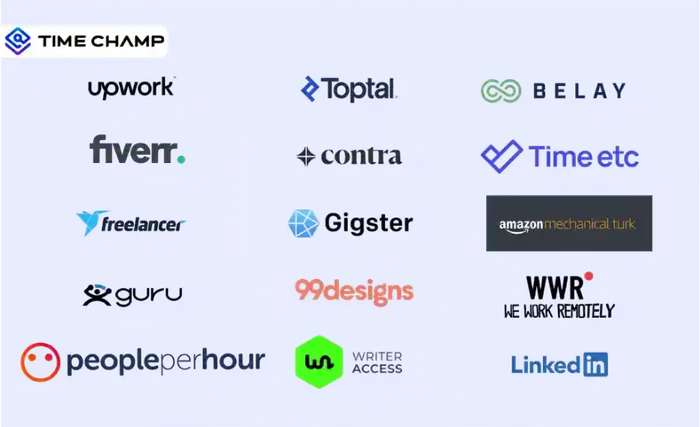
Compare the best online outsourcing websites for 2026, including real fees, hiring tips, platform features, and proven ways to manage freelancers easily.
Jahnavi Pulluri | Aug 13, 2026
Learn about the top 10 outsourcing risks and how to manage them effectively, protecting your business from potential challenges and disruptions
Shabana Shaik | Nov 27, 2023
Strategic outsourcing involves delegating specific tasks to external experts for efficiency. Explore its types, advantages, and how it optimizes operations.
Tarun Kumar Reddy | Nov 24, 2023
In-house vs outsourcing explained with key differences, pros, cons, costs, and practical tips to help you choose the best approach for your organization.
Anjali | Jul 02, 2026


 4.7/5 avg.
Ready to Manage Your Workforce Smarter?
Join our family of 1500+ companies using smart insights to redefine workforces!

Free Trial
No Credit Card Required