Managing Remote Call Center Agents: A Complete Guide
Managing remote call center agents brings new coaching and tracking challenges. Get practical strategies, key metrics, and signs of early disengagement.
A remote call center may stay busy while remaining difficult to manage. Without effective systems, you cannot easily identify performance drivers or support needs. Managing remote call center agents requires clear communication, consistent tracking, structured coaching, and aligned processes. With the right approach, you can maintain productivity and service quality while preserving remote work flexibility.
In this guide, you’ll understand the key challenges of remote call center management and practical ways to address them. You’ll also learn about performance metrics, coaching strategies, engagement signals, and the differences between remote and on-site management.
What Does Managing Remote Call Center Agents Involve?
Managing remote call center agents requires clear communication, performance tracking, scheduling, coaching, and employee engagement. These practices help agents meet customer service standards without direct, in-person supervision.
Key responsibilities typically include:
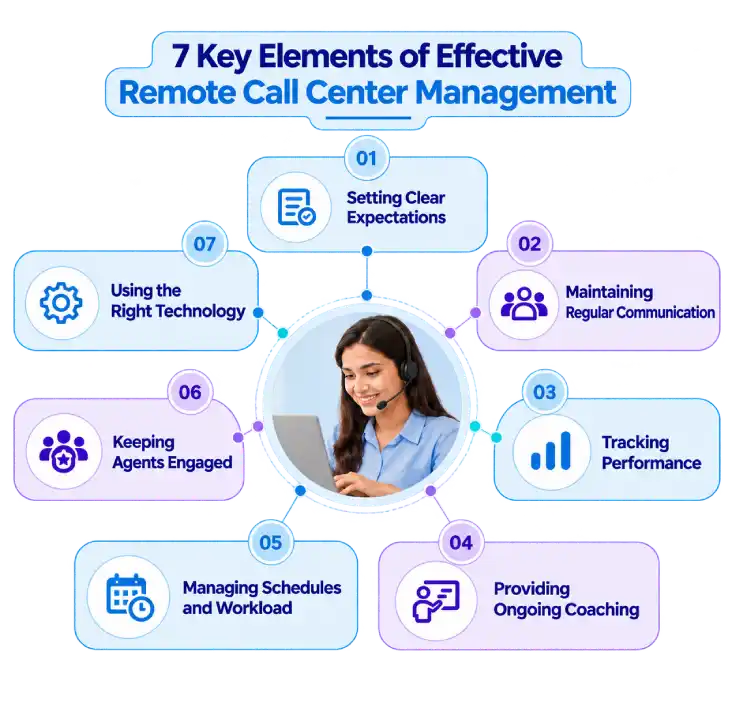
- Setting Clear Expectations: Define working hours, responsibilities, service standards, KPIs, and communication protocols so agents know what is expected of them.
- Maintaining Regular Communication: Use team meetings, one-on-one check-ins, and collaboration tools to keep agents informed, connected, and supported.
- Tracking Performance: Monitor relevant metrics such as quality scores, average handle time (AHT), first-call resolution (FCR), customer satisfaction (CSAT), and schedule adherence to identify trends and improvement areas.
- Providing Ongoing Coaching: Review performance data and real customer interactions to identify skill gaps, give actionable feedback, and follow up on improvement.
- Managing Schedules and Workload: Coordinate shifts, breaks, staffing levels, and schedule adherence to maintain adequate coverage while supporting agent needs.
- Keeping Agents Engaged: Create opportunities for recognition, collaboration, feedback, and team connection to reduce the isolation that can come with remote work.
- Using the Right Technology: Combine communication platforms, performance analytics, workforce management tools, and cloud-based contact center systems to maintain visibility across a distributed team.
Why Remote Call Center Management Is Harder Than It Looks
Managing a remote team removes many of the informal ways you could supervise agents in an office. You have to create visibility, communication, and accountability through structured processes, while also keeping agents supported and engaged.
- Limited Visibility into Daily Work: Without a shared floor, it is harder to notice productivity issues, workload gaps, or when an agent needs immediate support.
- Communication Becomes Less Immediate: Questions, feedback, team updates, and problem-solving can take longer when agents are working across different locations or time zones.
- Performance is Harder to Evaluate Consistently: You need reliable data and clear KPIs to assess agent performance when direct observation is limited.
- Coaching Loses the Benefit of In-person Interaction: You cannot easily step in, listen to live calls, or provide spontaneous guidance, making structured coaching more important.
- Engagement and Isolation can Become Bigger Concerns: Remote agents may miss the everyday interaction and recognition found in a physical workplace, increasing the risk of disengagement if you do not create regular opportunities for connection.
Remote vs On-Site Call Center Management: What Actually Changes
The core goals of call center management remain the same in both models: maintain service quality, meet performance targets, support agents, and deliver a consistent customer experience. What changes is how you create visibility, communicate with agents, provide coaching, and maintain accountability when your team is no longer working from the same physical location.
| Management Area | On-Site Call Center | Remote Call Center |
|---|---|---|
| Agent Visibility | Direct observation provides visibility into agent activity, team dynamics, and workplace behavior. | Digital systems, activity data, and performance signals provide visibility into agent activity and engagement. |
| Communication | Quick questions and updates can be handled through face-to-face conversations. | Messaging, video meetings, collaboration platforms, and defined escalation channels support consistent communication. |
| Performance Monitoring | Performance data can be combined with direct observation from the call center floor. | Reliable digital performance data and analytics help you identify trends and performance gaps. |
| Coaching | Immediate guidance can be provided through floor walks, side-by-side support, or live call review. | Video sessions, call reviews, digital feedback, and remote monitoring tools support effective coaching. |
| Accountability | Physical presence provides visibility into attendance, availability, and work activity. | Clear expectations, schedule tracking, and performance systems help you maintain accountability. |
| Team Collaboration | Agents can quickly approach supervisors or colleagues for help and information sharing. | Structured communication channels and virtual collaboration practices help you prevent information gaps. |
| Employee Engagement | Daily face-to-face interaction creates regular opportunities for connection and recognition. | Deliberate check-ins, virtual team interactions, recognition, and regular feedback help you maintain engagement. |
| Scheduling & Adherence | Visual observation helps you confirm whether agents are present and available. | Workforce management systems and digital status data help you monitor schedules and adherence. |
| Technical Support | IT teams or supervisors can often address equipment and connectivity issues in person. | Accessible digital support and reliable troubleshooting processes help you resolve technical problems quickly. |
| Management Approach | Physical presence, direct observation, and performance data work together to support management. | Technology, structured processes, measurable outcomes, and intentional communication play a more central role in management. |
Struggling to manage remote call center agents without on-site visibility?
Time Champ helps you track activity, attendance, productivity, and performance in one place.
How to Coach Remote Agents Without Shoulder-Surfing
Remote agents do not need your constant watching of their screens to improve performance. Effective coaching focuses on actual customer interactions, measurable performance data, and regular feedback, giving you enough visibility to address gaps without intrusive supervision.
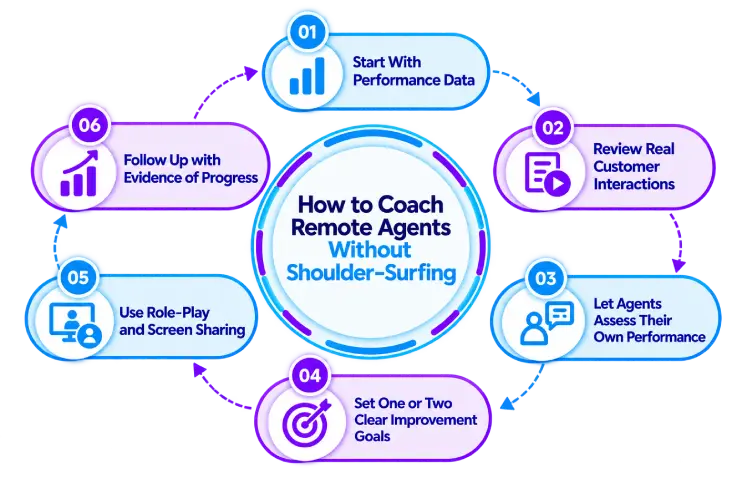
1. Start With Performance Data
Use relevant KPIs, QA scores, customer feedback, and interaction trends to identify specific coaching opportunities. This gives you an objective starting point and keeps conversations focused on measurable behaviors.
2. Review Real Customer Interactions
Select representative call recordings or other customer interactions and review them with the agent. Focus on specific moments involving tone, communication, problem-solving, or process adherence without making general observations.
3. Let Agents Assess Their Own Performance
Ask agents what they think went well and where they could have handled an interaction differently. Self-assessment encourages ownership and can reveal performance issues before you provide your own feedback.
4. Set One or Two Clear Improvement Goals
Avoid overwhelming agents with a long list of corrections. Choose one or two behaviors to improve, define what success looks like, and connect the goal to a relevant performance metric.
5. Use Role-Play and Screen Sharing
Recreate challenging customer scenarios through role-play and use screen sharing when an agent needs help with a CRM workflow or process. This gives remote agents practical guidance without requiring constant observation of their work.
6. Follow Up with Evidence of Progress
Schedule short, regular follow-ups and compare new interaction data with the original coaching goal. Tracking whether the targeted behavior shows improvement turns coaching into an ongoing development process instead of a one-time feedback session.
How to Spot a Disengaging Remote Agent Before They Resign
Disengagement rarely appears as a sudden drop in performance. Remote agents may continue meeting basic targets while gradually withdrawing from team interactions, taking less initiative, or showing changes in work patterns. Look for consistent changes over time without just treating a single behavior as proof of disengagement.
- Reduced Participation: The agent contributes less during team meetings, coaching sessions, or discussions where they were previously active.
- Lower Initiative: They stop volunteering for tasks, sharing ideas, asking questions, or taking ownership beyond their basic responsibilities.
- Declining Performance or Quality: A sustained drop in productivity, call quality, customer satisfaction, or other established KPIs may indicate a deeper engagement issue.
- Increased Absenteeism or Schedule Changes: More unplanned absences, late logins, or unexpected availability changes can signal growing dissatisfaction or withdrawal.
- Withdrawal from Team Communication: Messages become shorter or less frequent, and the agent increasingly skips optional conversations, team activities, or informal interactions.
- More Negativity or Complaints: Increasing frustration about workload, processes, management, or lack of support can signal that an agent is becoming disconnected from the organization.
Best Practices for Managing Remote Call Center Agents
Managing remote agents effectively requires a clear operating structure that gives agents the support, visibility, and flexibility they need while giving you enough insight to maintain service quality and performance. This section outlines six best practices for managing remote call center agents effectively.
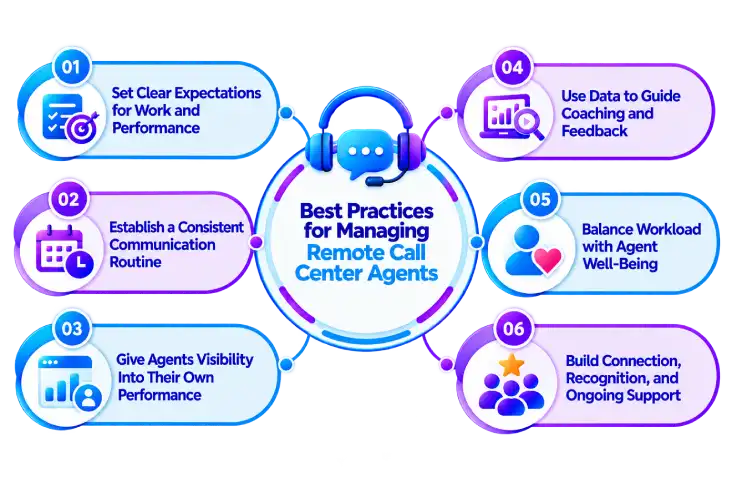
1. Set Clear Expectations for Work and Performance
Define working hours, response times, KPIs, quality standards, communication norms, and escalation procedures upfront so agents know exactly what good performance looks like.
2. Establish a Consistent Communication Routine
Use a predictable rhythm of shift huddles, one-on-one check-ins, team meetings, and feedback sessions to keep agents connected without filling their calendars with unnecessary meetings.
3. Give Agents Visibility Into Their Own Performance
Provide access to relevant performance data such as AHT, CSAT, FCR, quality scores, and schedule adherence so agents can see where they stand and take greater ownership of their results.
4. Use Data to Guide Coaching and Feedback
Review call recordings, QA results, customer feedback, and performance trends to identify specific improvement areas, then provide short, actionable coaching with clear follow-up goals.
5. Balance Workload with Agent Well-Being
Monitor workload, schedules, breaks, and demand patterns to prevent consistently uneven workloads and give agents enough recovery time during their shifts. Effective workforce management should account for both operational coverage and agent needs.
6. Build Connection, Recognition, and Ongoing Support
Recognize strong performance, encourage peer collaboration, provide accessible technical support, and create regular opportunities for agents to connect with you and their teammates to reduce isolation and strengthen engagement.
How Time Champ Supports Remote Call Center Management
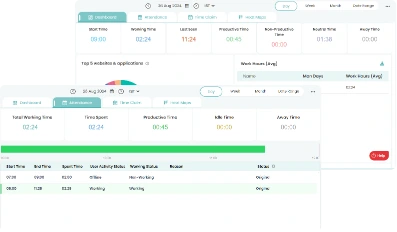
Managing remote agents makes it hard to track work, breaks, productivity, and performance without constant check-ins. You need clear visibility into agent activity and call performance without intrusive supervision. Time Champ is a smart employee monitoring software with call center monitoring features to track agent activity, calls, attendance, productivity, and workload. It turns work data into actionable insights, helping you make better decisions and coach agents effectively.
Here are the key features of Time Champ that help you manage remote call center agents more effectively:
- Real-time Agent Visibility: Tracks agent activity, work patterns, applications, tasks, and live status, helping you identify productivity gaps and provide timely support.
- Call Activity and Audio Insights: Captures call activity, recordings, and talk-time data, helping you evaluate customer interactions and improve performance reviews.
- Automated Time and Attendance Tracking: Records work hours, clock-ins, breaks, idle periods, late logins, and absences, helping you maintain accurate attendance records and workforce oversight.
- Productivity and Workload Insights: Identifies productivity trends, idle time, overworked or underworked agents, and workload patterns, helping you distribute tasks more effectively.
- Performance Reports and Coaching Insights: Provides performance reports, productivity trends, and performance gap data, helping you deliver targeted coaching and track improvement over time.
- Real-time Alerts and Shift Management: Sends alerts for late logins, idle time, productivity drops, and shift issues while helping you manage schedules from a centralized system.
Struggling to monitor remote agents and maintain productivity?
Time Champ provides real-time insights to improve visibility and performance.
Conclusion
Managing remote call center agents effectively requires a balance of visibility, accountability, communication, and support. Clear expectations, consistent coaching, meaningful performance metrics, and proactive engagement help you maintain service quality while keeping agents connected and motivated. The right technology can strengthen these practices by giving you actionable insights without relying on intrusive supervision. Combining structured processes with a people-focused approach can help you build a remote call center that delivers consistent performance, supports agent development, and creates a better experience for both employees and customers.

Anjali

Table of Content
 What Does Managing Remote Call Center Agents Involve?
- Why Remote Call Center Management Is Harder Than It Looks
- Remote vs On-Site Call Center Management: What Actually Changes
- How to Coach Remote Agents Without Shoulder-Surfing
- How to Spot a Disengaging Remote Agent Before They Resign
- Best Practices for Managing Remote Call Center Agents
- How Time Champ Supports Remote Call Center Management
- Conclusion
Related Blogs
Discover the ultimate guide to call centre workforce management. Learn key functions, pros, cons, optimisation tips, and how real-time WFM boosts ROI.
Thasleem Shaik | Oct 01, 2025
Discover how remote team communication and accountability improve with time tracking, helping teams build trust, visibility, and better work habits.
Anjali | May 19, 2026
Learn simple ways to measure and boost call center productivity, helping your team work more efficiently and improve customer service.
Jahnavi Pulluri | Jan 10, 2025
Discover the 10 best call centre quality assurance software for 2025. Compare features, pricing, pros, and cons to boost service quality and performance.
Thasleem Shaik | Nov 07, 2025
Explore employee performance monitoring types, effective methods, common mistakes, and practical ways to improve overall team performance for modern workplaces.
Anjali | May 08, 2026
Remote workforce management, also called virtual workforce management, helps teams stay engaged. Explore its definition, benefits, challenges & tools.
Thasleem Shaik | Sep 16, 2025


 4.7/5 avg.
Ready to Manage Your Workforce Smarter?
Join our family of 1500+ companies using smart insights to redefine workforces!

Free Trial
No Credit Card Required