Time Champ > Blog > What is Location Analytics? Use Cases, Pros & Cons (2026) > Content
What is Location Analytics? Use Cases, Pros & Cons (2026)
Learn what location analytics is, why it matters, common use cases, key benefits, implementation challenges & how it differs from location intelligence.
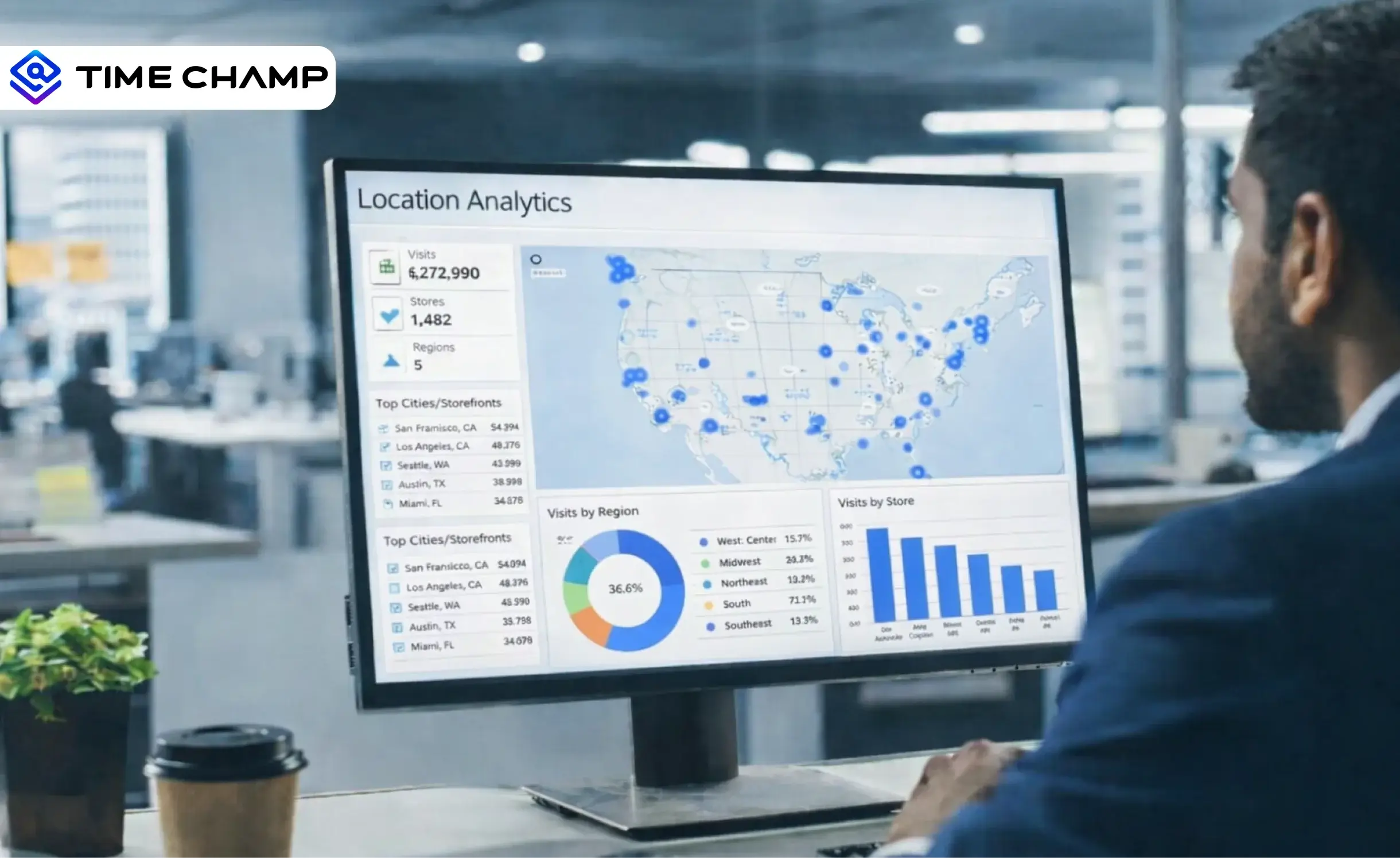
What would happen in case your workforce is already generating location insights, without you realizing it? A recent study shows that over 90% of adults in the U.S. utilize smartphones that provide location information. The location signals are continuously generated during every visit, check-in, and field activity. When the organizations analyze this data accurately, it becomes a strong foundation for workforce and employee location analytics. It also provides you with a clear view into where, when, and how employees actually complete the work.
In this blog, you will learn what location analytics is and how it best applies to workforce location analytics. You'll also learn the main advantages, practical applications, challenges, and the differences between location analytics and intelligence.
What is Location Analytics?
Location analytics is the practice of collecting and analyzing location-based data to understand where work happens and how efficiently it is performed. It helps you monitor employee presence, movement, and location-based productivity to support accurate workforce planning and operational decisions.
The primary purpose of location analytics is to provide complete visibility into how the work actually happens across various locations. It helps you understand where the employees spend their time, deliver tasks in specific locations, and which locations support effective performance. These insights help you to manage the field, hybrid, and multi-location staff effectively without relying on assumptions.
Location analytics also support the daily decision-making process and smarter workforce planning. You can easily identify any location-based problems, reduce unnecessary travel, align your staff according to actual demands, and improve attendance accuracy. You can always stay informed, enhance accountability, and build an efficient workforce which performs consistently across all the locations, using location data in the right way.
Why is Location Analytics Important?
As work becomes increasingly distributed, you need complete visibility into where work happens and how work is delivered. Managing the multi-site operations, hybrid, and field teams without accurate information often leads to work delays, creates blind spots, and assumptions. Location analytics will help you eliminate this gap, ensuring that location signals transform into practical workforce insights that support accuracy, control, and smarter decisions.
Here’s why location analytics is important to workforce and employee management:
- Improves Workforce Productivity: Location analytics helps you compare productivity across various work sites and identify where workforce performance boosts or declines. You can take immediate actions and enhance outcomes without relying on assumptions, using location data analytics.
- Enhances Attendance Accuracy and Accountability: Workforce analytics compares the check-in and work hours of employees with actual work hours, minimizing attendance disputes and time mismatches. This increases accountability and helps you to manage the workforce without continuous monitoring.
- Supports Smarter Workforce Planning: Location analytics for business shows the high-demand areas and where teams remain underutilised. This helps you schedule the staffing levels effectively and align the workforce availability with operational needs.
- Reduces Operational Inefficiencies and Travel Time: Mobile location analytics highlights the idle time, unwanted travel, and inefficient movements across the sites. You can redesign the routes and timelines to lower costs and ensure that employee focuses more on productive work.
- Strengthens Decision-making with Real data: Location analytics and business intelligence combine to eliminate the guesswork by providing quantifiable insights. Reports and dashboards uncover performance gaps and productivity trends across the locations, enabling confident and accurate decision-making.
- Creates Consistency across Multi-location Operations: Location analytics tools help you to regulate and measure the workforce performance across various job sites, regions, and branches. You can easily gain clear visibility of the operations, making it easier to maintain effective productivity everywhere.
What are the Common Use Cases of Location Analytics?

Location analytics use cases primarily focus on operational control, workforce visibility, and productivity. You can gain practical insights to improve daily execution and long-term planning. This happens when you effectively apply the location data to employee work patterns and movements.
Workforce Attendance & Location-Based Time Tracking
Location analytics helps you assess employee attendance by verifying the check-ins and actual work locations. This minimizes any false clock-ins and location mismatches, providing you with accurate work hour data without the manual checks.
Field Workforce Monitoring & Performance Tracking
With workforce location analytics, you can effectively monitor the field employees, how they stay on-site and how accurately they complete their tasks. This can help you identify any productivity issues across the sites and ensure that the field teams follow the allocated timelines and routes.
Location-Based Productivity Analysis
Location analytics helps you compare the productivity levels across all the branches, job sites, and regions. Integrating performance outcomes with location data allows you to recognize high-performing areas and address underperforming sites more effectively.
Route Optimization for Mobile Employees
Mobile location analytics help you to evaluate the travel routes, idle time, and movements of mobile employees. This reduces unwanted traveling, lowers operational costs, and ensures that the employees spend more time on productive work.
Workforce Location Planning & Resource Allocation
You can clearly understand where workforce demand is high and where the resources remain underutilised using geo-analytics for location planning. This helps you to assign the employees strategically, balance workloads, and improve service coverage across locations.
Compliance & Location-Based Work Validation
Location analytics tools help you ensure that employees operate within approved locations and schedules. This is essential in project-based work and regulated roles, in which location compliance directly impacts the accountability and operational issues.
What Are the Benefits of Location Analytics?
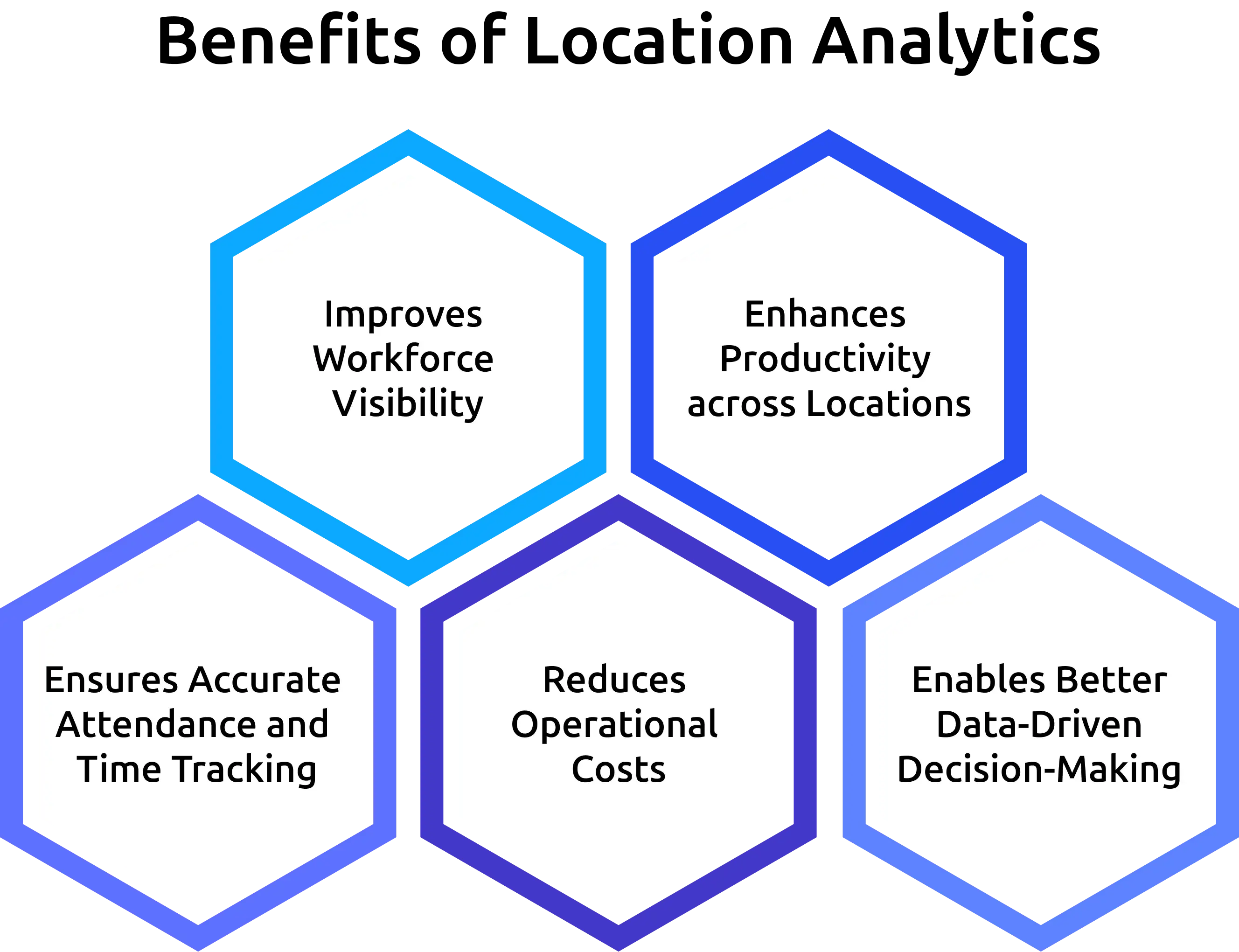
As work moves across the offices, sites, and field locations, you require more than assumptions to manage your workforce efficiently. Location analytics converts the daily location signals into clear insights which enhance overall productivity, control, and accuracy. When it is used efficiently, location data analytics becomes a practical advantage for employee and workforce management.
When it is used efficiently, location data analytics becomes a practical advantage for employee and workforce management.
Improves Workforce Visibility
Location analytics provides a historical and clear visibility into where the work happens across the locations. You can easily observe the employee movement, presence, and activity patterns, which helps you manage field, multi-location and hybrid teams with more confidence.
Enhances Productivity across Locations
You can identify the patterns impacting output across locations by applying the location analytics for business. This helps you to optimize processes, adjust workflows and improve outcomes effectively without reacting to the isolated performance problems.
Ensures Accurate Attendance and Time Tracking
Location analytics enhances the integrity of the workforce data as it is derived from time information on actual work scenarios. This eliminates the manual checks and enhances trust within the reported work hours, particularly in a distributed workforce.
Reduces Operational Costs
Location-based insights help you identify cost leakages, which are clear in standard reports. You can manage employee movement costs and coordination gaps through understanding how the location influences overlaps, delays, or underutilization.
Enables Better Data-Driven Decision-Making
Decisions heavily rely on observed patterns when the data becomes part of everyday analysis. This will help you operate effectively, address the changes, and align workforce decisions with the measurable results.
Gain Accurate Attendance Insights and Boost Productivity across All Locations.
Track workforce movement and performance with Time Champ
What are the Challenges in Implementing Location Analytics?
As location analytics provides a robust value for employee and workforce management, its implementation comes with some practical challenges. Clearly understanding these challenges helps you eliminate risks, plan more accurately, and apply the location data analytics effectively.
Managing Employee Privacy and Trust
Location analytics depends on sensitive information, making employees’ trust most critical. When you do not communicate clearly, employees may feel overly monitored and not efficiently supported at the same time. You need certain usage rules, policies, and ethical behavior so that location analytics enhances operations without influencing trust and morale.
Ensuring Location Data Accuracy
The reliability of the insights depends directly on location data analytics. GPS inconveniences, poor network issues, or outdated devices may lead to inaccurate location records. Workforce location analytics might highlight the inaccurate gaps or trends without the right information, which impacts decision-making and overall productivity.
Integrating Location Analytics with Existing Systems
Many enterprises already utilize the payroll, HR, and workforce management system. Integrating the location analytics software with these tools might look complicated and time-consuming. Data may remain fragmented, which reduces the complete value of analytics solutions without proper integration.
Managing Huge Volumes of Location Data
The workforce movements generate huge volumes of data daily. Handling, processing, and evaluating this data needs efficient tools and infrastructure. Location analytics might become more challenging when this data is not effectively managed.
Driving Adoption and Correct Usage
When the teams use location analytics efficiently, it generates great value. You may face challenges while interpreting dashboards or applying the insights effectively. The right training, clear workflows, and effective use cases can help you ensure that the analytics supports informed actions.
How Does Location Analytics Differ from Location Intelligence?
| Aspect | Location Analytics | Location Intelligence |
|---|---|---|
| Main Focus | Analyzes the location-based data to understand the behavior, patterns, and performance across locations. | Uses analyzed location data to guide strategic decisions and long-term business planning. |
| Purpose | Helps you clearly understand what is really happening and why it is really happening in certain locations. | Helps you to decide what actions need to be taken further based on the location-driven insights. |
| Scope of Use | Mostly operational and workforce-focused, such as productivity, attendance, and employee movement analysis. | More strategic, supporting expansion planning, site selection, and market decisions. |
| Data Handling | Gathers, processes and displays raw location and movement data. | Integrates the location analytics outputs with the financial, business, and external data sources. |
| Typical Users | Operations managers, HR teams, and workforce leaders handle the daily activities. | Strategy teams, senior leadership, and business planners. |
| Time Orientation | Focuses on the historical and real-time analysis of the location data. | Concentrates on the future-oriented planning and long-term results. |
| Workforce Relevance | Location analytics directly supports employee and workforce analytics use cases. | Location intelligence indirectly supports workforce decisions using broader strategic insights. |
| Outcome | Reports, dashboards, trends, and performance patterns associated with locations. | Forecasts, strategic recommendations, and location-based business decisions. |
Eliminate Location Blind Spots across Field and Multi-site Teams.
Use Time Champ to manage your workforce locations confidently.
Conclusion
Location analytics plays a major role in providing you with a clear view into how work gets done in your field teams, offices, and job sites. You can get clear insights into employee presence, movement, and productivity using the location data analytics. This helps you to improve the workforce productivity, accuracy, and operational control. From attendance evaluation to workforce location planning, location analytics for business helps to manage your distributed teams effectively and make more accurate decisions based on real-time data.
You need the right platform to put these insights into practice. This is where Time Champ workforce intelligence brings workforce location analytics, productivity insights, and time tracking together in a single solution. It helps you to monitor the work locations, identify productivity gaps, and enhance attendance accuracy while maintaining complete transparency and trust. You can easily transform location analytics into accurate workforce outcomes and build a more accountable, efficient, and high-performing enterprise with Time Champ.

Anjali

Table of Content
-
 What is Location Analytics?
-
Why is Location Analytics Important?
-
What are the Common Use Cases of Location Analytics?
-
What Are the Benefits of Location Analytics?
-
What are the Challenges in Implementing Location Analytics?
-
How Does Location Analytics Differ from Location Intelligence?
-
Conclusion
Related Blogs
Unlock how location intelligence transforms employee tracking, hybrid work management, and field team visibility with smart data-driven tools like Time Champ.
Chethana | July 24 2025
Take your team management to the next level by learning how to track employee attendance using smart tools and tactics to boost efficiency and remove errors
Chethana | May 29 2025
Get insights for workforce tracking: Meaning, importance, methods, how to implement it, benefits, challenges, and FAQs to support better team productivity.
Thasleem Shaik | September 25 2025
Learn what workforce productivity is, key factors, metrics, and ways to measure and optimize it. Discover AI’s role in improving workforce efficiency.
Chethana Choudary | October 01 2025
Discover how field service workforce management improves scheduling, boosts team productivity, lowers operational costs, and enhances customer satisfaction.
Jahnavi Pulluri | August 22 2025
Learn what workforce engagement management (wem) is, why it matters in contact centers, components, benefits, and how to choose the right software.
Shabana Shaik | October 01 2025


 4.7/5 avg.
Ready to Manage Your Workforce Smarter?
Join our family of 1500+ companies using smart insights to redefine workforces!

Free Trial
No Credit Card Required