What is an Integrated Workforce Management System (IWMS)?
Discover what is an integrated workforce management system (iwms) is, why it matters, core functions, key features, use cases & future business impact.
An Integrated Workforce Management System (IWMS), also known as an Integrated Workplace Management System, is a unified platform that helps organizations streamline core workforce functions, like scheduling, time tracking, payroll, and reporting, within a single, connected solution.
Instead of juggling multiple disconnected tools, an IWMS brings everything together, making workforce integration seamless. It eradicates data silos, isolated data systems, minimizes errors, and provides managers with a real-time view of people and processes. This means less admin stress and more focus on improving team performance.
Think of it as the backbone of modern workforce operations. Integrated workforce solutions will enable companies to maximize efficiency, reduce expenses, and offer a better employee experience, whether in the office, remote, or in the field.
Why Is Integrated Workforce Management Important?
Studies reveal that organizations using an integrated workforce management system can boost facility utilization by 39.3% while cutting maintenance expenses by nearly 15.2%. This is a sure indication that the correct system does not simply organize, but changes the way businesses are run on an everyday basis.
1. Clarity in Operations
Leaders no longer need to juggle spreadsheets or disconnected apps. An integrated workforce management platform centralizes all critical information, making it easier to track schedules, monitor attendance, and maintain consistency across teams.
2. Smarter Decision-Making
With accurate, real-time data, managers can spot trends early and respond faster. Whether it is staffing choices or redistributing resources, the decision-making is proactive instead of reactive.
3. Scalability for Growth
As businesses expand, manual systems often crack under pressure. An integrated workforce management system grows alongside the company, supporting larger teams, complex projects, and new operations without extra hassle.
4. Cost Efficiency
Time is saved and mistakes are minimized in every automated process. From cutting down administrative overhead to minimizing resource wastage, workforce integration directly impacts the bottom line in measurable ways.
5. Employee Satisfaction
Open processes minimize frustrations such as payroll errors or last-minute scheduling problems. When employees feel supported and trust the system, their engagement rises, and turnover rates fall.
Want a smarter way to manage your entire workforce?
Manage all teams and schedules effortlessly with Time Champ.
What Are the 5 Core Functional Areas Integrated into an IWMS?
An IWMS brings different operational pillars together under one unified platform. Here are the five main areas it covers:
1. Space and Facility Management
This area is concerned with the utilization of office space, buildings and facilities. It optimizes seating arrangements for the management of real estate properties, making sure that resources are used to the best of their abilities and maintenance is being done proactively.
2. Maintenance Management
Preventive and corrective maintenance is streamlined so equipment and infrastructure remain reliable. With automated scheduling and real-time tracking, businesses can cut downtime and extend the life of critical assets.
3. Capital Project Management
Large-scale initiatives like renovations, expansions, or new buildings require close oversight. IWMS tools simplify the process of planning budgets, distributing resources, and tracking progress to ensure that projects are on schedule and on track.
4. Sustainability and Energy Management
Energy usage and sustainability goals are tracked through this function. It allows companies to track utilities, detect waste, and embrace more environmentally friendly practices, which save money, as well as reinforce the sense of environmental responsibility.
5. Real Estate and Lease Management
Managing leases, compliance deadlines, and occupancy terms can be complex. IWMS centralizes all this data, minimizing chances of missed renewals or compliance problems as well as providing clear visibility of real estate costs.
How Does an IWMS Solution Work?
An IWMS solution functions as a central hub where different workplace processes connect and share information. Instead of handling facilities, projects, and resources separately, the system links them through a unified platform. This implies that information is easily flowing across different departments, providing leaders with a clear picture of what is being done across the organization in real time.
The system operates through modules designed for specific functions, such as space management, maintenance, and project oversight, that interact with one another. When these modules are integrated, organizations are in a position to make the correct decisions, automate the routine activities, and make decisions that are based on reliable data. This integration helps companies improve efficiency, reduce errors, and create a more streamlined employee experience.
What Are the 5 Key Features Of IWMS?
An integrated workplace management system is an application that brings various functions into one platform. It’s designed to simplify processes, improve efficiency, and strengthen workplace connectivity. Below are the essential features that make IWMS such a valuable solution for modern organizations.
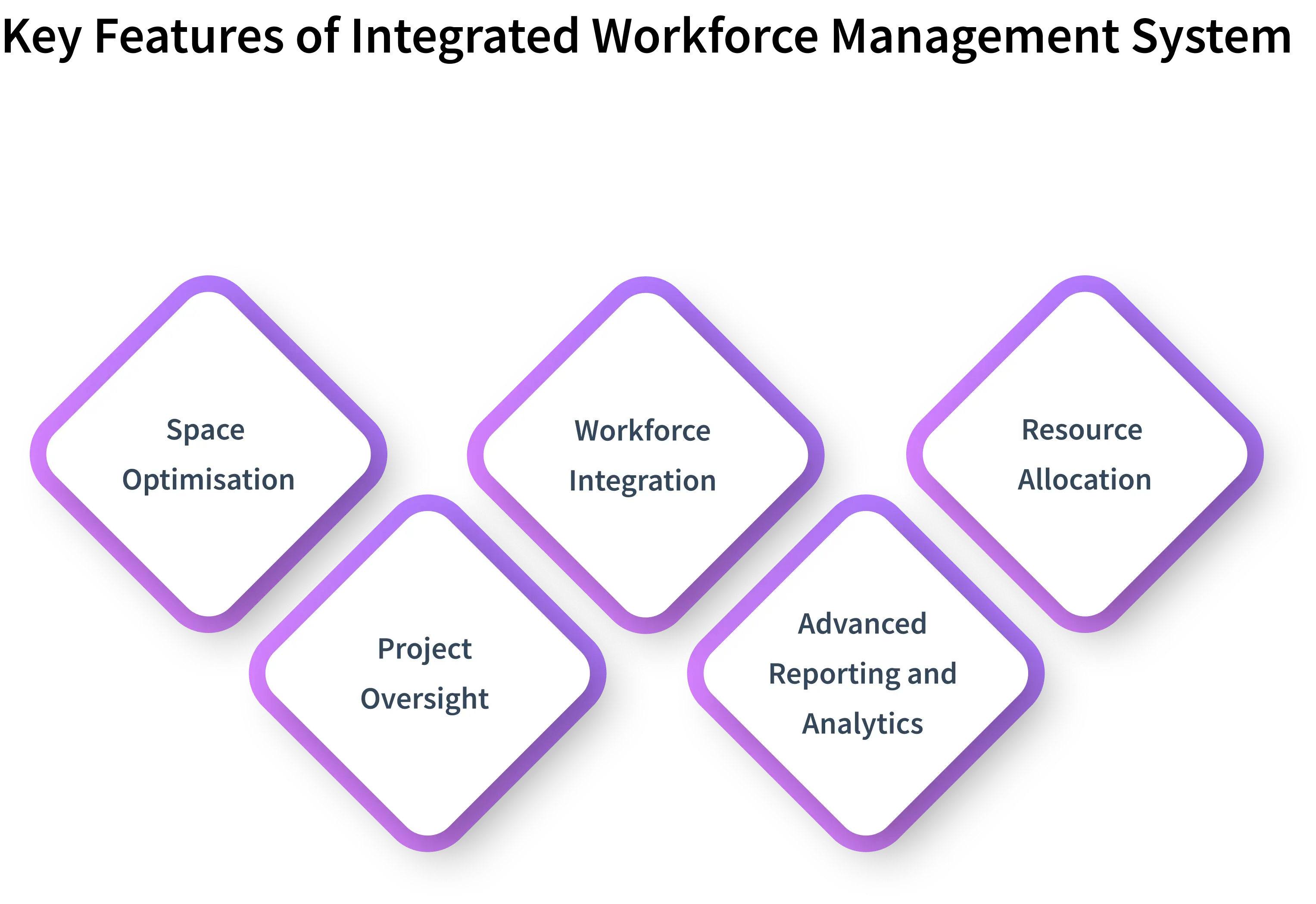
1. Space Optimization
IWMS solutions help organizations understand exactly how their spaces are being used. Floor plans, occupancy trends, and desk utilization become clear, making it easier to allocate space effectively. This ensures resources are never wasted and employees always have the right environment.
2. Project Oversight
Complex projects such as office redesigns or infrastructure upgrades are managed in one central dashboard. Budgets timelines, and resource needs are monitored closely to prevent overruns. Leaders gain transparency into progress, ensuring accountability across every stage.
3. Workforce Integration
Teams and departments stay connected through shared data and unified workflows. HR, operations, and facilities teams work together without communication gaps, preventing drops in productivity and efficiency. This integration ensures everyone is aligned and working toward the same objectives.
4. Advanced Reporting and Analytics
Data collected across modules is transformed into insightful dashboards and reports. Decision-makers are able to analyze performance trends, measure outcomes, and take action on accurate information. This turns raw numbers into actionable strategies that support long-term growth.
5. Resource Allocation
An IWMS makes it easier to assign resources where they are most needed. Whether it’s equipment, meeting rooms, or staffing, managers can see availability instantly and avoid conflicts. Smooth operations are maintained as teams and assets are balanced effectively.
Looking for one platform with every workforce feature?
Use Time Champ to plan and track your teams seamlessly.
What Are Some Use Cases of Integrated Workforce Management?
An integrated workforce management approach fits into many real-world scenarios. Here are a few examples of where it creates the most impact:
1. Shift and Schedule Management
Organizations with rotating staff, such as hospitals or call centers, can handle complex schedules with greater accuracy. Automated rostering reduces conflicts, ensures fair distribution of hours, and keeps operations running smoothly.
2. Remote Workforce Coordination
Companies that have staff in various locations can see attendance, productivity, and task progress clearly. Managers can track remote teams in real time while employees enjoy greater flexibility and transparency.
3. Facility and Asset Utilization
Businesses with multiple offices or large facilities can monitor how space and equipment are being used. This prevents underutilisation, improves planning for future needs, and cuts down unnecessary overhead costs.
4. Compliance and Safety Monitoring
The IWMS is used in industries that have strict rules, e.g. manufacturing or healthcare, to monitor certifications, safety checks and compliance deadlines. Consequently, organizations minimize the chances of violations and provide a safer workplace for the employees.
5. Project and Resource Planning
Large-scale initiatives, from office relocations to infrastructure upgrades, benefit from integrated oversight. Teams are able to distribute resources, budget resources efficiently, and deliver milestones without delays.
How Do Integrated Workforce Solutions Help Businesses Scale?
Integrated workforce solutions play a central role in helping businesses to scale. They provide a unified platform that streamlines operations, enhances resource management, and supports data-driven decision-making. This integration allows organizations to adapt swiftly to changing market demands and optimize their workforce deployment.
Looking ahead, the future of IWMS is closely tied to advancements in artificial intelligence and automation. These technologies are set to revolutionise workforce management by offering predictive analytics, real-time insights, and automated processes. As businesses continue to embrace these innovations, IWMS will play a crucial role in fostering agility, improving employee experiences, and driving sustainable growth.
Conclusion
Integrated workforce management transforms the way organizations operate, turning complex tasks into seamless, coordinated processes. With clear visibility into resources and real-time insights, teams can make smarter decisions, work more efficiently, and stay ahead of changing demands. Adopting such solutions empowers businesses to grow confidently while keeping employees aligned and productive.
Use Time Champ to streamline all your workforce needs in one place.
Tired of juggling multiple tools for workforce management?

Thasleem Shaik

Table of Content
-
 Why Is Integrated Workforce Management Important?
-
What Are the 5 Core Functional Areas Integrated into an IWMS?
-
How Does an IWMS Solution Work?
-
What Are the 5 Key Features Of IWMS?
-
What Are Some Use Cases of Integrated Workforce Management?
-
How Do Integrated Workforce Solutions Help Businesses Scale?
-
Conclusion
Related Blogs
Discover the ultimate 2025 guide to manufacturing workforce management. Learn the importance, challenges, efficiency metrics, benefits, and best practices.
Chethana Choudary | 01 October 2025
Workforce Management (WFM) vs Workforce Optimization (WFO). Learn the definitions, key functions, similarities, and best-fit use cases for businesses
Chethana Choudary | | 16 September 2025
Download 5 free workforce planning templates for 2025 in Excel. Simplify headcount planning, skills gap analysis, succession & project capacity planning.
Thasleem Shaik | 1 October 2025
Discover how to create an effective contingent workforce policy. Learn its importance, key steps, and what to include to ensure compliance & efficiency.
Guna Lakshmi | 25 September 2025
Discover 10 workforce planning models every HR professional should know to align talent with business goals, improve efficiency, and plan for the future.
Thasleem Shaik | 30 September 2025
Discover workforce productivity analytics in 2025: what it is, why it matters, key metrics, benefits, and how AI enhances workforce performance
Thasleem Shaik | 25 September 2025


 4.7/5 avg.
Ready to Manage Your Workforce Smarter?
Join our family of 1500+ companies using smart insights to redefine workforces!

Free Trial
No Credit Card Required