Insourcing vs. Outsourcing: Pros, Cons, and Key Differences
Insourcing vs. outsourcing can shape your costs, control, and access to expertise. Compare both approaches and see when each fits your business.
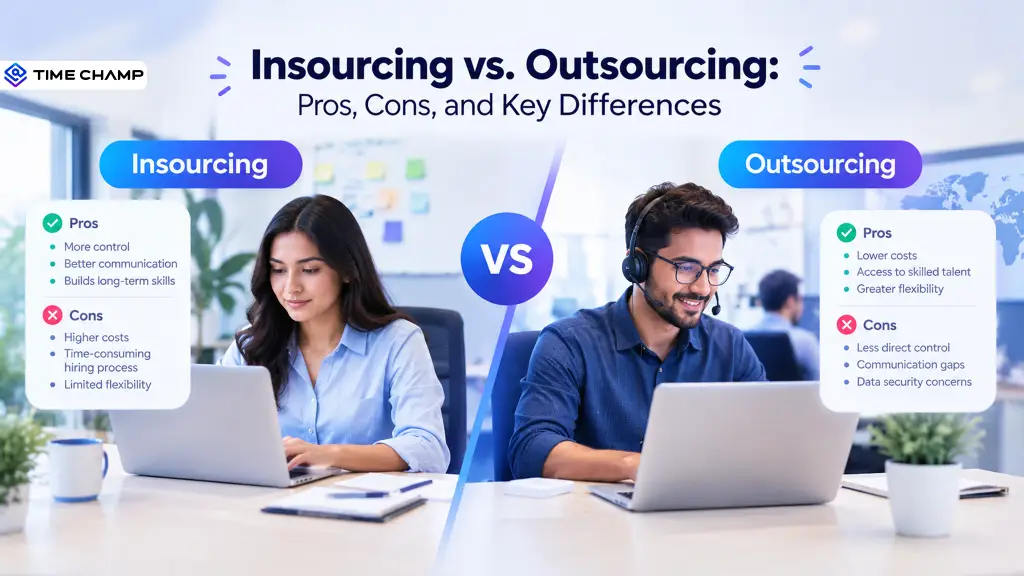
Insourcing vs. outsourcing gives you two ways to handle business work. You can keep tasks within your internal team through insourcing or assign them to an external provider through outsourcing. The right approach depends on your costs, available skills, level of control, workload, and long-term business needs.
Understanding these differences can help you decide where to build internal capabilities and where an external partner can support your operations. In this article, you’ll compare the pros, cons, key differences, and situations where each approach can fit your business.
What is Insourcing?
Insourcing means handling a business task, function, or project with your internal resources instead of assigning it to an external provider. You can use your existing team, move resources from another department, or build new internal capabilities to manage the work.
For example, if you need to develop a new software feature, you can assign the work to your in-house development team instead of hiring an outside vendor. You keep the work within your business and maintain direct control over how you plan, execute, and manage it.
You can also use insourcing when you want to bring work back in-house after outsourcing it. This approach can help you retain internal knowledge, maintain closer control over important functions, and build expertise that supports your long-term needs.
What is Outsourcing?
Outsourcing means hiring an external provider to handle a business task, service, or function instead of managing it with your internal resources. You can outsource anything from customer support and accounting to IT, logistics, payroll, or specific business processes.
For example, if you need customer support but do not want to build an internal support team, you can partner with a BPO service provider to handle customer inquiries on your behalf. You define the required work, agree on service expectations, and let the provider manage the assigned function.
You can choose an outsourcing model when you need specialized skills, additional capacity, or flexibility without building the entire capability internally. You can also outsource a single task or a larger business function, depending on your operational needs.
Insourcing vs. Outsourcing: Key Differences
The main difference between insourcing and outsourcing comes down to who handles the work and how much control you want over it. Insourcing keeps the work within your internal setup, while outsourcing assigns it to an external provider. The two approaches also differ in cost structure, expertise, flexibility, scalability, and risk.
The table below compares the key differences between insource vs. outsource so you can see how each approach works across the factors that can affect your business decisions.
| Factor | Insourcing | Outsourcing |
|---|---|---|
| Who handles the work | Your internal team handles the work | An external provider handles the work |
| Control | You have direct control over processes and decisions | You manage the work through agreements and service expectations |
| Cost structure | You take on costs for hiring, training, tools, and infrastructure | You pay the external provider based on the agreed service or contract |
| Expertise | You build and develop skills within your internal team | You gain access to specialized skills from an external provider |
| Flexibility | Your capacity depends on your available internal resources | You can adjust external support based on your workload and requirements |
| Scalability | Scaling often requires additional hiring, training, or resources | Scaling can be faster when the provider has additional capacity |
| Speed to start | You may need time to prepare resources and build capabilities | You can often start faster when the provider already has the required skills |
| Data and knowledge | Sensitive data and business knowledge stay within your internal setup | You may need to share relevant information with the external provider |
| Work ownership | Your internal team owns the day-to-day execution | The external provider takes responsibility for the assigned work |
| Long-term capability | You build knowledge and expertise within your business | You gain access to external capabilities without building them internally |
Want to understand how outsourcing changes when the work moves to another country? Read our onshore vs offshore guide for a simple breakdown.
What are the Pros and Cons of Insourcing?
Insourcing can give you greater control over how you handle important work, while also helping you build skills and knowledge within your internal team. However, bringing more work in-house can require higher upfront investment, additional resources, and time to build the right capabilities.
The table below breaks down the main advantages and drawbacks so you can see where insourcing can support your business and where it can create challenges.
| Pros of Insourcing | Cons of Insourcing |
|---|---|
| Greater Control: You can directly manage processes, quality, priorities, and day-to-day decisions. | Higher Upfront Costs: You may need to spend more on hiring, training, technology, equipment, and infrastructure. |
| Stronger Internal Expertise: Your team can build knowledge around your specific processes, systems, and business needs. | Skills Gaps: Your current team may not have the specialized expertise required for certain tasks, which can increase training time and costs. |
| Better Communication: Your internal team can work closely together and resolve issues without relying on an external provider. | Higher Workload: Adding responsibilities without enough capacity can stretch your existing resources and affect how well the team handles its regular work. |
| Better Control Over Sensitive Information: You can keep important business knowledge and data within your internal setup. | Longer Setup Time: Building the required skills, processes, and resources can take time before you reach the expected level of performance. |
| Long-term Capability Building: You can develop skills internally and retain knowledge that supports future work. | Higher Ongoing Responsibility: You take responsibility for staffing, training, tools, infrastructure, and the day-to-day delivery of the function. |
| Closer Alignment with Business Goals: Your internal team already understands your priorities, processes, and expectations, which can support consistent execution. | Limited Capacity to Scale Quickly: A sudden increase in workload may require additional hiring, training, or resources before you can expand capacity. |
The main advantage of insourcing is the control and internal capability you gain. The main challenge is the investment required to build and maintain that capability. Your decision should therefore consider the type of work, available skills, expected workload, and how important the function is to your long-term operations.
What are the Pros and Cons of Outsourcing?
Outsourcing can help you bring in specialized skills, add capacity, and handle certain functions without building everything internally. At the same time, you give an external provider responsibility for part of your work, which can affect your control, communication, quality, and data security.
The table below covers the main advantages and drawbacks you should consider before choosing an outsourcing model.
| Pros of Outsourcing | Cons of Outsourcing |
|---|---|
| Access to Specialized Skills: You can work with specialists who already have the knowledge and experience your project requires. | Less Direct Control: You may have less influence over how the provider handles processes, priorities, and day-to-day work. |
| Lower Upfront Investment: You can avoid some hiring, training, infrastructure, and technology costs when you work with an external provider. | Communication Challenges: Different time zones, working styles, or unclear expectations can slow decisions and create misunderstandings. |
| Flexible Capacity: You can bring in additional support when your workload increases without building a permanent internal setup. | Quality Concerns: You need clear expectations and regular reviews to ensure the provider delivers work that meets your standards. |
| Faster Access to Expertise: You can start work with a provider that already has the required capabilities instead of spending time building them internally. | Data Security Risks: Sharing sensitive information with an external provider can increase your exposure to confidentiality and data protection risks. |
| More Focus on Core Work: You can delegate specific functions and give your internal team more time to focus on work that directly supports your business priorities. | Provider Dependency: Relying heavily on one provider can create challenges if the provider changes its pricing, capacity, availability, or service levels. |
| Easier Scaling: You can adjust external support as your workload changes, especially when you need temporary or project-based capacity. | Less internal knowledge: When an external provider handles a function for a long time, your internal team may build less knowledge about that area. |
Outsourcing can work well when you need specialized capabilities, flexible capacity, or faster access to support. However, you should also consider how much control you need, what information you need to share, and how closely you need to oversee the work.

Did You Know?
Outsourcing functions in human resources or supply chain can reduce labor and overhead costs by nearly 50% in some areas, according to Deloitte’s research.
When to Choose Insourcing or Outsourcing
The right choice depends on the type of work, how often you need it, and the level of control you want to maintain. Instead of choosing one approach for every function, look at each function separately and consider what your business needs from it.
You Can Consider Insourcing When
- The function plays a central role in your business
- You need direct control over quality and decisions
- The work requires strong knowledge of your internal processes
- You handle sensitive business information or intellectual property
- You need the same capability for a long period
- You have the skills and resources to build an internal team
For example, if product development directly shapes what you offer to your customers, keeping that capability in-house can help you retain knowledge and maintain control over important decisions.
You Can Consider Outsourcing When
- You need specialized expertise
- Your workload changes frequently
- You need additional capacity for a specific project
- You want to avoid building a new internal function
- The work does not directly support your core competitive advantage
- You need external support for a defined business process
For example, you may outsource a specialized technical project when you need expertise for a limited period but do not expect to need the same capability continuously.
Which Functions to Keep In-source or Outsource?
Not every business function needs the same approach. Some functions benefit from direct internal ownership, while others can work well with an external provider. The right choice depends on how closely the function connects to your core business, the level of specialization it requires, and how consistently you need the work.
The table below gives you a practical starting point for deciding where insourcing or outsourcing may fit.
| Business Function | Approach To Consider | Why it May Fit |
|---|---|---|
| Product development | Insourcing | Keeps product knowledge, technical decisions, and intellectual property within your internal team |
| Core engineering | Insourcing | Supports long-term product knowledge and gives you closer involvement in technical decisions |
| Cybersecurity | Insourcing | Gives you closer oversight of sensitive systems, security decisions, and incident response |
| Strategic finance | Insourcing | Keeps financial knowledge and important business decisions within your internal setup |
| Payroll processing | Outsourcing | Gives you access to specialized payroll expertise without building a dedicated internal function |
| Accounting and bookkeeping | Outsourcing | Works well when you need specialist support for recurring financial tasks |
| IT support | Outsourcing | External providers can handle routine technical support and helpdesk requests |
| Standard customer support | Outsourcing | Works well for structured support tasks that require consistent handling at higher volumes |
| Premium customer support | Insourcing | Keeps important customer relationships and product knowledge closer to your internal team |
| Content moderation | Outsourcing | External support can handle large volumes when the work follows defined processes |
| Marketing execution | Outsourcing or hybrid | You can keep strategy and brand direction internally while getting external support for specific campaigns or production work |
| Software development | Depends on the function | Core product work may suit an internal team while specialist or short-term projects may suit external support |
| Supply chain management | Depends on the function | The right approach depends on how closely supplier relationships and operational knowledge connect to your business |
| Data processing | Outsourcing | Structured, high-volume tasks can fit an external provider when you have clear requirements and quality checks |
These examples give you a starting point rather than a fixed rule. A function that works well with an external provider for one business may need internal ownership in another. Review the function's role, workload, sensitivity, and long-term importance before making the final decision.
Unsure whether to build more internal capacity or bring in outside support?
Use Time Champ to see where your workforce spends time and plan with better insight.
Conclusion
Choosing between insourcing and outsourcing depends on what each function needs to work well. One approach may suit a core function that requires close involvement, while another may work better for specialized tasks or changing workloads.
Instead of following a fixed rule, look at the role each function plays in your business and consider the resources, skills, risks, and requirements involved. You can also combine both approaches when different parts of your operations need different setups.
A clear understanding of these differences can help you choose an approach that fits your current needs and supports your plans for the future.

Thasleem Shaik

Table of Content
 What is Insourcing?
- What is Outsourcing?
- Insourcing vs. Outsourcing: Key Differences
- What are the Pros and Cons of Insourcing?
- What are the Pros and Cons of Outsourcing?
- When to Choose Insourcing or Outsourcing
- Which Functions to Keep In-source or Outsource?
- Conclusion
Related Blogs

Business process outsourcing (BPO) vs Knowledge process outsourcing (KPO). Discover definitions of BPO and KPO, key functions, similarities, and use cases.
Guna Lakshmi | Apr 02, 2026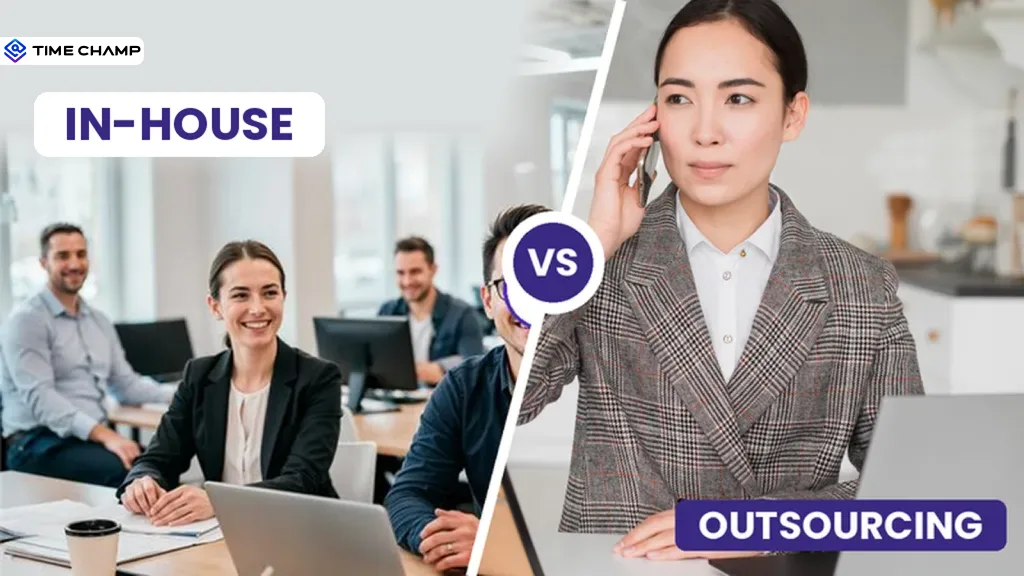
In-house vs outsourcing explained with key differences, pros, cons, costs, and practical tips to help you choose the best approach for your organization.
Anjali | Jul 02, 2026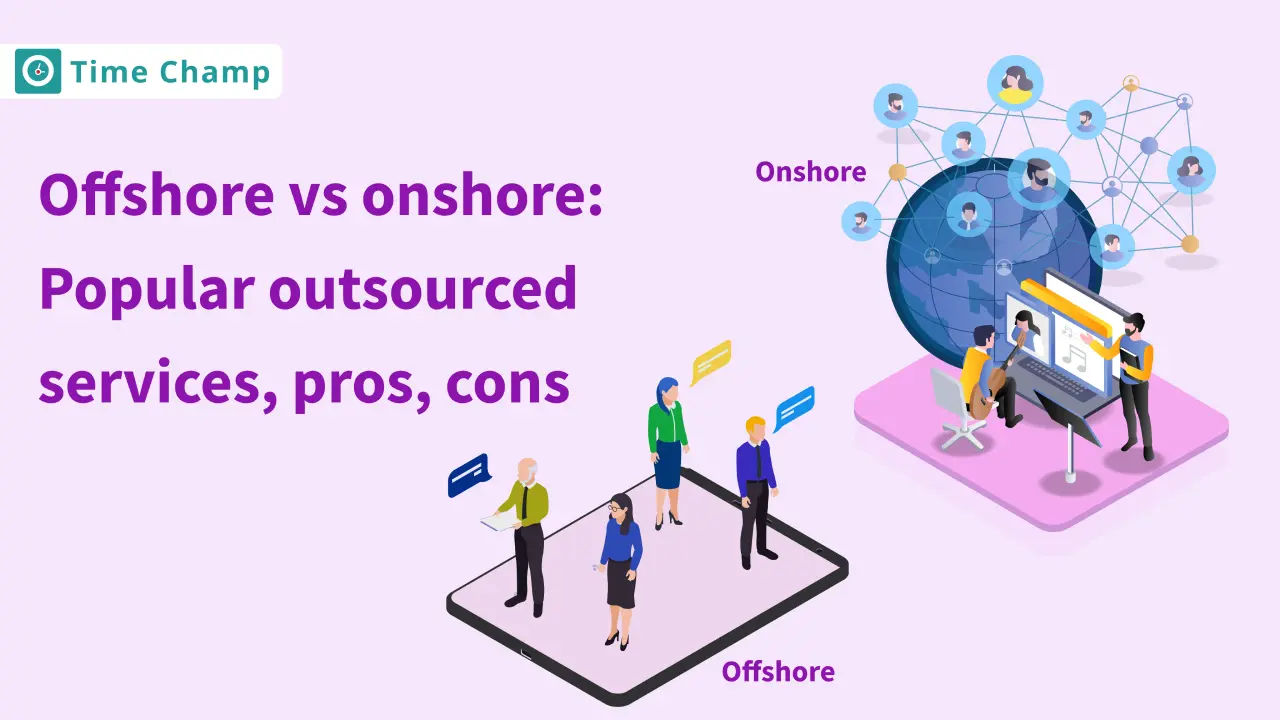
Exploring offshore and onshore outsourcing: Compare popular services, advantages, and drawbacks to make informed business decisions.
Mounika Sai | Nov 20, 2023
Explore top BPO companies offering tailored solutions. Find the right partner to boost efficiency, cut costs, and drive your business growth!
Mounika Sai | Nov 24, 2023
Learn how to kickstart your BPO business with this comprehensive step-by-step guide, covering everything from planning to execution. Get insights now!
Tarun Kumar Reddy | Nov 17, 2023
Learn why billing breakdowns damage BPO trust, why clients value workforce intelligence billing, how it strengthens billing models & implementation steps.
Thasleem Shaik | Feb 11, 2026


 4.7/5 avg.
Ready to Manage Your Workforce Smarter?
Join our family of 1500+ companies using smart insights to redefine workforces!

Free Trial
No Credit Card Required