Time Champ > Blog > How to Build & Manage Construction Workforce Intelligence > Content
How to Build & Manage Construction Workforce Intelligence
Discover construction workforce intelligence: definition, importance, key components, how to build & manage it effectively, and explore its pros & cons.

Almost 92% of construction organizations in the U.S struggle to identify qualified employees, and over 45% report project delays due to labor shortages. These challenges go beyond the hiring process alone. They occur because of limited visibility into the workforce productivity, availability, and on-site execution. This is where the construction workforce intelligence becomes more crucial. It helps you solve these issues by providing real-time insights to plan better, minimize the delays, and control costs.
This blog will help you to understand what construction workforce intelligence is, why it is important and its core components. You'll also learn how to build and maintain the construction workforce effectively, its pros & cons.
Control Labor Costs, Reduce Delays, and Keep Every Job Site on Schedule.
Use Time Champ to turn workforce data into confident construction decisions.
What is Construction Workforce Intelligence?
Construction workforce intelligence involves the systematic collection, analysis, and application of workforce data across construction projects. It provides real-time visibility into labor availability, skills, productivity, and performance, helping you make informed decisions that improve planning, efficiency, and project outcomes.
With construction workforce intelligence, you no longer rely on guesswork. You can observe the employee availability, task completion, and productivity in real-time. This helps you understand the skill shortages, allocate workforce accurately, and resolve problems before they affect schedules or potential cost increases.
The purpose of construction workforce intelligence is to help you manage your workforce and increase accountability with confidence. It enhances employee productivity, minimizes labor costs, and increases accountability at job sites. It also helps to build a more reliable and efficient workforce in all your projects.
Why is the Construction Workforce Intelligence Important?
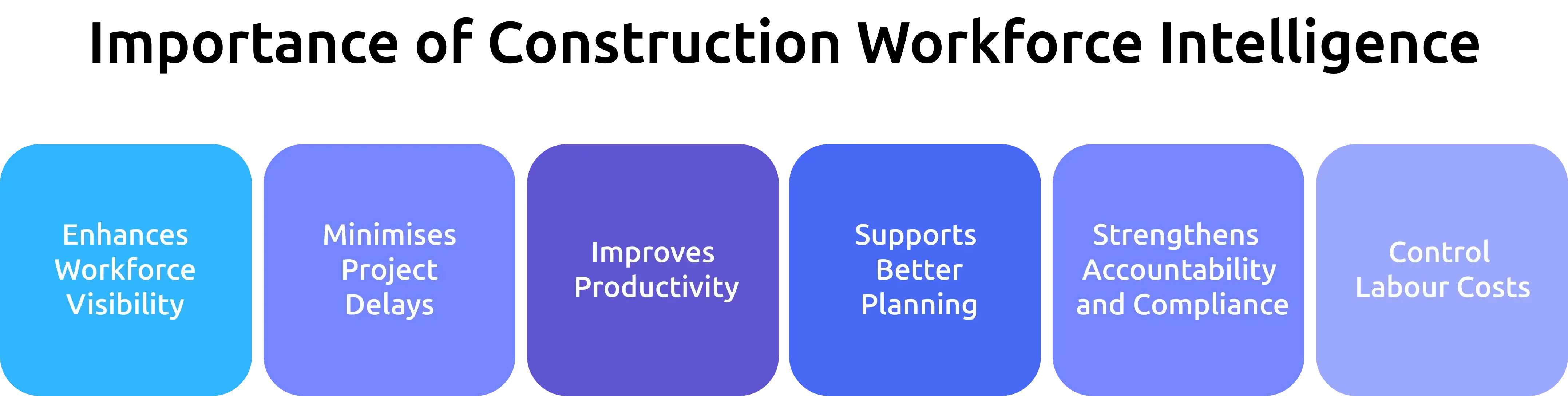
Managing a construction workforce without real-time insights often leads to cost overruns, decreased productivity, and work delays. Construction workforce intelligence provides a clear view into how work happens on-site. This helps you to maintain the projects on track, make accurate decisions, and hold your teams accountable.
Here, you can understand why the construction workforce intelligence actually matters:
- Enhances Workforce Visibility: Construction workforce intelligence gives you a clear view of who is working and how work is progressing on each site. This clarity helps you track the workforce attendance, availability, and productivity efficiently.
- Minimizes Project Delays: Early visibility into absenteeism, workforce gaps, or slowdowns allows for quick action. Through addressing the issues early, you can maintain the momentum, reduce the disruptions, and keep projects on schedule.
- Improves Productivity: Effectively monitor how employees complete tasks across the job sites. This supports better task execution, minimizes idle time, and ensures labor hours are used efficiently.
- Supports Better Planning: Accurate workforce data removes uncertainty from your project planning. It helps you forecast workforce requirements early, prepare for future tasks, and maintain schedules accurately without last-minute hiring and staffing problems.
- Strengthens Accountability and Compliance: Clear workforce activity and performance records support accountability across all job sites. This supports easier accountability enforcement, maintains stable reporting, and meets employee regulations across all projects.
- Controls Labor Costs: Early identification of inefficiensies helps you keep labor expenses under control. This helps you control overtime work, eliminate rework, and protect project margins while keeping the costs predictable.
What are the Key Components of Construction Workforce Intelligence?
To build an effective construction workforce intelligence system, you require the right components which work together. Every component helps you gain more visibility, control and make accurate decisions across all your workplaces.
Real-Time Workforce Data Collection
You can gather accurate workforce data from the job sites in real-time with field employee tracking software. This gives you a complete view of who is working, where they are assigned, and how time is spent.
Workforce Availability and Attendance Tracking
With construction workforce intelligence, you can track employee attendance, availability, and absences within your projects. This helps you avoid hiring gaps, act quickly towards absenteeism, and assign the right number of employees as work progresses.
Productivity and Performance Monitoring
Monitor how efficiently employees complete their tasks on each site. This will help you identify the areas of low productivity, compare performance across your teams, and take instant action before task delays or missed milestones affect the project.
Skills and Role Visibility
You can have a clear view of the employee skills, roles, and experience levels. This helps you assign the potential employees to the right tasks to minimize skill mismatches and also enhances the overall work quality on-site.
Workforce Planning and Allocation
Use the workforce data to plan the employees' requirements accurately. This helps you to assign the employees based on the project timelines, avoid understaffing or overstaffing and maintain realistic schedules.
Compliance and Accountability Management
You can maintain your workforce records accurately for audit and compliance requirements. This increases accountability, supports labor laws, and ensures consistent workforce reporting across all your construction projects.
Actionable Insights and Reporting
You can transform the workforce data into clear insights, which support your decisions. These insights can help you act quickly, solve the issues early, and make the workforce and project processes more efficient.
How to Build Construction Workforce Intelligence

Constructing workforce intelligence is not about adding more tools, but enhancing the visibility of where the blind spots usually occur. When workforce data flows clearly from job sites to the decision-makers, the risks reduce, the planning process improves, and implementation becomes predictable.
Here's the step-by-step process which helps you build an efficient construction workforce intelligence.
Define Clear Workforce Goals
Begin by identifying what you need to improve, whether it is reducing the delays, controlling labor costs or increasing productivity. Clear objectives can help you concentrate on the right workforce data and avoid tracking the information without purpose.
Capture Real-Time Workforce Data
Collect the real-time workforce information from your job sites. This involves employee work hours, attendance, progress, and location. Capturing data in real-time ensures that decisions are based on current site conditions without historical reports.
Centralize Workforce Data Across Projects
Integrate all the workforce data into a unified system. A centralized perspective can remove the data silos and help you monitor workforce activities efficiently across every project without shifting between the disconnected tools or spreadsheets.
Track Availability, Productivity, and Skills
Keep track of workforce availability, capability, and productivity. This can help you understand who is available at work, how employees deliver their work and whether you align the right skills with the job requirements.
Turn Data into Actionable Insights
Raw data alone might not create an effective value. Transform workforce data into clear insights that help to identify risks, productivity gaps, and areas of improvement. This can help you to act instantly, fix the problems faster, and prevent cost overruns and schedule delays.
Align Workforce Data with Project Planning
Utilize workforce data to support project and resource allocation efficiently. Align your workforce capacity with project timelines so that staffing levels remain balanced across every project phase.
Strengthen Accountability and Compliance
Maintain accurate workforce records to support labor compliance, audits, and internal accountability across your organization. Proper records can help you ensure fair practices, accurate recording, and reduce conflicts across your workplace.
Review and Improve Continuously
Regularly assess the insights, monitor trends and streamline by relying on actual results. Continuous improvement can help you adjust to the workforce changes and remain efficient in the long run.
How to Manage Construction Workforce Intelligence
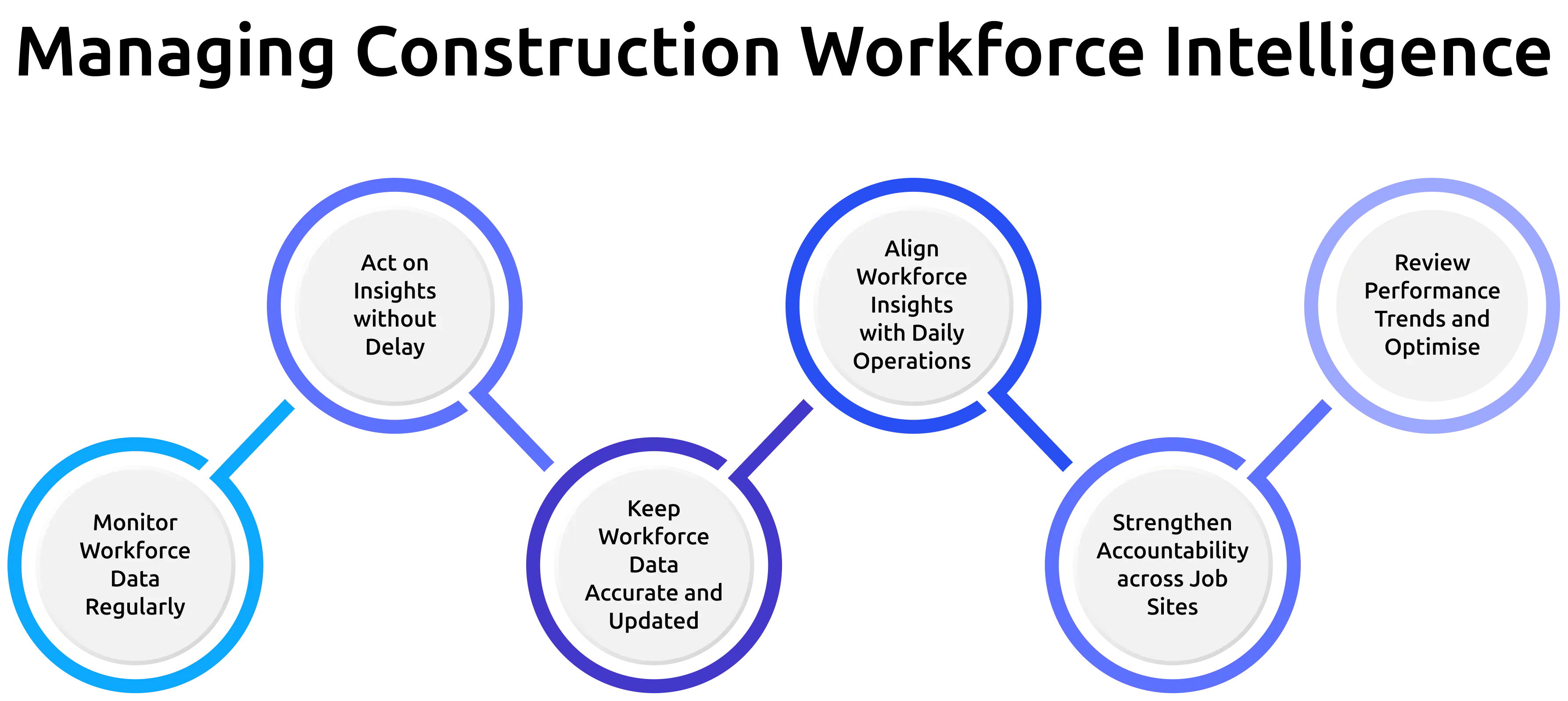
Managing a construction workforce intelligence is a continuous process. Once you complete the setup, regular reviews will accurately update your workforce data and integrate it into the real job-site circumstances.
This section will help you learn how to apply the workforce insights to drive the daily operations, minimize risks, and boost productivity.
Monitor Workforce Data Regularly
Review the workforce data regularly to ensure that it is aligned with on-site realities. Consistent monitoring can help you identify the attendance problems, productivity loss or staffing issues before they impact timelines or raise costs.
Act on Insights without Delay
Workforce intelligence provides value only where the insights have an action. Identify skill mismatches, productivity gaps, or absenteeism before they occur, to maintain the projects on the right track.
Keep Workforce Data Accurate and Updated
Ensure that you maintain workforce records up to date on all projects. Access to accurate data will increase trust in the reports, support better decisions, and minimize errors in planning.
Align Workforce Insights with Daily Operations
Use workforce intelligence in day-to-day planning and coordination. This helps to align labor deployment with active tasks, site priorities and shifting the project requirements.
Strengthen Accountability across Job Sites
Transparent workforce information enhances accountability on all levels. The teams keep track of the expectations, site managers monitor performance at all levels, and reporting remains transparent throughout the projects.
Review Performance Trends and Optimize
Evaluate workforce trends over the period of time to spot common issues or areas of improvement. Consistent review helps refine workforce strategies, enhance efficiency and support the long-term project's success.
What Are the Pros & Cons of Construction Workforce Intelligence?
Construction workforce intelligence provides a robust operational advantage, but it also has some practical challenges.
| Pros | Cons |
|---|---|
| Enhances the visibility of the workforce availability and on-site activity. | Initial set-up and system configuration require a certain time. |
| Helps to reduce the project delays through early issue identification. | The accuracy of data relies on the consistent workforce adoption. |
| Boosts productivity through uncovering any inefficiencies and idle time. | Managers and site supervisors may require training. |
| Improves labor planning and allocation of resources. | Integrating with the existing tools might seem difficult. |
| Strengthens accountability and labor compliance | Requires constant monitoring to ensure the accuracy and reliability of data. |
| Helps control labor costs and overtime expenses. | Provides long-term value because the workforce data accumulates over time. |
See Exactly How Your Workforce Performs across Every Construction Site.
Track productivity, availability, and ensure accountability with Time Champ.
Conclusion
Construction workforce intelligence gives you the clarity needed to manage your workforce with confidence. It helps you observe what actually happens on-site, plan resources efficiently, and address the issues before they impact the expenses or timelines. By utilizing the real-time workforce data, you can enhance productivity, strengthen trust, and maintain better control across the projects. Workforce intelligence supports accurate decisions at each stage of construction when it is built and managed effectively. It also helps you adapt to labor shortages, minimize the inconsistencies, and deliver the projects more reliably. You can create an effective and accountable construction workforce which supports long-term project success by applying the right approach.

Anjali

Table of Content
-
 What is Construction Workforce Intelligence?
-
Why is the Construction Workforce Intelligence Important?
-
What are the Key Components of Construction Workforce Intelligence?
-
How to Build Construction Workforce Intelligence
-
How to Manage Construction Workforce Intelligence
-
What Are the Pros & Cons of Construction Workforce Intelligence?
-
Conclusion
Related Blogs
Find the 10 best workforce intelligence software for 2026. Compare features, pricing, pros, cons to boost operational clarity and team performance.
Thasleem Shaik | February 11, 2026
Understand operational intelligence: definition, real examples, benefits, challenges, how it differs from business intelligence & helps scale businesses.
Anjali | February 11, 2026
Discover how workforce intelligence improves workload distribution, balances team capacity, prevents burnout & how to manage it with data effectively.
Tarun Kumar Reddy | February 11, 2026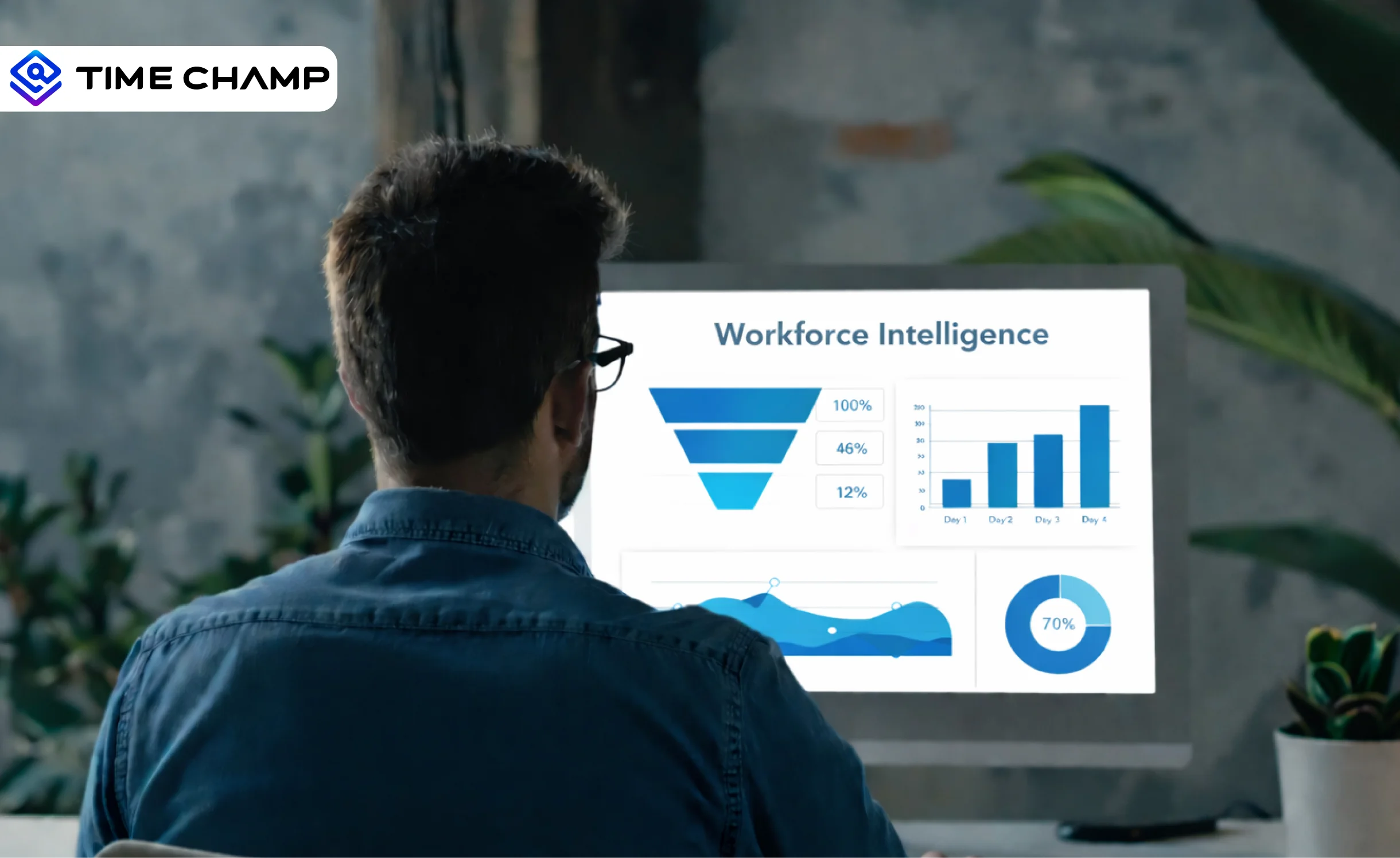
Learn why filtering workforce data is essential, how to filter data for effective workforce intelligence step-by-step, and how it supports better outcomes.
Guna Lakshmi | February 28, 2026
Learn what productivity intelligence is, why it's important, how it works, ways it transforms team performance, pros & cons, and how to measure it.
Shabana Shaik | February 11, 2026
Unlock how location intelligence transforms employee tracking, hybrid work management, and field team visibility with smart data-driven tools like Time Champ.
Chethana | July 24, 2025


 4.7/5 avg.
Ready to Manage Your Workforce Smarter?
Join our family of 1500+ companies using smart insights to redefine workforces!

Free Trial
No Credit Card Required