Work often breaks down when people work in silos, overlook messages, and leave responsibilities unclear, even when everyone puts in effort. Teamwork solves this by bringing people together around a shared goal, helping work move forward with clarity instead of confusion.
In this guide, you’ll understand what teamwork is, why it matters in the workplace, and how it shows up in everyday situations. You’ll explore real examples, key benefits, and practical tips you can apply to strengthen collaboration, improve communication, and elevate performance at work.
What Is Teamwork?
Teamwork is the ability of individuals to work together toward a shared goal by combining skills, responsibilities, and effort. It focuses on cooperation, mutual support, and accountability, where each person’s contribution directly impacts the group’s overall outcome, not just their individual results.
The purpose of teamwork is to make work more achievable and more sustainable. When the team shares responsibilities and uses strengths intentionally, tasks become clearer, decisions improve, and the team distributes pressure more evenly. They solve challenges together and move forward with shared momentum.
Characteristics of Effective Teamwork
Building a healthy team doesn’t happen by accident. A few core behaviors shape how people interact and work together every day.
- Clear Communication: Teams work better when everyone in the team shares information openly and early. Regular updates, honest conversations, and space for questions help prevent misunderstandings.
- Shared Commitment: When team members care about the outcome, collaboration improves, and everyone stays focused on the same goal.
- Trust and Ownership: Reliability builds trust. When people take responsibility for their work and follow through, teams work with confidence and less friction.
- Feedback Culture: Open, respectful feedback helps individuals improve and keeps performance on track. Teams that share feedback regularly grow faster.
- Mutual Support: Team members proactively step in to support one another, ensuring progress continues smoothly even during challenging moments
- Adaptability: Effective teams adjust quickly when priorities change. They respond to challenges without losing focus or coordination.
Why Is Teamwork Important in the Workplace?
Workplace success depends less on individual effort and more on how well people work together. According to Harvard Business Review research, employees engaged in productive collaboration become more engaged and work better, primarily due to less confusion and friction among teams because of shared work. Below are the key reasons that show how teamwork shapes day-to-day progress, decision-making, and the overall work experience.
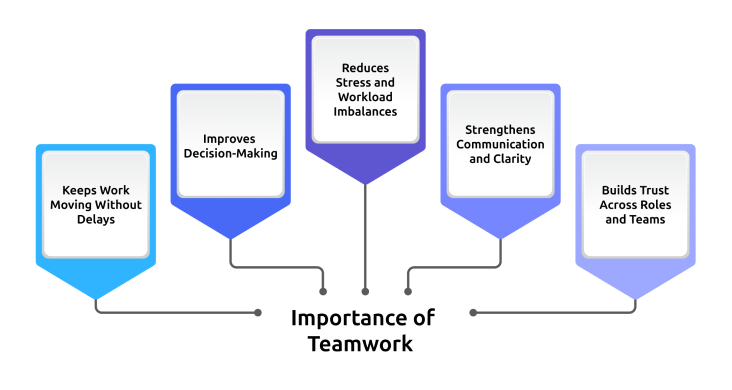
1. Keeps Work Moving Without Delays
Without teamwork, work often slows down in small ways that add up. Tasks wait on updates, responsibilities overlap, and teams lose momentum. When teamwork is in place, you know who’s doing what and what comes next, which keeps work moving without constant follow-ups.
2. Improves Decision-Making
When teams work together, one person does not make decisions alone. You hear different opinions, learn from others’ experiences, and notice things you might have missed on your own. This helps you make choices that apply better to real work situations and helps you avoid errors that narrow thinking creates.
3. Reduces Stress and Workload Imbalances
When teamwork functions well, teams share pressure instead of concentrating it in one place. You’re less likely to feel overwhelmed because teams distribute responsibilities and provide support when workloads rise. This balance helps teams stay consistent during busy periods instead of burning out or cutting corners.
4. Strengthens Communication and Clarity
Teamwork helps information flow more smoothly across the team. Teams discuss expectations early, align on priorities, and clarify responsibilities before work begins. Clarity of communication will reduce confusion, minimize rework, and also guide you to concentrate on what really counts.
5. Builds Trust Across Roles and Teams
Since team members deliver work on time and stay consistent in their actions, trust certainly grows. Reliable follow-through creates confidence across roles, making collaboration smoother. You spend less time checking progress and more time contributing with confidence.
Is Teamwork the Same as Collaboration?
No, teamwork and collaboration serve different purposes, even though many use the terms interchangeably. Collaboration is generally about working together, sharing ideas, giving input, or solving a problem. On the other hand, teamwork involves shared responsibility, clear coordination, and continuous effort towards the achievement of a common goal.
You often see collaboration at work when teams engage in discussions, planning, or reviews. Teamwork shapes how work moves forward every day by clarifying who owns each task, encouraging support across roles, and keeping progress steady even when challenges arise. Collaboration strengthens teamwork, but teamwork provides the foundation that turns shared ideas into steady results.
What Are the Benefits of Teamwork in the Workplace?
Teamwork plays a central role in how organizations achieve results today. When teams work together with a clear purpose, they achieve better results, strengthen morale, and drive organizational growth that individual effort simply cannot achieve. Let's explore the key benefits of teamwork and why they matter in every modern workplace.
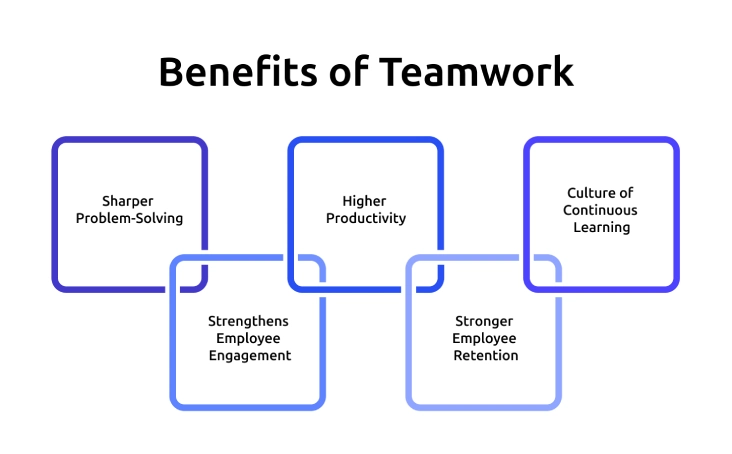
1. Improves Problem-Solving
When different minds work together, they solve problems much faster and in a more creative way. Researchers at Stanford discovered that those employees who collaborated were able to focus on challenging tasks 64% longer than those who were working individually. The diversity in experience and new perspectives come together with teamwork, thus resulting in more robust and balanced solutions each time.
2. Strengthens Employee Engagement
One of the biggest benefits of teamwork is the boost it gives to employee engagement. A shared goal creates a sense of connection and purpose, helping team members understand how their work contributes to the overall success of the team and the organization. That connection is what turns routine work into something meaningful, and it keeps engagement levels high across the board.
3. Higher Productivity
Teamwork naturally speeds things up, communication becomes faster, duplicated effort disappears, and projects move forward more smoothly. According to the Institute of Corporate Productivity, organizations that foster teamwork are five times more likely to be performing well. That kind of output comes not from working longer hours, but from working together more seamlessly.
4. Stronger Employee Retention
Teamwork increases retention by creating a sense of support and belonging at work. When employees feel valued, connected, and part of a collaborative environment, they are more likely to stay committed to the organization.
5. A Culture of Continuous Learning
Teamwork creates a strong foundation for a better employee experience by making learning a natural part of the workday. When teams work side by side, members acquire new skills, share tips, and learn from each other through daily discussions.
What Challenges Do Organizations Face When Implementing Effective Teamwork?
Effective teamwork requires effort and clear structure. When these are missing, teams often struggle with communication gaps, unbalanced workloads, and unclear responsibilities. Below are the key challenges that commonly affect teamwork and disrupt alignment across teams.
1. Role and Skill Misalignment
Team performance suffers when responsibilities do not match individual strengths or when skill gaps remain unnoticed until results decline. Work slows down, teams reassign tasks, and deadlines slip. Organizations can prevent this by conducting regular skill assessments, defining roles clearly, and investing in targeted development. When expectations align with capability, teams operate with greater clarity and confidence.
2. Communication Breakdowns Across Teams
Distributed work models such as remote, hybrid, or cross-location setups often spread communication across multiple platforms and time zones. Teams delay important updates, and coordination weakens. Establishing clear communication guidelines, selecting the right tools for collaboration, and encouraging consistent information sharing help restore alignment. Structured communication reduces confusion and keeps everyone informed without unnecessary repetition.
3. Uneven Workload Distribution
When some roles handle too many tasks while others have very little to manage, pressure builds unevenly across the team. Over time, this gap lowers motivation, creates frustration, and slows overall progress. Transparent task planning, regular workload reviews, and timely redistribution of responsibilities help create a more balanced work structure.
4. Lack of Accountability and Follow-Through
When ownership remains unclear, tasks stall and trust declines. Manual tracking methods often fail to provide real visibility into progress. Clear task assignment, measurable goals, and transparent progress tracking systems strengthen accountability. Defined ownership keeps responsibilities visible and ensures teams consistently meet commitments.
5. Resistance to Change
Even well-designed teamwork practices can face hesitation when teams are unsure about new processes or tools. This slows adoption and affects overall progress. To overcome resistance, organizations should explain the purpose behind changes, involve team members early, and provide proper training. When teams understand the benefits and feel supported, they adapt with confidence.
Looking to build a stronger work culture through better collaboration?
Explore Time Champ to support teamwork that feels connected and consistent.
How to Improve Teamwork in the Workplace?
Let’s walk through a few practical strategies to improve teamwork and create a more connected work environment.
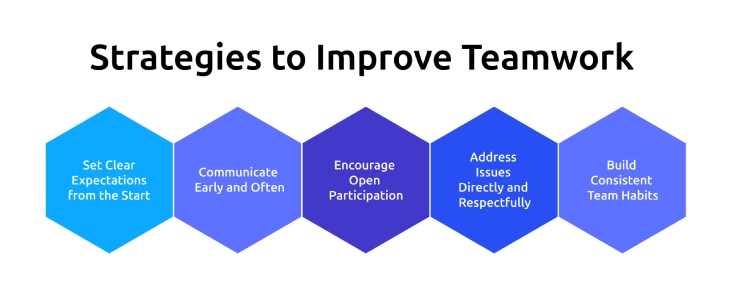
1. Set Clear Expectations from the Start
Clear expectations set the foundation for better collaboration. Define goals, timelines, and responsibilities at the beginning so work starts with direction instead of doubt. When everyone in the team knows their responsibilities and the steps ahead, work moves forward smoothly, without delays or unnecessary rework.
2. Communicate Early and Often
Strong teamwork grows when you share updates before problems grow. Regular check-ins, clear messages, and timely feedback keep work aligned. Consistent communication keeps everyone aligned, reduces confusion, and helps work move forward smoothly.
3. Encourage Open Participation
Teamwork becomes stronger when everyone feels comfortable sharing ideas and speaking up. Better outcomes come from creating space for suggestions, listening with attention, and recognizing valuable contributions. Simple actions like encouraging discussion and giving thoughtful responses build confidence and help everyone stay committed to shared goals.
4. Address Issues Directly and Respectfully
There are always unspoken issues that silently damage teamwork. You improve collaboration by addressing concerns early and keeping conversations respectful. Honest dialog clears misunderstandings and helps work continue smoothly.
5. Build Consistent Team Habits
Strong teamwork develops through everyday practices that teams follow consistently. Simple routines like regular planning sessions, clear handovers, and dependable updates create structure and predictability in daily work. When collaboration becomes part of the daily routine instead of something teams focus on only during difficult situations, work moves forward with more confidence and steady progress.
What Are the Examples of Effective Teamwork?
Effective teamwork becomes visible when work progresses smoothly, even under pressure. It shows up in moments when coordination matters more than individual effort, and teams work together to achieve meaningful results. Below are real workplace examples that show how teamwork works in practice.
1. Launching A New Product Across Teams
A product launch requires more than one team to succeed. Design facilitates the experience, marketing develops the message, sales plans the outreach, and operations support delivery. When teamwork is effective, each team is aware of the timeline, communicates progress very early, and reacts rapidly to priority changes. You experience fewer last-minute changes, clearer handoffs, and a launch that feels controlled rather than rushed.
2. Resolving Customer Issues in Real Time
Customer-facing teams often rely on close coordination with support, operations, and product teams. When an issue arises, quick collaboration helps identify the cause, agree on the next steps, and communicate clearly with customers. Strong teamwork here reduces delays, avoids repeated explanations, and helps you deliver consistent responses even during high-volume periods.
How Does Teamwork Differ from Individual Work?
Work can move forward through individual effort, where you complete tasks independently, or through teamwork, where teams coordinate and work together. Knowing the difference helps you choose the right approach for different situations. The following table shows the comparison of teamwork and individual work in various important areas of everyday work.
| Aspect | Teamwork | Individual Work |
|---|---|---|
| Responsibility | Teams divide work across roles and assign clear ownership for each part. | One role carries full responsibility from start to finish. |
| Decision-making | Consider multiple viewpoints and discuss ideas before making decisions. | Decisions rely on one perspective and personal judgment. |
| Speed of execution | Progress stays steady through coordination and parallel effort. | Progress depends on individual capacity and availability. |
| Problem-solving | Solve challenges by sharing ideas and supporting each other. | Individuals handle challenges independently, often with limited input. |
| Accountability | Team members hold each other accountable for progress. | Self-accountability drives individuals to complete tasks responsibly and on time. |
| Learning and growth | Knowledge spreads through collaboration and shared experience. | Learning stays limited to personal experience. |
| Work experience | Work feels more connected and supported. | Work feels focused, but can become isolating over time. |
| Best suited for | Complex tasks, shared goals, and cross-functional work. | Deep-focus tasks that require full autonomy and independent execution. |
Both approaches have value at work. Individual effort supports focus and ownership, while teamwork strengthens coordination, consistency, and shared success. Knowing when to use each makes daily work more effective and balanced.
Conclusion
Teamwork shapes how smoothly work moves and how supported everyone feels along the way. When goals stay clear, communication remains open, and teams take responsibility for their roles, daily tasks become easier to manage, and results become more consistent. Strong collaboration builds trust, improves engagement, and creates a work environment where progress feels steady instead of stressful.
Need clearer insight into how your teams work together?
Use Time Champ to gain real-time visibility into team productivity and performance.

Run HR in One Place
Time, attendance, leaves, and payroll-ready reports unified.
Explore HR Management →