Quiet quitting does not always mean leaving a job.
It often starts when extra effort slowly turns into doing only what is required.
In this blog, you’ll learn what quiet quitting means, why it happens, the signs to watch for, and simple examples that make the concept easier to understand.
What is Quiet Quitting?
Quiet quitting is a workplace behavior where employees complete the responsibilities defined in their job role without taking on additional work beyond what their role requires. They continue to meet job requirements and perform their assigned duties, but choose not to go beyond their role or working hours. Quiet quitting is about setting clear work boundaries, not leaving a job.
The term "quiet quitting" became widely known after gaining popularity on social media. Although the name suggests resigning, it actually refers to limiting work to the responsibilities included in a job description. Depending on the situation, it may reflect a focus on work-life balance, reduced motivation, or lower engagement at work.
What Does Quiet Quitting Mean in the Workplace?
It is not always clear whether quiet quitting is a real workplace trend or mainly an internet discussion. The topic has gained attention on platforms like TikTok and in traditional media, which suggests that it may be happening in some workplaces, but it is still difficult to measure how common it actually is.
Gallup explains that quiet quitters are similar to employees who are “not engaged.” They are not completely disengaged, but they feel mentally disconnected from their work and focus only on completing required tasks instead of putting in their best effort.
Gallup’s State of the Global Workforce report shows that only 32% of employees are engaged at work, while 18% are actively disengaged.
This means that the remaining 60% of the global workforce falls into the “not engaged” category, which could include many employees who are quietly quitting.
Common Signs of Quiet Quitting
Quiet quitting is not always easy to recognize because employees continue to complete their regular work. The changes usually appear in attitude, participation, and willingness to contribute beyond assigned responsibilities. Here are some common signs that may indicate quiet quitting in the workplace.
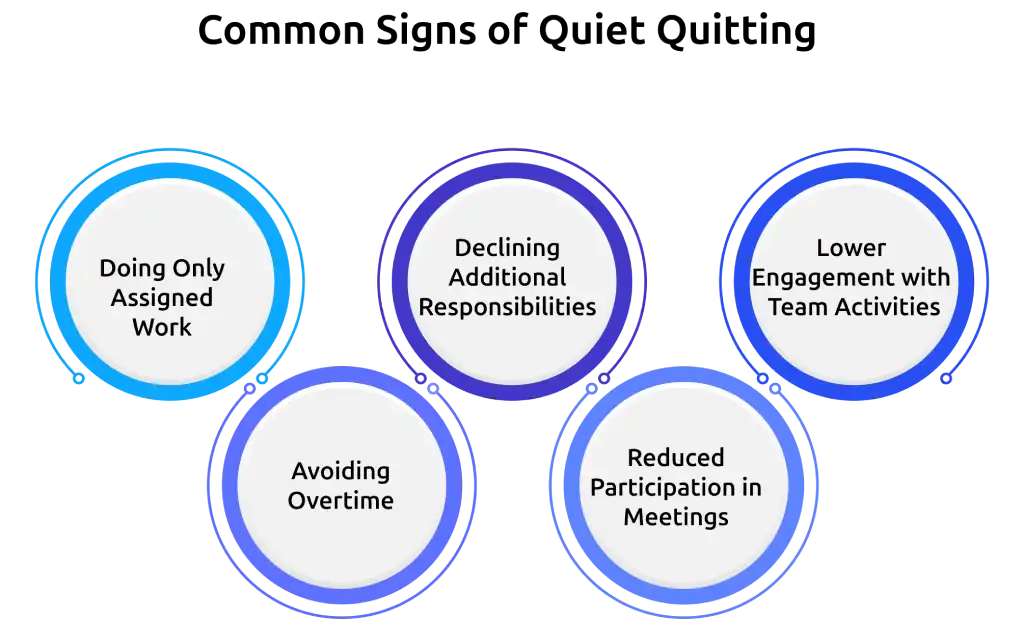
1. Doing Only Assigned Work
Employees complete the tasks listed in their job responsibilities but rarely take on work beyond what they are expected to do. They meet deadlines and fulfill their role, but they choose not to volunteer for additional assignments or responsibilities outside their scope of work.
2. Avoiding Overtime
One of the most noticeable signs is a reluctance to work beyond scheduled hours. Employees finish their workday on time and avoid staying late unless it is absolutely necessary. This often reflects a stronger focus on maintaining work-life boundaries.
3. Declining Additional Responsibilities
Employees may stop accepting stretch assignments, special projects, or new initiatives that require extra effort. Instead, they prefer to concentrate on the work that is already part of their role and avoid taking on anything beyond their defined responsibilities.
4. Reduced Participation in Meetings
Employees attend required meetings but contribute less to discussions. They may share fewer ideas, avoid asking questions, or participate only when their input is specifically requested. Employees also tend to stay quiet during brainstorming sessions and avoid taking an active role in group conversations.
5. Lower Engagement with Team Activities
Another common sign is reduced involvement in optional workplace activities. Employees may skip informal discussions, social events, or voluntary team initiatives while continuing to participate in mandatory work-related tasks.
What Causes Quiet Quitting?
Take a look at some of the key factors that can lead to this quiet quitting.
1. Burnout
Heavy workloads, constant pressure, and long working hours can leave employees feeling physically and mentally exhausted. Over time, many begin to limit their effort to their core responsibilities as a way to reduce stress and protect their well-being. Try Time Champ to identify burnout risks before they affect performance
2. Lack of Recognition
Employees are more likely to lose motivation when their contributions go unnoticed. When extra effort is not often acknowledged or rewarded, they may decide that meeting basic job expectations is enough instead of consistently going beyond them.
3. Poor Work-Life Balance
An unhealthy balance between work and personal life can make it difficult to maintain long-term motivation. Many employees respond by setting firmer boundaries and limiting their work to scheduled hours and assigned responsibilities.
4. Limited Career Growth
When employees do not get chances to learn new skills, take on important tasks, or grow in their role, they may feel that working harder will not help them move forward. As a result, their level of engagement can gradually decline.
5. Poor Management
Unclear expectations, inconsistent communication, or a lack of support from leadership can weaken trust and reduce motivation. When employees feel unsupported or unheard, they are more likely to withdraw from discretionary effort and stick to the minimum requirements of their role.
How to Prevent Quiet Quitting in the Workplace?
It often develops gradually, so you need to take consistent steps to address it early. When workplaces actively support, value, and motivate employees, they can build stronger engagement over time. Here are some practical ways to help reduce quiet quitting in the workplace.
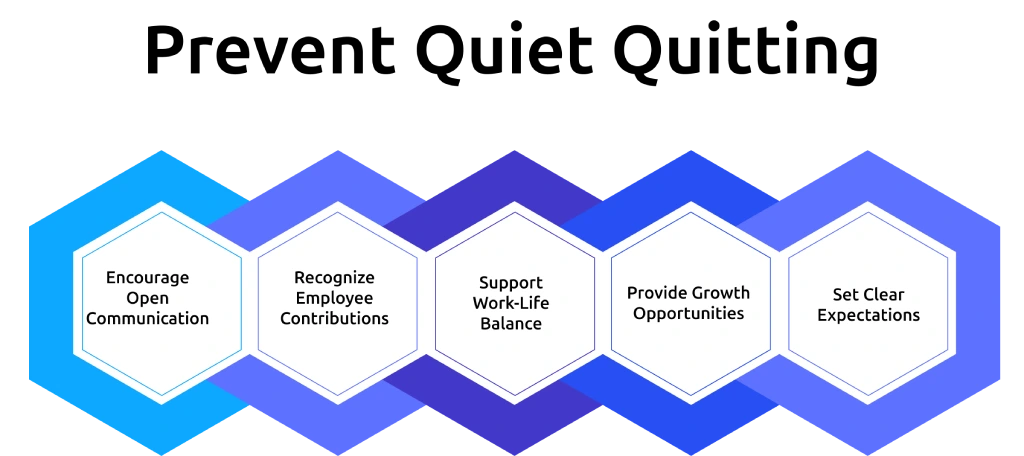
1. Encourage Open Communication
Regular conversations help identify concerns before they become bigger problems. Creating opportunities for honest feedback and actively listening to employees makes it easier to understand their challenges and build stronger working relationships.
2. Recognize Employee Contributions
Acknowledging good work helps employees feel valued and appreciated. Recognition does not always have to be financial. Simple appreciation, timely feedback, and celebrating achievements can improve motivation and encourage continued engagement.
3. Support Work-Life Balance
A healthy work-life balance helps reduce stress and prevent long-term burnout. Encouraging reasonable workloads, respecting working hours, and promoting time off allow employees to stay productive without feeling overwhelmed.
4. Provide Growth Opportunities
Employees are more likely to stay engaged when they see opportunities to develop new skills and advance their careers. Offering training, mentoring, and clear career paths helps maintain long-term motivation.
5. Set Clear Expectations
Define responsibilities clearly, set realistic goals, and give regular feedback so employees know what to do. This reduces confusion, builds confidence, and creates a more positive work experience.
Unbalanced workloads often reduce productivity and team performance.
Try Time Champ to balance workloads and improve efficiency.
One smart tool for all your workforce management needs
Instant Signup
Thank you for your request!
We have received your signup request and our team will get back to you soon. In the meantime, you can book a demo to see Time Champ in action.
Book a DemoFree trial. No credit card required. Prefer a walkthrough? Book a demo.
Decisions Backed by Data
Trends and team-level analytics that show what matters.
Explore Workforce Analytics →