What is Short Term Planning?
Learn what short-term planning is, its importance, and how it helps businesses stay focused for immediate success.
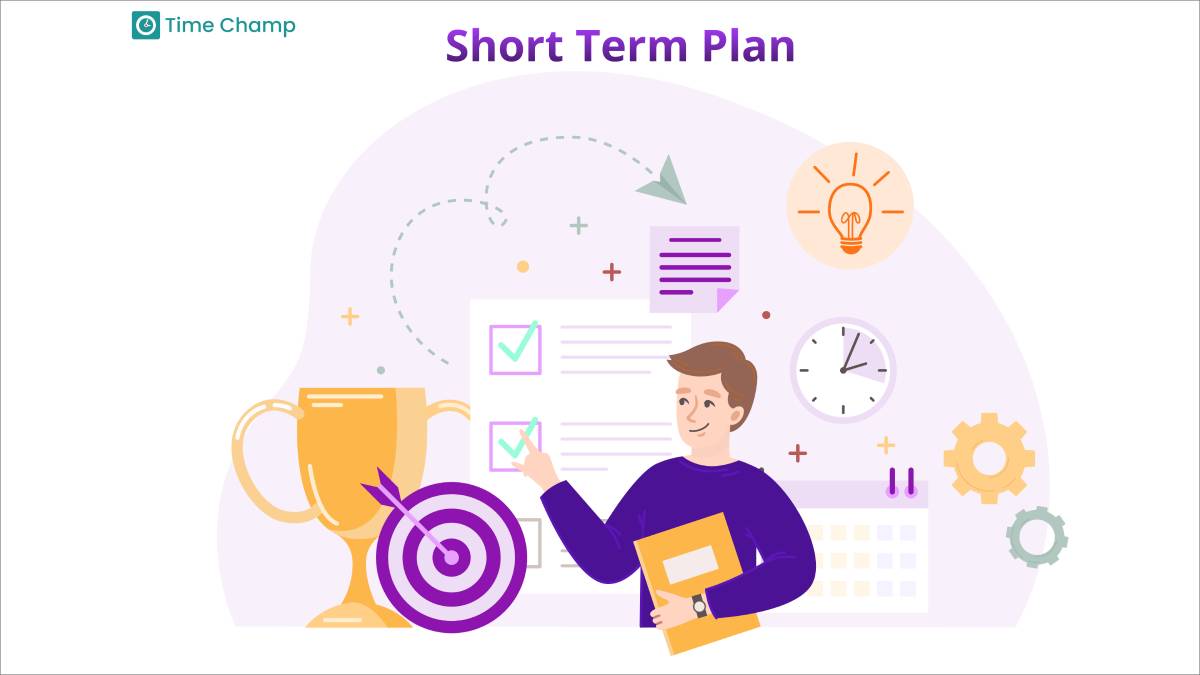
Short-term planning is about setting goals and making decisions for the near future, usually within one day to one year Rather than thinking about distant goals, it concentrates on the next few days, weeks, or months, thus, it helps us to determine what we need to do right now to be closer to where we want to be.
It is about dividing the big goals into smaller, manageable steps, so we can keep on track and make necessary adjustments. Planning for the short term helps us be organized, and flexible, and keep on the way to our big dreams.
Why Short Term Planning is Important?
Short-term planning is not just about keeping things in order. It is about additional motivation, time management, and flexibility. The following are some of the reasons why it is important to set short term goals.
- Offers short-term objectives that allow you to see the starting point.
- It provides a sense of achievement and your employees will be encouraged enough towards work.
- Divide projects into small tasks to effectively manage time.
- It assists in the smooth implementation of alternative plans if need be.
- Promotes easier progress tracking so that you can plan more things.
- Tasks will become less overwhelming when planned.
- Raises a feeling of accountability in employees and they will become more responsible for their actions.
- Prevents wasting time and helps in increasing overall efficiency.
- You can witness task improvement as soon as you and your employees start working according to the plan.
- Short term goals assist you in creating a good foundation for long-term goals.
Also Read
What is Long-Term Planning: How it Unveils Success
How to Create a Good Short-Term Planning Strategy?
Here are the tips that will help you to set up short term goals for yourself or your organization in an easy way.
1. Set Your Objectives
Define your short term objectives using the SMART criteria:
- Specific: To reach your company goals, you must ensure they are precise and clearly stated.
- Measurable: Implement an evaluation procedure which will show the effectiveness of the plan.
- Achievable: Attempt to set goals that are easy to accomplish for you.
- Relevant: Guarantee that the goals are the same as the objectives and the priorities.
- Time-bound: Make a to-do list with a deadline for each task so that your employee will be in a hurry and also accountable.
2. Prioritize Your Tasks
Break your goals into smaller and more manageable parts and then prioritize them to make them more realistic. This way, you accumulate the necessary energy and proceed towards the attainment of the general goals and objectives incrementally.
3. Set Achievable Deadlines
Set real deadlines with the tasks to be finished by a certain date to give the work process meaning and responsibility. Do not set unrealistic deadlines. However, it is better to set more realistic deadlines that will enable gradual progress and quality work to be done. This way you can develop a framework that will help your employees efficiently achieve the intended objectives.
4. Use a Calendar or Planner
Organize your tasks using a calendar or planner to schedule your tasks and deadlines. This way, you can have better control over the time and your employees are likely to adhere to the planned schedule. This method assists you in keeping on the right track and in achieving set goals and objectives.
5. Allocate Time Wisely
Divide the time into segments for the accomplishment of certain tasks. Do not schedule too many tasks for a particular day and do not force your employees to complete everything in a day. This way, they can pay more attention to each task, avoid stress and be more productive. By spreading the workload, your employees can work steadily without the feeling of being overwhelmed by the amount of work they have to do.
6. Stay Flexible
It is very important to leave some space for flexibility and changes in your schedule. Make changes to the plan if that is necessary. In this way, they can handle new situations without stress and also maintain their concentration while at the same time, they have a practical and feasible strategy.
7. Avoid Overcommitting
Be careful about your employee’s limitations and do not assign more tasks than they can handle. It is better to deal with a few of the most important tasks and finish them in the best possible way than to overload your agenda and thus not complete anything at all. This way, your employees can maintain productivity and avoid the stress of an overburdened schedule.
8. Split up the Tasks into Smaller Steps
Split big tasks into simple tasks that can easily be done. This way, the tasks will be more doable and the rush of doing them will be less nerve-wracking. By tackling simpler tasks one at a time, your employees can effectively manage your workload and maintain a sense of progress. This strategy not only makes the overall task less daunting but also increases productivity and efficiency.
9. Regular Review and Adjust
Every day, it is your job to go back to your short-term plan to see how far you have come and to see if any adjustments need to be made. Maintain your aim by changing the way if needed. By regularly evaluating and adapting the approach, your employees can ensure continued progress towards your goals while staying responsive to changing circumstances. This proactive mindset fosters ongoing growth and success on their journey.
10. Celebrate Achievements
Take your success story with you as you go. Remember your positive feelings when you are done with a task and have achieved something to help you stay motivated. In this way, you keep yourself in a positive frame of mind and are encouraged to keep on striving for your goals.
11. Learn from Experience
Consider your short-term planning mechanism and write down the conclusions based on your experiences. Give an example of what worked and what needs to be changed so that the next time you plan something, you can make the best choice. For instance, if setting deadlines worked well previously, integrate this practice. On the other hand, if poor communication causes delays, prioritize clearer communication in future plans. This reflective-adaptive cycle boosts planning proficiency, increasing success rates in subsequent projects.
12. Seek Feedback
Do not be shy to ask for feedback from the people around you, whether from your colleagues, mentors, or friends. They might be the knowledge source and give you the best advice to enhance your planning process. Accept what they say as they may come up with new ideas or highlight some aspects you have not thought of. Feedback helps in improving plans and thus enhances the probability of success.
13. Stay Positive
Never give up and be confident that you can achieve your long-term goals. A good attitude will surely be your friend in combating difficulties and staying positive. Dedication and self-assurance are necessary for achieving objectives and overcoming obstacles. It is important to know that sometimes everyone can experience some form of failure so, remember that this can be a good thing in the long run.
14. Stay Consistent
Ensure that the activities involved in short-term planning are continuous. It is important to plan and make it a habit so that you will be able to realize your goals gradually. It is crucial to review and revise your plans to ensure that you are on the right track, especially when proactive planning helps in making slow but sure progress towards the achievement of goals.
Also Read
What is Short Term and Long Term Planning?
Conclusion
In conclusion, short term planning plays an important role in planning your future and gives you great clarity about what to do next. You just need to make little parts of your big goals, one step at a time makes you closer to your big goals. so, and make progress by achieving these goals one by one. Always stay organized and flexible to the challenges.
The selection of the right monitoring software like Time Champ helps in achieving the set goals and objectives as planned.
Plan Short and Achieve Big with Time Champ
Take steps towards your goals

Shabana Shaik

Table of Content
-
 Why Short Term Planning is Important?
-
How to Create a Good Short-Term Planning Strategy?
-
Conclusion
Related Blogs
Find out the difference between short-term and long-term planning. Learn how businesses set short-term goals and lay the foundation for long-term success in simple terms.
jahnavi Pulluri | 24 May 2024
Discover the importance of time estimation for project success and how accurate estimates enhance productivity and planning.
Jahnavi Pulluri | 19 September 2024
Learn the art of long-term planning with us! Explore practical advice and user-friendly tools to achieve Everlasting success on your
Jahnavi Pulluri | 25 May 2024
Optimize productivity: Discover strategies to enhance organizational efficiency, streamline operations, and drive success in a competitive business landscape.
Mounika Sai | 7 January 2024
Master PC monitoring software with our comprehensive guide. Discover benefits, best practices, and expert insights for enhancing security and productivity.
Thasleem Shaik | 15 December 2023
Enhance productivity and reduce waste with operational efficiency strategies. Discover how streamlined processes and optimization drive business success.
Thasleem Shaik | 6 June 2023


 4.7/5 avg.
Ready to Manage Your Workforce Smarter?
Join our family of 1500+ companies using smart insights to redefine workforces!

Free Trial
No Credit Card Required