Time Champ > Blog > External Workforce Intelligence Shaping Enterprise Strategy > Content
External Workforce Intelligence Shaping Enterprise Strategy
Learn what external workforce intelligence is, why it matters for enterprise strategy, real examples, how it shapes strategy & which teams benefit most.

The way you build and execute an effective strategy has evolved significantly in today’s business environment, right? External employees now support key innovation, operations, and growth. Yet you might still lack visibility into how your workforce performs. Without proper insights, strategic decisions depend on assumptions. External workforce intelligence helps you monitor how work actually happens beyond the internal teams.
This blog will help you understand what external workforce intelligence is and why it is important in today’s business strategy. You’ll also get to know real-time examples, key benefits, and the teams that benefit the most from these insights.
What is External Workforce Intelligence?
External workforce intelligence is the structured analysis of data from contractors, vendors, and freelancers to understand performance, collaboration, capacity, and risk. It helps you make strategic decisions across wide workforce environments with measurable outcomes, accountability, and long-term real value.
What if your biggest strategic risks lie beyond your enterprise and go unnoticed? External workforce intelligence removes the blind spots in how the work actually happens and gets delivered. You can have complete visibility into the engagement, productivity, timelines, and dependencies which shape the strategic results. You can act early with the insights into actual work patterns.
This intelligence becomes highly important as the external teams drive innovation and execution at scale. When you clearly understand how the external contributors work, you can control expenses and minimize risks at delivery time. You can integrate the strategy with execution using accurate data. This connection helps you to make smarter and more confident enterprise decisions.
Is External Workforce Intelligence the Same as External Workforce?
No, external workforce intelligence is not the same as managing an external workforce. External workforce refers to contractors, freelancers, vendors and partners helping your operations. External workforce intelligence focuses on analyzing how this workforce actually performs and collaborates. It transforms the scattered workforce information into actionable insights for organizational strategy. Without intelligence, you can only see the workforce numbers but not the real execution trends. You can understand who is actually working, but you might not observe the effectiveness of delivering work by your teams. External workforce intelligence connects work activity with outcomes, which helps you align external efforts with your enterprise strategy. This transparency ensures that you make decisions based on actual information.
Why does External Workforce Intelligence Matter for Enterprise Strategy?
Enterprise strategy often fails when leaders cannot observe how work is actually delivered in real-time beyond the internal teams. This section explains how external workforce intelligence enhances decisions, aligns execution, manages cost and risk, and prepares enterprises for future workforce needs.

Did You Know?
According to the U.S. Bureau of Labor Statistics, 10.1% of U.S. workers operate in alternative work environments, including contractors, freelancers, and on-call employees. As this workforce expands, enterprises require enhanced visibility to manage execution, cost, and risks beyond internal teams.
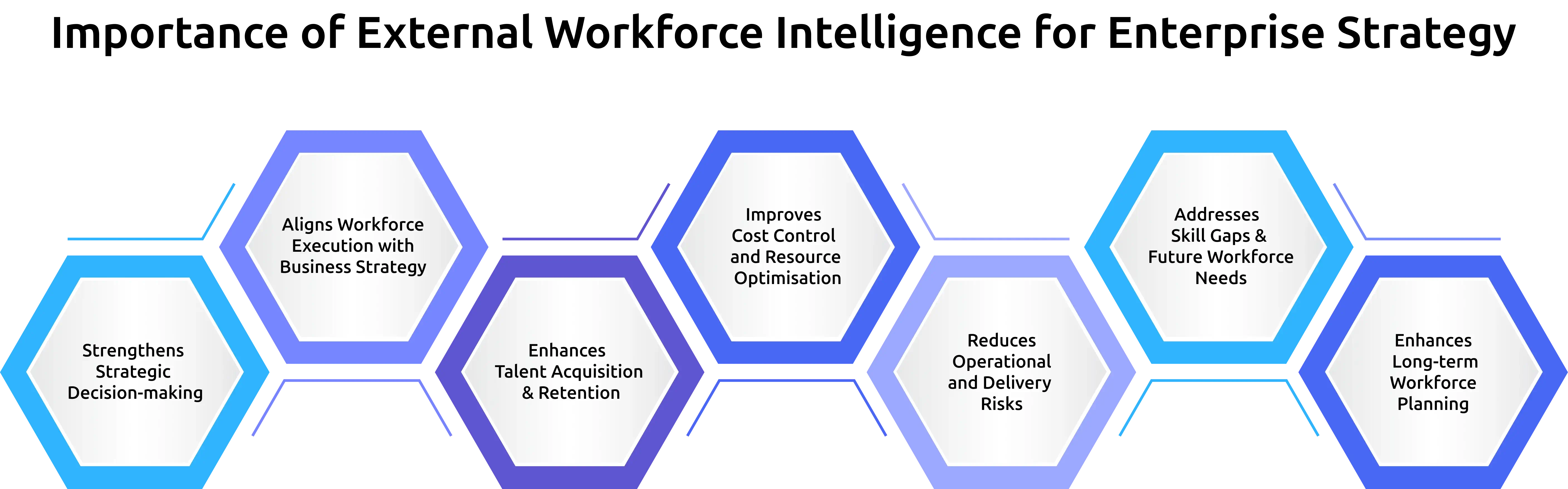
- Strengthens Strategic Decision-making: Accurate workforce information enables you to make informed and confident decisions by showing the real execution conditions. This strengthens the enterprise planning and eliminates the reliance on assumptions.
- Aligns Workforce Execution with Business Strategy: Real-time external work visibility ensures that the daily execution remains properly aligned with the strategic timelines and plans. The resources constantly contribute towards your business objectives with measurable progress.
- Enhances Talent Acquisition & Retention: Performance insights can help you identify the high-value external contributors, enhancing the hiring quality and vendor selection. Data-driven decisions promote stronger and long-term partnerships.
- Improves Cost Control and Resource Optimization: Clear transparency into the utilization, work distribution, and costs minimizes the inefficiencies and prevents cost overruns. Resources stay optimally aligned with your delivery needs.
- Reduces Operational and Delivery Risks: Early identification of delays and workflow dependencies enables you to act proactively. This transparency keeps delivery risks predictable and manageable.
- Addresses Skill Gaps & Future Workforce Needs: Insights into the emerging skills needs and capability gaps support the targeted hiring and upskilling initiatives. This ensures the workforce readiness for your future projects and priorities.
- Enhances Long-Term Workforce Planning: Integrating workforce information with the growth and capacity creates an organized view into future workforce requirements. Planning is effectively aligned with your organizational direction, scale and long-term objectives.
What Are Examples of Workforce Intelligence in Enterprise Strategy?
External workforce intelligence becomes most valuable when applied to real enterprise decisions. It helps you transform the workforce data into practical insights which guide planning and execution. The following examples show how the businesses utilize workforce intelligence to support strategy and enhance outcomes.
External Vendor Performance Evaluation
External workforce intelligence helps you evaluate vendor work delivery across projects and timelines. You can monitor productivity, delays and quality trends consistently. This helps to select the efficient partners and reinforce vendor associations.
Workforce Capacity and Utilization Analysis
External workforce intelligence shows how external contributors use their available capacity. You can identify the overload, underutilization or uneven workload distribution. This clarity enables you to balance the resources and maintain smooth execution across initiatives.
Skill Availability and Capability Mapping
Enterprises evaluate their workforce data to understand what external skills are available and what they lack. You can align the sourcing decisions to future strategic initiatives. This ensures that the crucial capabilities remain accessible when organizational priorities alter.
Cost and Spend Visibility across External Teams
External workforce intelligence can help you monitor the effort, time, and expense of contractors and vendors. You can compare costs and the delivered outcomes. This helps to enhance the budget management and workforce investment.
Risk Detection in Cross-Team Dependencies
External workforce intelligence can identify dependency risks between internal and external teams. Early transparency into handoffs and delays helps to prevent disruptions. This keeps enterprise initiatives on track and limits the uncertainty of execution.
Gain Clear Visibility into Your External Workforce.
Make confident decisions with Time Champ workforce intelligence.
How Does an External Workforce Intelligence Platform Shape Enterprise Strategy?
External teams play a critical role in achieving enterprise goals. An external workforce intelligence solution helps you align vendor and contractor performance with strategic priorities. This section shows how external workforce intelligence platforms deliver visibility and strategic control.
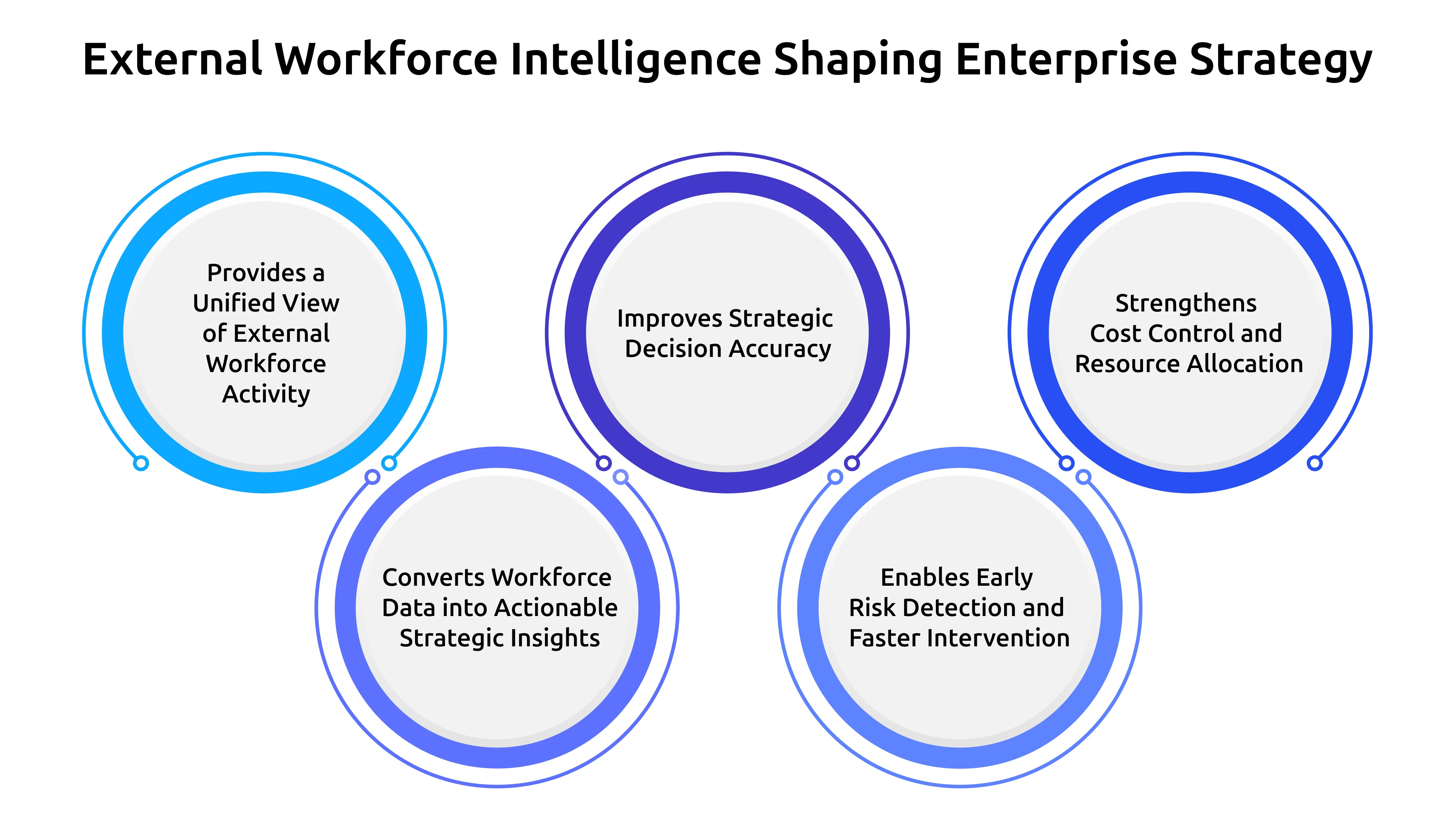
1. Provides a Unified View of External Workforce Activity
An external workforce intelligence platform centralizes data across the contractors, vendors and partners. You can have a clear visibility into performance, timelines and dependencies. This clarity will help you to understand how external work influences enterprise goals.
2. Converts Workforce Data into Actionable Strategic Insights
The platform uses workforce data to identify trends, inefficiencies, and performance loopholes. You can observe what impacts the outcomes in the external teams. These insights help to refine your strategy based on the real-time delivery outcomes.
3. Improves Strategic Decision Accuracy
You can get accurate insights for evaluating the investments, trade-offs, and timelines. This directly supports strategic decisions by connecting the workforce performance with the business goals, challenges, and outcomes.
4. Enables Early Risk Detection and Faster Intervention
The platform detects risks that relate to capacity, productivity, and cross-team dependencies. You can solve the problems before they influence enterprise objectives. This minimizes disruption to strategic initiatives.
5. Strengthens Cost Control and Resource Allocation
Monitor effort, utilization and expenditure on external interactions. With this transparency, you can optimize the resources and manage costs. Strategic investments effectively align with the delivered value.
Platforms like Time Champ enable businesses to gain real-time access to the external workforce performance, utilization, and delivery risks. Time Champ helps you integrate contractor and vendor execution with the business priorities by having centralized data and actionable insights. This ensures that decisions remain data-driven and aligned with your enterprise strategy.
Gain Clear Visibility into Your External Workforce.
Make confident decisions with Time Champ workforce intelligence.
Which Business Teams Benefit Most from External Workforce Intelligence?
External workforce intelligence provides value to various business processes. It helps teams gain more clarity, enhance coordination, and make accurate decisions. This section highlights the business teams that gain effective value from external workforce intelligence.
Human Resources and Talent Teams
HR departments rely on external workforce intelligence to gain insights into the skill availability, performance trends, and engagement levels. You can enhance your sourcing decisions and develop more robust external talent pipelines. This insight supports effective workforce planning and long-term talent strategy.
Operations and Delivery Teams
External workforce intelligence helps operations teams to monitor employee productivity, timelines, and dependencies. You can detect the bottlenecks at an early stage and ensure consistency in the delivery. This helps to ensure that external work meets the operational standards and commitments.
Finance and Procurement Teams
Finance and procurement teams get full visibility of expenditure, vendor performance and utilization. You can control the costs and enhance resource allocation. This helps you make smarter budgeting and contract decisions associated with real-time delivery outcomes.
Project and Program Management Teams
Project managers have real-time access to external team progress and dependencies. You can manage the challenges, schedules and enhance coordination. This clarity helps keep the projects aligned with the company priorities.
IT and Digital Transformation Teams
IT teams use workforce intelligence to monitor external contributors across complex initiatives. You can monitor the employee performance, security issues, and delivery readiness. This ensures that external resources support technology goals without compromising the quality of execution.
Remove Blind Spots in External Workforce Execution.
Drive strategic clarity using Time Champ.
Conclusion
External workforce intelligence has become a necessity for enterprises that depend on extended teams to drive growth and implementation. Strategy becomes reality when you think about how the external work is actually delivered. You can get insight into performance, cost, risk and capabilities across contractors, vendors and freelancers. This visibility enables you to make appropriate decisions, minimize the delivery gaps, and ensure that the execution of the workforce aligns with business objectives. As the external work continues, companies that utilize workforce intelligence remain flexible and competitive. With the right intelligence platform, you can ensure that strategy reflects real working patterns and long-term organizational achievement.

Anjali

Table of Content
-
 What is External Workforce Intelligence?
-
Is External Workforce Intelligence the Same as External Workforce?
-
Why does External Workforce Intelligence Matter for Enterprise Strategy?
-
What Are Examples of Workforce Intelligence in Enterprise Strategy?
-
How Does an External Workforce Intelligence Platform Shape Enterprise Strategy?
-
Which Business Teams Benefit Most from External Workforce Intelligence?
-
Conclusion
Related Blogs

Discover how workforce intelligence improves workload distribution, balances team capacity, prevents burnout & how to manage it with data effectively.
Tarun Kumar Reddy | February 11, 2026
Learn why filtering workforce data is essential, how to filter data for effective workforce intelligence step-by-step, and how it supports better outcomes.
Guna Lakshmi | February 11, 2026
Learn what talent strategy is in workforce intelligence, how to create, implement & manage it effectively for a future-ready talent workforce.
Chethana | February 11, 2026
Learn why workforce intelligence matters for investment & strategy teams, what makes it a strategic asset, how teams use it & how it supports decisions.
Chethana | February 11, 2026
Learn why trust matters in workforce intelligence, how a privacy-first approach builds it, the key benefits, and how it protects company culture.
Thasleem Shaik | February 11, 2026
Discover 10 ways HR teams can use workforce intelligence to improve hiring, retention, performance management, and drive smarter data-driven HR decisions.
Anjali | February 11, 2026


 4.7/5 avg.
Ready to Manage Your Workforce Smarter?
Join our family of 1500+ companies using smart insights to redefine workforces!

Free Trial
No Credit Card Required