Time Champ > Blog > How to Build a Talent Strategy with Workforce Intelligence > Content
How to Build a Talent Strategy with Workforce Intelligence
Learn what talent strategy is in workforce intelligence, how to create, implement & manage it effectively for a future-ready talent workforce.

Creating a modern talent strategy becomes difficult when work spreads across teams and roles change faster than plans can keep up. Assumptions and static workforce plans no longer reflect how work actually happens or which skills drive results. Workforce intelligence closes this gap by showing you how work flows, how teams use skills, and where capacity or performance risks start to build.
In this blog, you will learn how workforce intelligence supports smarter talent planning, aligns hiring and upskilling with real workload demand, and keeps workforce decisions grounded in operational reality. By the end, you will gain practical insight to plan confidently, improve workforce efficiency, control costs, and build a resilient, future-ready workforce that can adapt to constant change.
What is a Talent Strategy?
Talent strategy is a data-driven method of planning, acquiring, developing, and retaining talent by aligning workforce skills, capacity, and performance with long-term business goals through workforce intelligence.
An effective talent strategy gives you a structured approach to workforce planning and decision-making. It connects people initiatives, such as hiring, learning, and performance management, with real work patterns and skill utilization. This helps you anticipate talent needs, prioritize critical roles, and reduce reliance on reactive recruitment.
As business needs change quickly and skill requirements evolve faster than job roles, you need a clear and adaptable talent strategy. Workforce intelligence strengthens this strategy by giving you ongoing visibility into workforce effectiveness, helping you balance productivity, cost efficiency, and long-term workforce sustainability.
Want to build a talent strategy that matches real team capacity?
Use Time Champ to track workload trends and make smarter staffing decisions!
How to Create a Talent Strategy with Workforce Intelligence
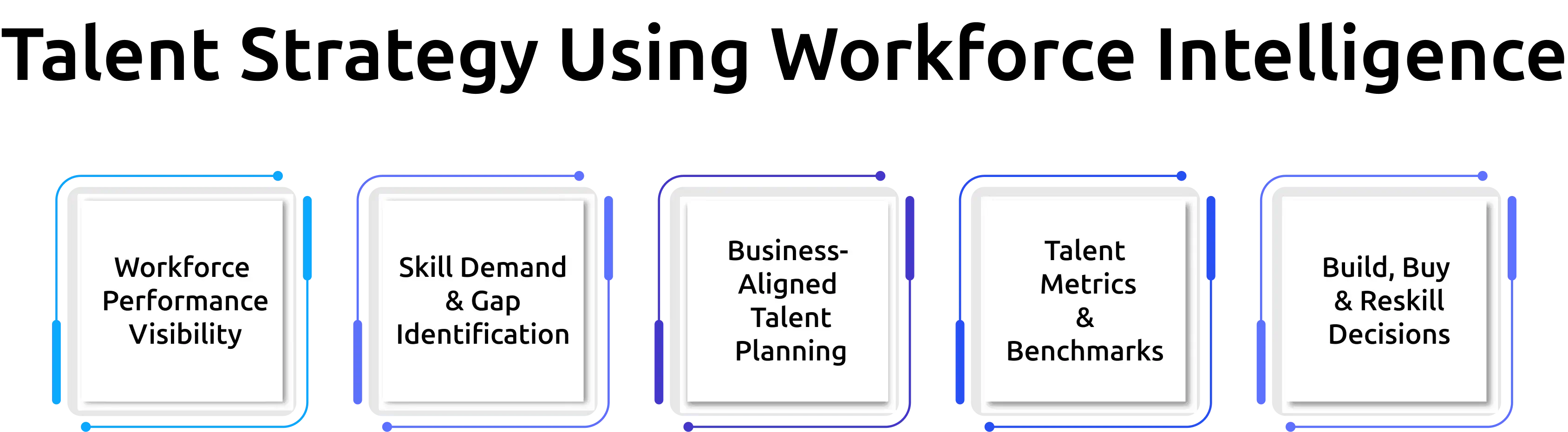
Developing a talent strategy with workforce intelligence means turning workforce data into clear, actionable planning decisions. The steps below show you how to build a data-driven talent strategy that aligns workforce capabilities with business objectives.
Analyze Current Workforce Performance
Workforce intelligence gives you insight into how teams spend their time, how workloads are distributed, and where productivity varies across roles and teams.With workforce analytics, you can identify underutilization, capacity pressure, and performance gaps early.
Identify Skill Demand and Gaps
By analyzing work patterns and output data, workforce intelligence helps you identify the skills that drive business outcomes and where gaps are emerging. This supports more precise skills-based planning and reduces reliance on reactive hiring.
Align Talent Planning with Business Objectives
A data-driven talent strategy helps you align hiring, upskilling, and workforce allocation with real business demand. Workforce intelligence connects workforce planning to project needs, growth strategies, and operational priorities.
Define Clear Talent Metrics and Benchmarks
Workforce intelligence helps you define clear metrics such as utilization rates, coverage ratios, and productivity metrics. These benchmarks give you a consistent way to assess the success of your talent strategy over time.
Prioritize Build, Buy, or Reskill Decisions
Workforce analytics help you decide whether to hire new talent, reskill existing employees, or redeploy internal resources. This approach maximizes workforce investment and supports long-term sustainability.
How to Implement a Talent Strategy Using Workforce Intelligence
A talent strategy implementation involves transforming workforce knowledge into action. Workforce intelligence ensures that your strategy moves beyond planning documents and actively guides hiring, development, and workforce management decisions.
Step 1: Translate Workforce Insights into Action Plans
Start by transforming workforce intelligence data into defined talent priorities. Apply workforce analytics to identify roles with persistent workload pressure, productivity gaps, or skill deficiencies. Use these insights to guide targeted hiring, reskilling, or redeployment decisions based on business needs.
Step 2: Align Hiring with Real Workload Demand
Instead of relying on assumptions, workforce intelligence helps you plan hiring based on actual workload demand. By understanding capacity needs and utilization patterns, you can avoid overstaffing or understaffing and fill critical roles at the right time.
Step 3: Embed Workforce Intelligence into Upskilling Programs
Workforce intelligence identifies the skills that are in use and those that are becoming less relevant. This will enable you to focus on upskilling and reskilling programs that have a direct influence on productivity, delivery and long-term workforce readiness.
Step 4: Enable Managers with Continuous Visibility
To make a talent strategy effective, managers require continuous workforce visibility. Workforce intelligence platforms give you real-time visibility into workload balance, performance trends, and engagement risks. With this insight, you can shift from reactive intervention to proactive people management.
Step 5: Use Time Champ to Operationalise Talent Strategy
Time Champ is a workforce intelligence platform that helps you strengthen your talent strategy using data-driven insights. It gives you visibility into work patterns, productivity, utilization, and team capacity, so you can align hiring, upskilling, and workforce allocation with real business needs. This keeps your talent strategy measurable, adaptive, and execution-ready.
What if you could plan talent using real workload insights?
Explore how Time Champ supports confident hiring and skills planning.
How to Manage a Talent Strategy with Workforce Intelligence
Managing a talent strategy requires ongoing review, adjustment, and coordination to stay aligned with business needs. Workforce intelligence makes sure that the strategy is still up to date as business needs, workloads, and skill demands change.
Monitor Workforce Health and Capacity Continuously
Workforce intelligence gives you continuous insight into utilization, workload distribution, and capacity imbalance across teams. With these signals, you can avoid burnout, address inefficiencies early, and maintain sustainable levels of productivity.
Review Skill Effectiveness and Talent Outcomes
A data-driven talent strategy relies on regularly evaluating how teams use skills and how those skills drive outcomes. Workforce analytics helps you determine whether existing skills deliver results or whether you need to focus on upskilling or role redesign.
Adjust Talent Plans Based on Business Change
As business demand changes, workforce intelligence helps you redistribute teams, redeploy talent, and adjust recruitment plans without disrupting operations. This flexibility keeps your talent strategy aligned with growth, cost, and delivery goals.
Strengthen Retention through Proactive Insights
Workforce intelligence provides early signs of disengagement from day-to-day work, imbalance in team workloads, and a drop in overall execution performance. These insights help you keep employees longer, reduce turnover risk, and safeguard the knowledge that keeps work moving.
Maintain Executive Oversight with Actionable Dashboards
Centralized workforce intelligence dashboards give you a clear understanding of workforce performance, capacity, and risk. With this visibility, you can plan confidently, address challenges early, and support sustainable performance over time.
Want to build a talent strategy based on real workforce data?
Use Time Champ to track capacity, performance trends, and skill gaps with workforce intelligence.
Conclusion
Developing and maintaining a strong talent strategy requires more than planning. It demands clear answers to everyday questions such as where teams lose time, which roles carry the highest workload, and where skill gaps affect delivery. Workforce intelligence provides that clarity by showing how work moves across teams, how employees apply skills, and where capacity pressure starts to build.
With this visibility, you can hire based on actual demand, focus reskilling on the skills that matter most, and allocate budgets with better accuracy. Instead of reacting after performance drops, you can prevent overload early, improve productivity, and build a workforce that consistently supports business goals.
What if your workforce strategy adapted as fast as your business?
Explore how Time Champ brings clarity to changing workforce needs.

Chethana

Table of Content
-
 What is a Talent Strategy?
-
How to Create a Talent Strategy with Workforce Intelligence
-
How to Implement a Talent Strategy Using Workforce Intelligence
-
How to Manage a Talent Strategy with Workforce Intelligence
-
Conclusion
Related Blogs

Discover 10 ways HR teams can use workforce intelligence to improve hiring, retention, performance management, and drive smarter data-driven HR decisions.
Anjali | February 11, 2026
Learn workforce intelligence's role in employee experience & retention, how it redefines engagement, and key strategies to reduce turnover effectively.
Chethana Choudary | February 11, 2026
Learn why workforce intelligence matters for investment & strategy teams, what makes it a strategic asset, how teams use it & how it supports decisions.
Chethana Choudary | February 18, 2026
Discover how workforce intelligence improves workload distribution, balances team capacity, prevents burnout & how to manage it with data effectively.
Tarun Kumar Reddy | February 11, 2026
Learn what workplace intelligence is with real examples, how to implement it, key benefits, major challenges, and how it helps businesses scale effectively.
Anjali | February 11, 2026
Learn what productivity intelligence is, why it's important, how it works, ways it transforms team performance, pros & cons, and how to measure it.
Shabana Shaik | February 11, 2026


 4.7/5 avg.
Ready to Manage Your Workforce Smarter?
Join our family of 1500+ companies using smart insights to redefine workforces!

Free Trial
No Credit Card Required