What is Organization? Definition and Processes
Discover the definition, types, and key processes of an organization, and how structure and communication drive its success.
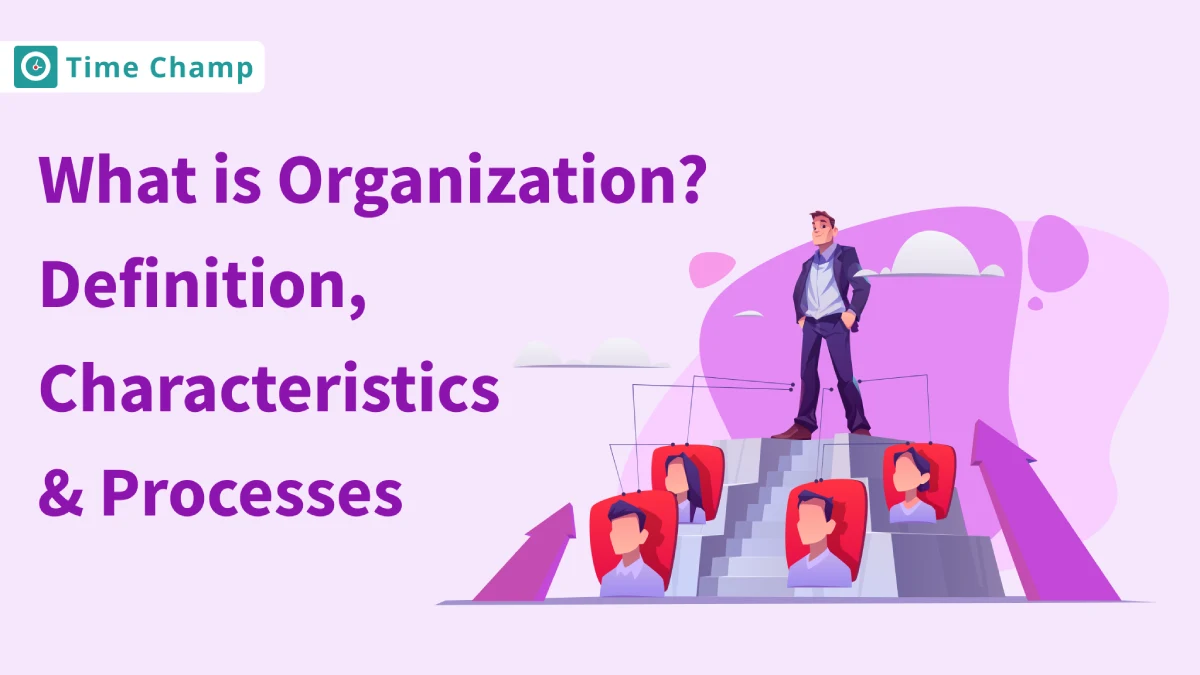
What is an Organization?
An organization is a group of individuals who work together to achieve common goals and
objectives, often with a structured approach and defined roles. An organization can be a private or public group,
such as a business, school, charity, government office, etc., that has a clear goal and purpose. Mainly
organizations are registered and bound by the existing tax rules and laws of the country or state.
The person
or people who start the organization are called the ‘Founder’ or ‘Founders.’ A founder is responsible for
implementing legal procedures, vision, and mission of the organization, creating its structure as well. Every
organization needs someone to make important decisions and guide the team to make sure they are working towards the
same goals. This is where the ‘Leader’ comes in, who is responsible for the actions mentioned above.
Types of Organization
Organizations come in various shapes and sizes, each designed to serve different purposes. Below are some of the categories that define how organizations are structured and operate.
For-Profit Organizations
- Aim to make money as their main goal.
- Can be privately owned or traded on the stock market.
- Examples: Corporations, partnerships, and sole proprietorship.
Non-Profit Organizations
- Work to help a cause or community, not to earn profits.
- Donations, grants, and fundraising as their main ways of financing their activities.
- Examples: NGOs, charities, and religious groups.
Government Organizations
- Organizations that are created and supported by the government to offer public services.
- Operate at local, state, or national levels.
Examples: Public schools police departments, government agencies, etc.
International Organizations
- International organizations unite countries to tackle global issues like peace, health, and trade.
- Focus on things like promoting peace, helping people during crises, and improving economies.
- Examples:
The United Nations (UN) works on peace and global security.
The World Bank helps countries grow their economies.
The International Red Cross provides aid during emergencies.
Informal Organizations
- Unofficial groups are formed by people with common interests or goals.
- Usually community-based and not formally structured.
- Examples:
Hobby clubs where people share fun activities.
Book discussion groups where individuals gather to read books and then have discussions.
Social groups that connect friends or people with similar interests.
Importance of Organization
Businesses need organizations to ensure that they operate smoothly and effectively as
they are supposed to. Understanding their importance is key to improving
operations, boosting
productivity, and enhancing profit margins.
Here are the key factors that highlight the importance of
organization:
Better Use of Resources
Organizations make the best use of people and money by giving the right tasks to the right people, avoiding repeated work, and reducing waste. This clear division of tasks saves time, money, and effort, helping to increase productivity.
Facilitate Economic Growth
Organizations are the engines of economic development. They produce the best products and services for society, provide employment to people, and are part of the national and international economy. It can be a small or multinational business, organizations are important for wealth creation and the distribution of resources.
Foster Innovation
Every organization aims to deliver new products, designs, technologies, and services which improve the quality of life. This innovation not only helps to increase the organization’s success but also impacts industries, and companies around the world.
An organization builds stability by setting up clear systems and structures. It eventually reduces confusion and makes business operations run smoothly, especially when supported by modern Business Management Software which help the teams to stay aligned.
Foster a Sense of Culture
An organization helps to create a strong culture based on the values and beliefs of its
people. This culture unites the team, helping them communicate and collaborate easily. It creates a good foundation
for teamwork, keeping everyone focused and driven toward the organization’s key goals and objectives.
As we’ve
seen, the benefits of organizations are game-changers, helping businesses make the most of their resources, spark
innovation, and build a strong, connected culture that really sets them up to succeed.
What are the Characteristics of an Organization?
Understanding the key characteristics of an organization helps to reveal how it
operates and achieves its objectives.
Let’s have a look!
Clear Purpose and Goals
Every organization aims for a specific goal or mission. This can be financial growth (in businesses) or to offer services (charities or government organizations). They work towards clear goals, both short-term and long-term, which help them plan their activities better and make good decisions as well.
Adaptability and Innovation
Organizations must be able to adjust to internal and external environment factors, for
example, the trends in the market, technological advancements, and regulatory requirements.
Encouraging
creativity and new ideas helps organizations solve problems, seize opportunities, and stay competitive.
Good
Structure
A clear structure outlines the roles, responsibilities, and reporting lines within an organization.
It builds a hierarchy to guide the flow of information and decision-making.To make this easier to understand, teams
often map out the steps and responsibilities visually using a flowchart generator .
Division of Labor
In an organization, work is broken down into sub-tasks and then distributed to individuals according to their capabilities. This makes the work easier to handle and enables the employees to do what they are employed to do best. Thus, the employees can become more specialized and, therefore, can work quickly and more effectively. However, coordination is important to avoid complications in completing the tasks to meet organizational objectives.
Specialization
Organizations help people grow in their respective areas by using their skills to produce great results. As a result, it makes work more efficient and helps employees grow, letting companies get the best of their abilities.
Resource Management
Organizations use different types of resources such as money, people, tools, and technology, to achieve their goals. This includes financial resources for operations and growth, physical assets like machinery and tools, and intellectual resources such as knowledge, information, and innovation. Properly planning, using, and improving these resources helps organizations work efficiently and grow.
What is the Process of Organization?
Set Clear Goals and Objectives
Setting particular goals which define the purpose and direction of the work is the first step. These goals should be easy to measure and guide the work ahead. Then, divide the goals into smaller and more easily achievable sub-tasks for each team to follow. This helps them to stay motivated.
Determine What Needs to be done
Finding out what needs to be done to reach the goals means identifying what tasks should be completed to achieve the goal. For instance, if the goal is to increase sales, the activities could be providing training to employees, improving advertising, improving catalogue design etc. These actions will help an organization get closer to its goal.
Divide the Work
This clearly identifies who is responsible for what and minimizes confusion about task
responsibilities in an organization.
For example, one employee can perform the marketing function, another employee can manage staff development, etc.
Arrange Resources
When the work is divided, the next process is to see that the work has to be supported by resources in terms of time, money, tools, and people. This way, each of the teams or each person is equipped with the necessities to fulfill their part.
Categorizing Groups and Departments
In this step, teams or individuals are categorized based on their expertise, skill, or the tasks they need to perform. It helps streamline operations and makes sure teams are focused on their specialized roles.
Create an Organizational Structure
It is essential to create structure after people have been divided into groups so that everyone knows what they are supposed to do. This helps everyone know their job, who they report to, and how teams can work and talk to each other easily.To support secure and efficient collaboration, many organizations now rely on a team password manager to safely share and manage access credentials across departments.
Give responsibilities and check progress
Finally, leaders are given the responsibility to manage teams. They check the progress of every member of the organization, make sure that goals are being achieved, and make changes if needed.
Examples of Successful Organizations
Apple Inc.
Apple is well known for creating trendy gadgets such as the iPhone, iPad, and Macintosh computers. They highly focus on quality design and easy-to-use technology. Apple’s strong brand loyalty has made it one of the world’s most valuable firms.
Microsoft
Microsoft is a large software firm that produces products such as Office and Windows. They also work on cloud services with Azure. Microsoft helps people and businesses with tech solutions.
Google is the most popular search engine, helping millions find information online every day. It also has services like Gmail, YouTube, and Google Maps. The company leads in online ads and new technology, like artificial intelligence.
Johnson & Johnson
Johnson & Johnson makes healthcare products people trust, like baby care items, medicine, and medical tools. The company is recognized for prioritizing safety and quality. It has been helping improve health around the world for over 100 years.

Jahnavi Pulluri


Table of Content
-
 What is an Organization?
-
Types of Organization
-
Importance of Organization
-
What are the Characteristics of an Organization?
-
What is the Process of Organization?
-
Examples of Successful Organizations
Related Blogs

Analyze and improve employee performance with ‘Lifetime Heat Maps’ for detailed insights and data-driven results.
Thasleem Shaik | 18 March 2025
Explore Time Champ’s new Audio Tracking feature. Monitor employee activity with audio and screen recording for detailed insights.
Shabana Shaik | 18 March 2025
Discover the best ways to introduce productivity monitoring in your organization smoothly and effectively.
Thasleem Shaik | 18 March 2025
Learn how to boost productivity by finding the right balance in employee monitoring, focusing on key indicators, and maintaining transparency
Tarun Kumar | 14 March 2025
Wondering why meetings are essential in remote work? Uncover 10 key reasons they improve communication, teamwork, and efficiency for your
Tarun Kumar | 14 March 2025
Struggling to keep your remote team connected? Explore 10 proven strategies to boost engagement, strengthen teamwork, and build a thriving
Tarun Kumar | 14 March 2025


 4.7/5 avg.
Ready to Manage Your Workforce Smarter?
Join our family of 1500+ companies using smart insights to redefine workforces!

Free Trial
No Credit Card Required