Every day, your business creates data through sales, customer interactions, and employee activities. When you use this data in the right way, it shows you what’s working and where improvements are needed. Business analytics helps you understand this information by converting raw data into actionable insights for making better and more accurate decisions.
In this guide, you will learn what business analytics is, why it matters, how it works, real examples, key benefits, challenges, how it differs from BI, & it's essential role.
What is Business Analytics (BA)?
Business analytics (BA) is the process of collecting, analyzing, and interpreting data to understand business performance and support better decision-making. It uses data, statistical methods, and analytical technologies to find patterns, measure outcomes, and transform raw data into valuable insights that can drive business decisions.
The main purpose of business analytics is to help you gain a clear and connected view of how your business truly operates. It reveals what’s working, what isn’t, and the reasons behind different outcomes by analyzing both past and real-time information. This insight allows you to respond quickly to changes, reduce risks, and stay on track.
Why is Business Analytics Important?
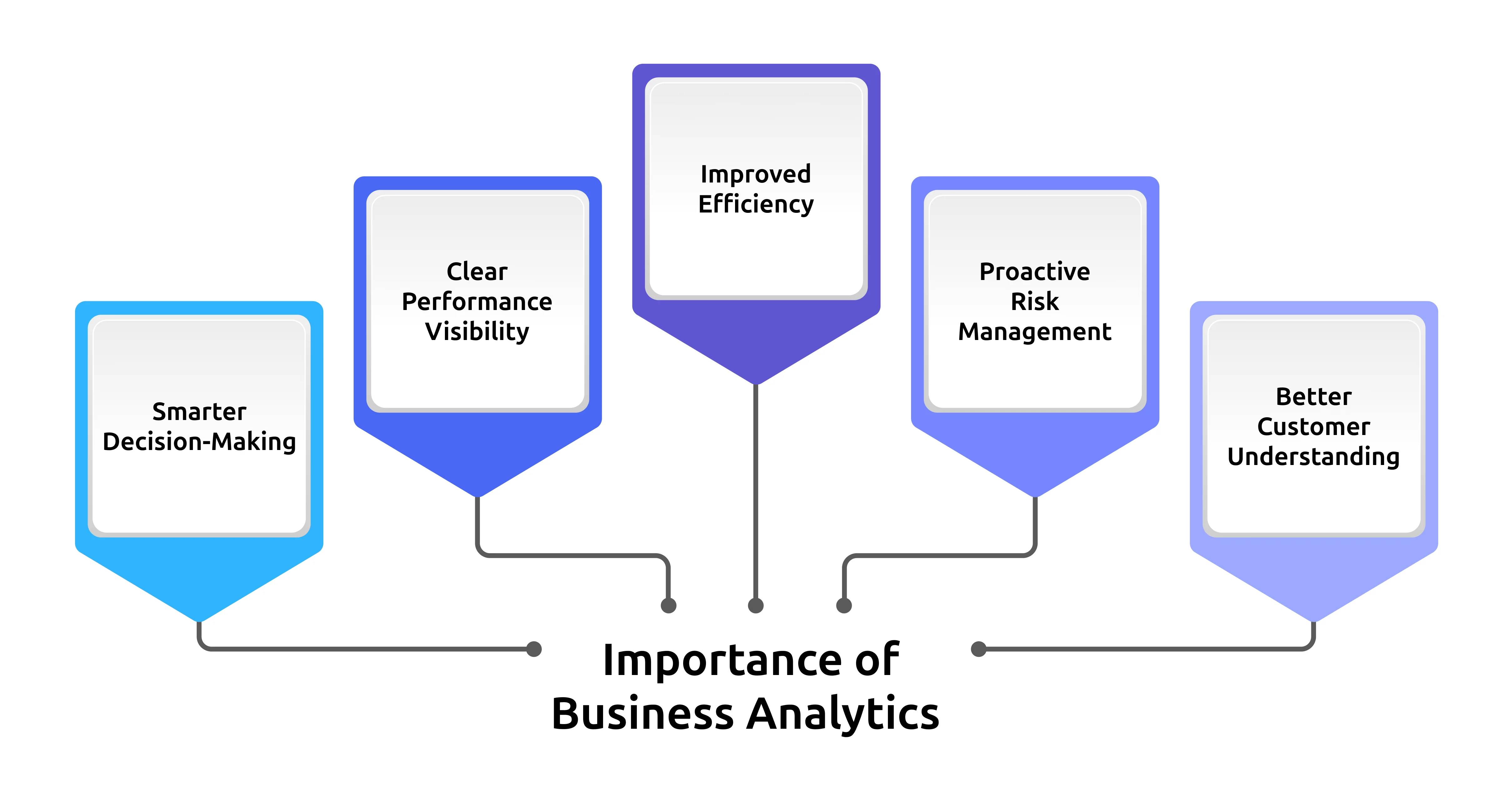
Business analytics plays a key role in helping you understand what’s happening across your business using data. Here are some key reasons why business analytics is important for your business:
-
Smarter Decision-Making:
Business analytics helps you make smarter decisions using clear and accurate data. It shows what is really happening in your business, so you can choose actions that push and support you towards your business goal.
-
Clear Performance Visibility:
It provides you with a clear picture of how your business is performing in terms of teams, processes and departments. This visibility makes it easier to track progress, measure outcomes, and understand where adjustments are needed.
-
Improved Efficiency:
It highlights inefficiencies in workflows and resource utilization in your teams. With these insights, you can simplify processes, reduce resource waste, and improve overall team efficiency.
-
Proactive Risk Management:
These analytics help you recognize potential risks before they grow and affect your team’s performance by identifying these patterns and trends early.
-
Better Customer Understanding:
Analytics helps you understand customer behavior, preferences, and expectations. These insights enable you to improve customer experiences, increase employee satisfaction, and build stronger relationships.
How Does Business Analytics Work?
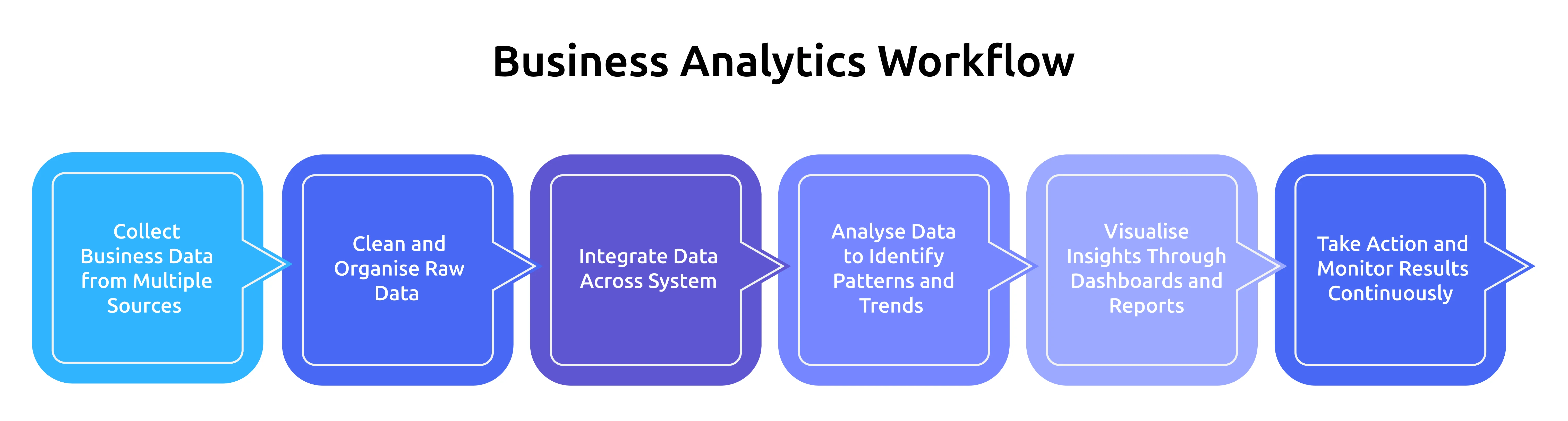
Business analytics works by turning everyday business data into useful insights through a structured process. It starts with collecting data from different sources such as sales systems, customer interactions, workforce operations, and employee activities. This data is then cleaned and organized so it can be accurately analyzed without errors or inconsistencies.
Next, the prepared data goes through data integration and analysis, where different datasets are combined and examined using analytical tools to examine patterns, trends, and relationships. This step helps you understand what is happening in your business, why certain outcomes occur, and where gaps or opportunities exist.
The final step is turning insights into action. Business analytics helps you make informed decisions, refine strategies, improve processes, and track results over time.
What Are Some Examples of Business Analytics?
Business analytics is used across different areas of a business to understand performance and improve outcomes. Here are some common examples that show you how analytics supports better decisions in everyday business operations.
1. Sales Performance Analysis
Businesses utilize analytics to track sales trends, revenue growth, and product performance. You can understand which products sell well, which regions perform better, and where sales efforts need improvement by analyzing this data.
2. Customer Behavior Analysis
Organizations analyze customer behavior in order to know buying habits, preferences and involvement levels. You can understand how customers interact with your brand and use these insights to enhance customer experience and establish a long-term relationship
3. Marketing Campaign Analysis
Business analytics applies to evaluating the effectiveness of marketing campaigns in various channels. You can understand which campaigns deliver results, which messages connect with audiences, and where marketing spend is most effective.
4. Operational Efficiency Analysis
Businesses use analytics to measure workflow, resource consumption, and business operations. You can understand where delays occur, identify unnecessary steps, and improve efficiency across processes.
5. Financial Analysis
Analytics supports financial planning by analyzing budgets, expenses, and forecasts. You use these insights to control costs, improve profitability, and plan investments more effectively.
6. Employee Performance Analysis
Organizations use analytics to track productivity, attendance, and workload trends of employees. You can understand workforce performance patterns and support better workforce planning and balanced operations.
What Are the Benefits of Business Analytics?
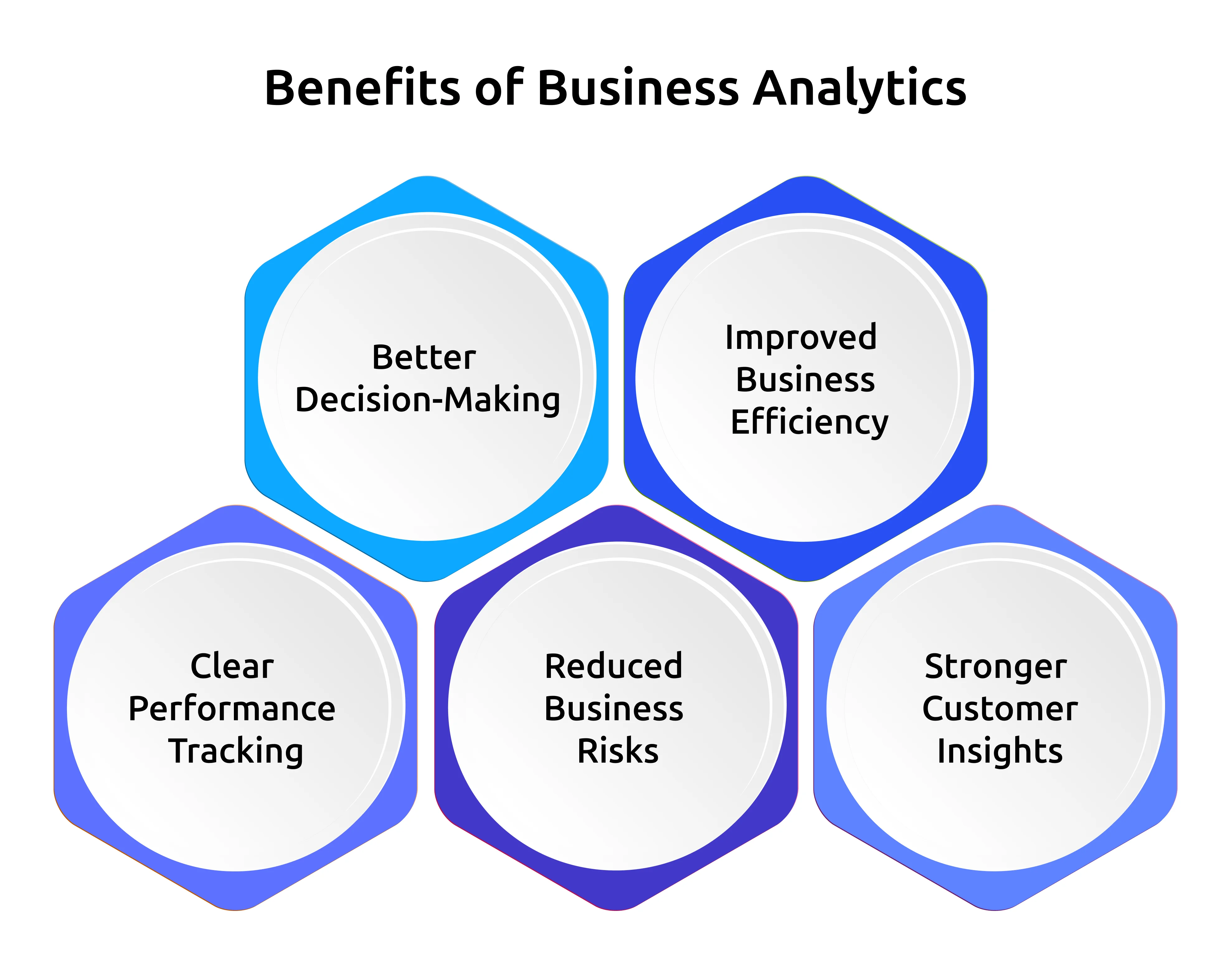
Here are the key benefits of business analytics and how it adds value across different areas of your business. These benefits help you make better decisions, improve efficiency, and build stronger business outcomes using data.
- Better Decision-Making: Business analytics helps you make decisions based on clear and accurate data. It shows patterns and results in a way that removes confusion and supports confident choices. As a result, you can make on-time, practical decisions that stay aligned with your business goals.
- Improved Business Efficiency: Analytics helps you quickly spot inefficiencies in everyday operations and workflows. It enables you to simplify processes, cut down time and resource waste, and boost productivity. As a result, your operations run more smoothly, and your resources are used more effectively.
- Clear Performance Tracking: Business analytics gives you a clear view of performance across teams and processes in one place. It helps you track progress, spot gaps early, and understand results in real-time.
- Reduced Business Risks: Analytics helps you identify potential risks by highlighting unusual patterns and early warning signs. You can take action before small issues turn into major problems. This reduces unexpected disruptions and supports business stability.
- Stronger Customer Insights: Business analytics helps you understand customer behavior, preferences, and expectations. These insights allow you to improve experiences and build stronger relationships. Over time, this leads to higher customer satisfaction and loyalty.
What Are the Challenges of Business Analytics?
While business analytics offers many advantages, it also comes with challenges that can limit its impact. Understanding these challenges and knowing how to overcome them helps you use analytics more effectively and get better results from your data:
1. Poor Data Quality:
One of the biggest challenges in business analytics is dealing with incomplete, outdated, or inaccurate data. When data quality is poor, insights become unreliable, and decisions may lead to wrong outcomes. This often happens when data is collected from multiple sources without clear standards. Over time, small errors can grow and affect overall business performance.
How to overcome it:
You can reduce this risk by setting clear data standards, cleaning data regularly, and using automated tools that validate and organize data before analysis.
2. Data Silos Across Teams:
Another challenge that can occur is when data is stored across different systems and departments, making it difficult to gain a complete view of the business. This reduces workforce collaboration and decision-making. When teams rely on partial data, it can lead to inconsistent reports and misaligned goals. Important insights are often missed when data remains disconnected.
How to overcome it:
You can prevent this by integrating data sources into a centralized platform. Workforce intelligence unites data across multiple teams into a single dashboard to enhance visibility.
3. Lack of Skilled Resources
Some businesses find it challenging when teams lack the skills to analyze and interpret data correctly. Complex tools and detailed reports can feel overwhelming, making it harder to use analytics effectively. This can lead to underuse of analytics tools or incorrect interpretation of insights.
How to overcome it:
You can address this challenge by using user-friendly analytics platforms and AI-powered workforce intelligence tools. These tools give insights in a clear, visual format, helping teams understand data quickly.
4. Difficulty Turning Insights into Action
Even when valuable insights are available, it may not always be clear what actions to take next. This often leads to delays, missed opportunities, or decisions that lack direction. In many cases, insights remain stuck in reports and dashboards and are not translated into real business actions, which weakens the value of analytics.
How to overcome it:
You can overcome this challenge by using AI-driven analytics and workforce intelligence that clearly show key trends, risks, and next steps.
5. Managing Large Volumes of Data
As business grows, the volume of data you handle increases rapidly, making manual analysis slow and inefficient. Huge data volumes may overload staff and slow down decision-making. Without the right tools, important patterns and insights may easily go unnoticed.
How to overcome it:
You can manage this by using AI and workforce intelligence tools that automate data analysis and handle large datasets efficiently.
How Does Business Analytics Differ from Business Intelligence?
Business analytics and business intelligence often look similar, but they serve different purposes. Understanding the difference between them helps you choose the right approach for analyzing data and making decisions.
| Business Intelligence (BI) | Business Analytics (BA) |
|---|
Are Business Analytics Tools Essential for Data-Driven Decisions?
Yes, business analytics tools are essential for data-driven decisions because they turn large volumes of data into clear, usable insights. These tools help you collect, organize, and analyze data accurately, making it easier to understand patterns, track performance, and evaluate outcomes. Without analytics tools, important insights can be missed, and decisions rely on assumptions. They also help to save time by automating analysis and presenting insights in understandable reports and dashboards. This allows you to respond faster to changes and make decisions with greater clarity.

Productivity Starts with Visibility - And Time Champ Gives You Both!
Book Your Free Demo