What are Core Values? Meaning and Definition
Learn how core values guide decisions, shape identity, and influence behavior in both personal and organizational settings.
Core values are the fundamental beliefs, principles, or standards that guide an individual, organization, or group in making decisions, setting goals, and interacting with others. These values reflect what is considered important and act as a compass for behavior, shaping actions and attitudes in various situations.
Core values often define an organization’s culture, ethics, and overall purpose, serving as a foundation for both personal and professional conduct. Examples of core values include integrity, respect, innovation, teamwork, and accountability.
Why are Core Values Important?
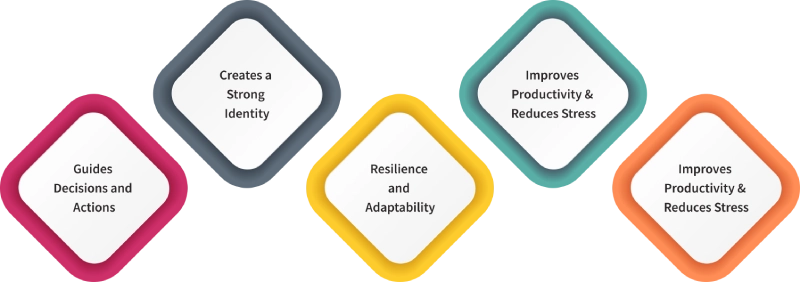
Guides Decisions and Actions
Core values provide a guide to decision-making since they define what is right and what is wrong. For individuals, this might mean choosing integrity over short-term gain, while for organizations, it could mean prioritizing customer satisfaction over cost-cutting. They make sure decisions match what matters most. For example, a company that values sustainability might avoid partnerships with businesses that harm the environment. These values often serve as a guide for your business growth , helping ensure strategic decisions align with long-term objectives.
Creates a Strong Identity
Core values explain who people are and what companies stand for. For individuals, they reflect what people think of them. For companies, values define their reputation and how they are seen by customers. Having clear values makes people and companies stand out. For instance, brands like Patagonia and TOMS Shoes are recognized for their commitment to the environment and social causes.
Resilience and Adaptability
Core values become the basis of stability and resilience, which helps to move forward during times of change or uncertainty. By applying principles, people and organizations can better deal with challenges and setbacks by remaining true to their values despite arduous circumstances.
Consistency in Behaviour
Core values make a company’s culture and identity stronger. They make sure everyone works in the same way, leading to reliable results. For example, a company focused on customers will teach employees to deal with issues kindly and quickly, which builds a strong brand. For individuals, living by core values helps reduce the stress of doing things that don’t match their beliefs, making them more authentic. It also makes relationships more stable.
Alignment and Cohesion
Core values equalize the efforts of individuals and teams through a shared purpose and vision. When team members have the same values, it creates an environment where people feel connected to each other and this leads to the enhancement of collaboration, communication, and teamwork.
Key Characteristics of Core Values
Fundamental Beliefs
Core values represent the fundamental principles of what is good, beautiful, and important, which we hold dear. They define who we are and influence various aspects of life, both positively and negatively.
Guiding Principles
The ethical core values are governing principles that are essential in ensuring conformity to organizational conduct and decision-making. They are the sets of norms and values that give people and organizations the ability to make choices, which subsequently helps them to keep a vision-based focus.
Consistency
For example, codes of conduct are often stable and enduring, so they are not affected by the dynamic nature of situations or the environment. They maintain consistency not only among individuals but also within society and businesses.
Alignment
The ideological components should run parallel to the mission and objectives of an individual or an organization. These represent agents of solidarity and upholding values among such groups, thus, defining their identity and aspiration for a common cause.
Influence on Culture
Values define the overall culture and power of the identity of every organization, motivating habits, structure, and peer relationships among employees. They serve to define minimum levels of behavior that people in an organization should adhere to in order to interact and behave appropriately with others.
Examples List of Core Values
Here are some important values you can use in life or work. They might help you pick your own values, prepare for interviews, or see what matters to others.
Optimism
Hard work
Popularity
Happiness
Curiosity
Power
Peace
Creativity
Respect
Family
Responsibility
Adventure
Integrity
Knowledge
Tenacity
Time management
Community
Stability
Open communication
Wisdom
Friendship
Honesty
Humility
Success
Kindness
Bravery
Spirituality
Growth
Acceptance
Wealth
Ingenuity
Innovation
Quality
Work-life balance
Patience
Achievement

Jahnavi Pulluri


Table of Content
-
 Why are Core Values Important?
-
Key Characteristics of Core Values
-
Examples List of Core Values
Related Blogs

Employee relations is a term that describes the kind of connections that exist between the employer and the employees of
Vijaya Lakshmi 3 May 2024
It is the process which an employer evaluates the performance of their employees as well as their skills, competencies and
Vijaya Lakshmi |30 April 2024
Employee referral can be defined as a recruitment method through which present employees of an organization refer or recommend candidates
Vijaya Lakshmi 30 |April 2024
Employer Identification Number (EIN) is a 9-digit unique number provided by the IRS (Internal Revenue Service) to businesses and other
Vijaya Lakshmi |30 April 2024
The term due diligence means usually the process of collecting all available information about an investment opportunity, business deal, or acquisition and analyzing it before completing the transaction. It is
Vijaya Lakshmi |30 April 2024
E-recruitment, also called online recruitment or internet recruitment, is the procedure of using digital technologies and online platforms to search,
Vijaya Lakshmi| 30 April 2024


 4.7/5 avg.
Ready to Manage Your Workforce Smarter?
Join our family of 1100+ companies using smart insights to redefine workforces!

Free Trial
No Credit Card Required