What is the Bell Curve? Its Role & Impact on Appraisals
The Bell curve, which is also known as the ‘forced ranking’ is a performance appraisal technique that seeks to evaluate y employees’ performance levels.
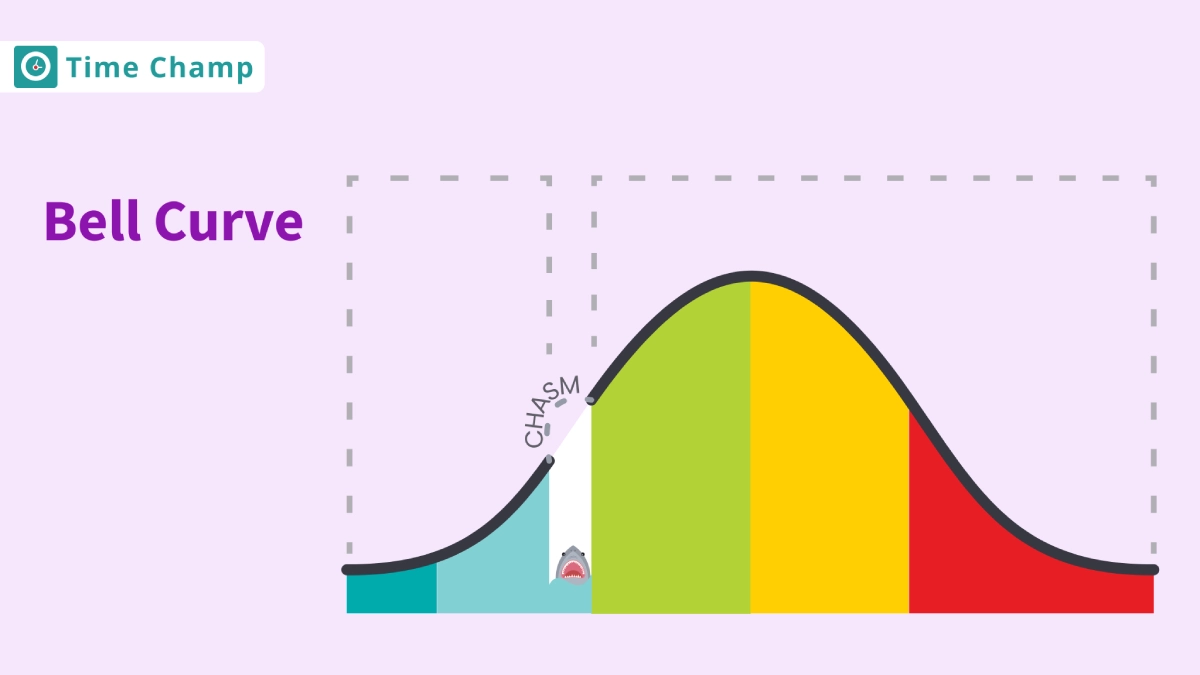
What is the Bell Curve?
A Bell Curve is a graphical representation of normal distribution and is in the shape of a bell. This statistical instrument is used to demonstrate the spread of a dataset in which most values are concentrated near the mean and form a symmetrical bell-shaped curve. The top of the curve represents the mean, mode, and median of the collected data, indicating the central tendency.
The Bell curve, also referred to as forced ranking or stack ranking, is a performance appraisal method used to evaluate and classify employees’ performance levels. In this approach, employees are categorized into various performance groups based on their achievements, skills, and other performance indicators, with the majority falling in the middle, while fewer employees are rated at the extremes of high or low performance.
The Role of Bell Curve in Performance Appraisal
1. Performance Distribution
Employers are required to put employees into predetermined performance categories, which are usually based on a bell curve distribution. These categories include “top performers,” “average performers,” and “below-average performers.”
2. Percentage Allocation
The bell curve method divides employees into groups based on performance: 10% high performers, 70% average performers, and 20% low performers. Most fall in the middle, reflecting a balanced performance range.
3. Consequences and Rewards
Based on this distribution, the performance ratings that are allocated may have an impact on compensation, promotions, and other rewards or consequences. Good-performing employees may receive bonuses or get promotions, while poor performers may need performance improvement plans or other corrective actions.
Impacts of Bell Curve in Performance Appraisal
1. Unhealthy Competition
The bell curve system often encourages employees to compete against each other, prioritizing personal success over teamwork. This can create an unhealthy atmosphere, negatively impacting collaboration and shared goals.
2. Unfairness and Bias
The forced ranking system may lead to unfair judgments and bias. Categorizing employees into fixed percentages can overlook individual contributions and skills. Employers might feel pressured to manipulate ratings, compromising the fairness and accuracy of evaluations.
3. Stifles Creativity
The rigid structure of the bell curve discourages risk-taking and innovation. Employees may fear trying new ideas or taking on challenging projects, worrying about the impact on their rankings. This can hinder creativity and slow down overall progress.
4. Ignores External Factors
The bell curve doesn’t consider external factors affecting performance, such as market changes or industry trends. Employees may be unfairly judged for things beyond their control, leading to inaccurate assessments.
5. Lack of Personal Feedback
The forced ranking system often results in a lack of individualized feedback. As employees are grouped into fixed percentiles, managers may overlook providing specific insights into strengths, weaknesses, or areas for improvement. This hampers personal development.
What is the Bell Curve Principle?
The Bell Curve Principle, also known as the Normal Distribution, is a statistical concept describing a pattern where most observations or values in a dataset are concentrated around the mean (average), with fewer occurrences as you move farther away in either direction. The graph of this distribution looks like a bell, with a balanced shape.
What is the Bell Curve Performance Management?
In HR, the Bell Curve is used to rank employees. Most people get average scores, such as in the middle of a bell curve. Some get high scores, while a few get low scores. It helps companies see who’s doing well and who might need more support.
With this method, organizations can easily spot top performers and those who might need extra help to understand the skills of their team better. The problem is that systems such as the Bell Curve can lead to unhealthy competition and make team morale worse.
Also Read:
Ways to use productivity intelligence to improve team performance
Importance of Goal Setting to Increase Employee Productivity

Jahnavi Pulluri

Table of Content
-
 What is the Bell Curve?
-
The Role of Bell Curve in Performance Appraisal
-
Impacts of Bell Curve in Performance Appraisal
-
What is the Bell Curve Principle?
-
What is the Bell Curve Performance Management?
Related Blogs

Employee relations is a term that describes the kind of connections that exist between the employer and the employees of
Vijaya Lakshmi |3 May 2024
It is the process which an employer evaluates the performance of their employees as well as their skills, competencies and
Vijaya Lakshmi |30 April 2024
Employee referral can be defined as a recruitment method through which present employees of an organization refer or recommend candidates
Vijaya Lakshmi| 30 April 2024
Employer Identification Number (EIN) is a 9-digit unique number provided by the IRS (Internal Revenue Service) to businesses and other
Vijaya Lakshmi |30 April 2024
The term due diligence means usually the process of collecting all available information about an investment opportunity, business deal, or acquisition and analyzing it before completing the transaction. It is
Vijaya Lakshmi| 30 April 2024
E-recruitment, also called online recruitment or internet recruitment, is the procedure of using digital technologies and online platforms to search,
Vijaya Lakshmi| 30 April 2024


 4.7/5 avg.
Ready to Manage Your Workforce Smarter?
Join our family of 1100+ companies using smart insights to redefine workforces!

Free Trial
No Credit Card Required